Office Cabin Design Ideas That Will Completely Change Your Workspace
Disclosure: This article contains affiliate links. If you make a purchase through these links, we may earn a small commission at no extra cost to you. See our Affiliate Disclosure

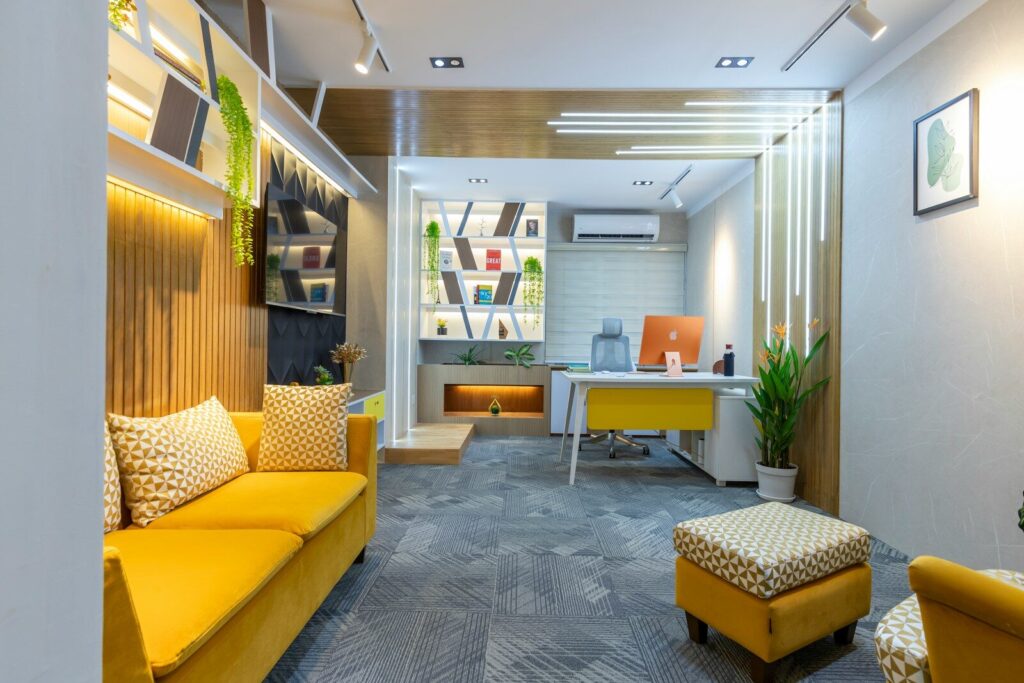
Designing an office cabin is not only about buying an expensive desk or choosing a good-looking wall color. The way the desk faces the room, where the storage goes, how much natural light comes in, and even the amount of empty space can completely change how the cabin feels.
The ideas below show different ways to make an office cabin feel professional, comfortable, organized, and personal. Some are luxurious, while others have simple details that can easily be adapted to a smaller cabin. As you go through them, look beyond the furniture and notice the little design decisions that make each space work.
5 Smart Products That Can Transform Your Office Cabin
1. Hide the Cable Mess With a Ventilated Cable Management Box
A clean office cabin can quickly look messy because of one simple thing: cables. Laptop chargers, monitor wires, extension boards and adapters often end up in a tangled pile under or behind the desk.
A ventilated cable management box is a simple way to hide that mess without trapping everything in a closed box. You can place the extension board and extra cable length inside, while keeping the setup neat and easy to reach when you actually need it.
What I like about this idea is that it doesn’t take up valuable desk space. From the outside, the cabin looks cleaner, while all those annoying wires stay out of sight.
Best for: Small cabins, executive desks and minimalist office setups.
2. Add Hidden Storage With an Under-Desk Drawer
There is never quite enough storage around a work desk. Pens, notebooks, documents, chargers and small office items somehow end up occupying the entire desktop.
An under-desk drawer is a clever solution because it uses space that normally does nothing. It sits underneath the desk and gives you a private place to keep small things without adding another cabinet or organizer.
This can be especially useful in a small office cabin where every inch matters. Your desktop stays open, but the things you use every day are still within easy reach.
Best for: Small office cabins where desktop space is limited.
3. Create More Privacy With a Clamp-On Acoustic Panel
An office cabin is supposed to feel private, but sound can still travel through an open door or thin partitions. If you often take calls or need to concentrate, a small acoustic panel can make the workspace feel more comfortable.
A clamp-on acoustic panel is interesting because you don’t necessarily have to redesign the cabin or drill into the wall. It attaches directly to the desk and creates a visual and partial sound barrier around your working area.
It also gives a desk a more finished, professional look. Instead of filling the cabin with decorative items, you are adding something that actually serves a purpose.
Best for: Meeting calls, focused work and cabins with limited privacy.
4. Get the Power Strip Off the Floor
The power strip is one of those things nobody thinks about when designing an office cabin—until it is lying on the floor collecting dust with six cables coming out of it.
An under-desk power strip mount fixes that small but irritating problem. Instead of leaving the power strip on the floor or taking up space on your desk, you can mount it underneath the desk where it is still accessible but mostly hidden.
This small change can make the whole workstation look more organized. It also makes it easier to connect chargers without reaching behind furniture every time.
Best for: Computer desks with multiple monitors, chargers and office electronics.
5. Make Long Work Hours More Comfortable With an Under-Desk Foot Hammock
This one looks a little unusual at first, but that’s exactly why it caught my attention. An under-desk foot hammock gives your feet somewhere to rest while you are sitting for long periods.
It attaches underneath the desk, so it doesn’t take up floor space. When you don’t need it, you can simply move it out of the way.
It isn’t a replacement for a good office chair, but it can be a nice little comfort upgrade for someone who spends several hours at a desk. And unlike another decorative desk accessory, this is something you can actually use throughout the workday.
Best for: People who spend long hours sitting at their office desk.
1# Use Warm Wood and Soft Lighting to Make the Cabin Feel Welcoming
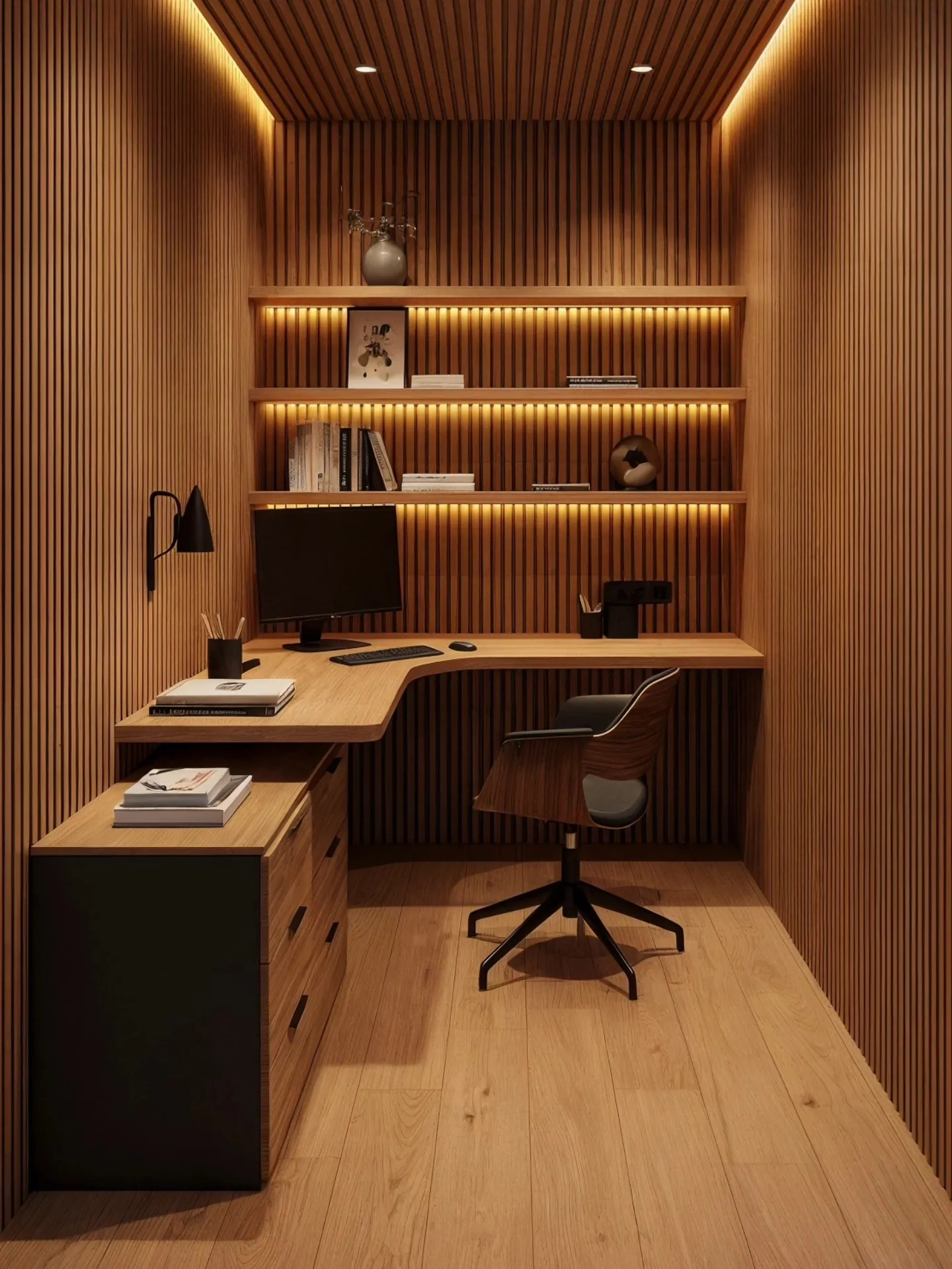
The first design creates a warm, comfortable cabin rather than the typical cold corporate office. Wood tones dominate the room, while the lighting is kept soft and warm. The combination immediately makes the space feel more relaxed without making it look casual.
One detail worth copying is the balance between the working area and the seating area. The desk remains the main focus, but comfortable seating gives the room another purpose. If clients or colleagues regularly visit your cabin, this arrangement is much more useful than simply placing two chairs directly in front of the desk.
A simple takeaway: If your office feels too formal or sterile, introduce warm wood, softer lighting, and one comfortable seating corner instead of filling the room with decoration.
2# Let a Wood-Finished Wall Become the Main Feature
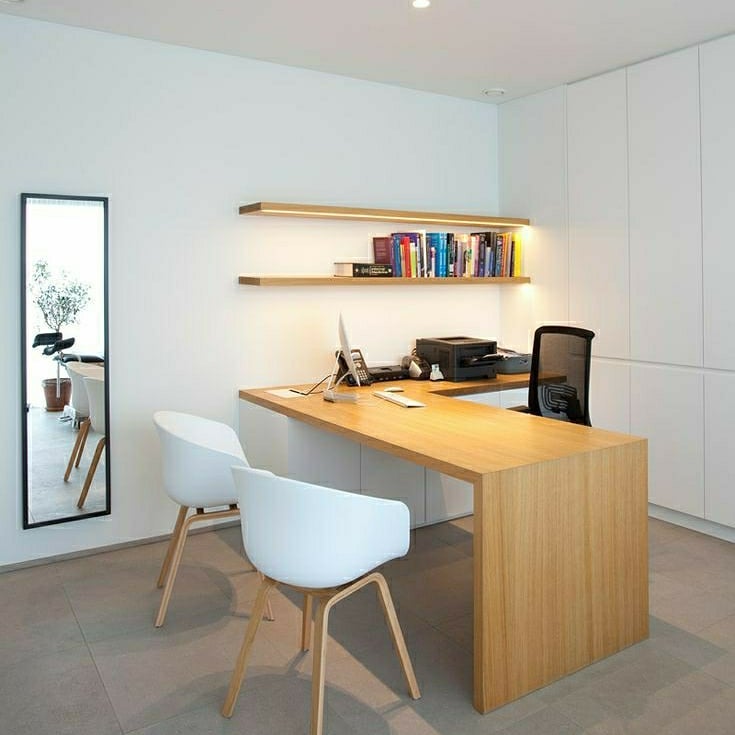
Here, the wall behind the workspace does most of the visual work. The vertical wooden treatment gives the cabin depth and makes the desk area feel intentionally designed.
This is a useful approach if you don’t want to decorate every wall. Choose one wall as the visual anchor and keep the remaining surfaces relatively simple. It can save money compared with adding expensive finishes throughout the room while still giving the cabin a premium appearance.
The warm built-in lighting also prevents the wood from looking too heavy, especially in a compact cabin.
Try this: Use a wood panel, fluted panel, or wood-look finish behind the desk and add subtle lighting between or around the panels.
3# Keep a Small Cabin Bright With a Light Color Palette
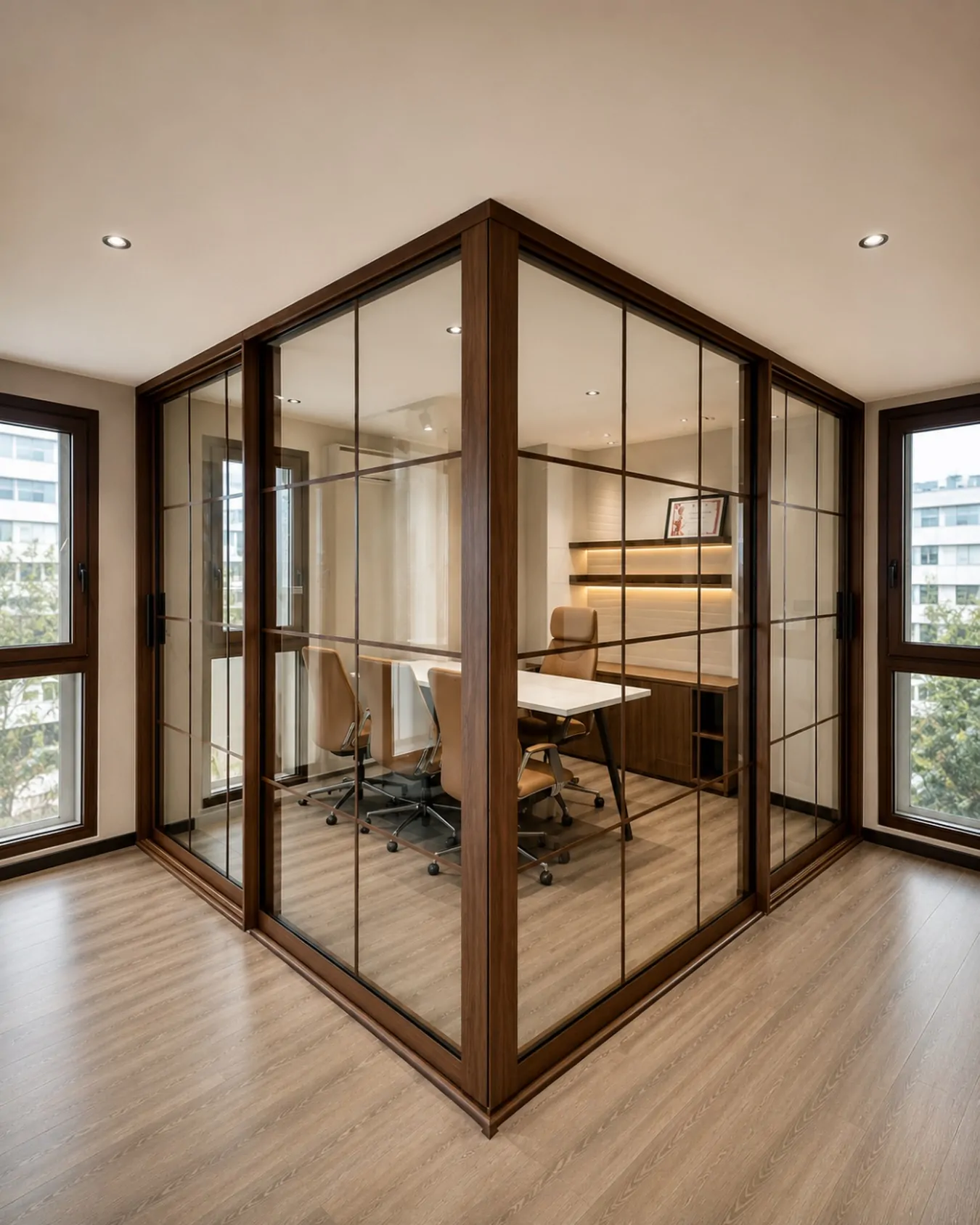
This office takes a completely different approach. Instead of dark wood and dramatic finishes, it uses light colors, a compact desk, and plenty of open space.
That makes it a particularly useful reference for a small office cabin. When the room itself is limited, adding too many dark surfaces or oversized furniture can make it feel even smaller.
A compact desk against the wall also leaves more usable floor area. The light-colored furniture and walls help the room feel cleaner and less visually crowded.
What you can copy
- Choose light walls if the cabin is small.
- Keep the desk proportional to the room.
- Avoid filling every empty corner.
- Use one or two plants instead of lots of decoration.
- Let natural light do as much work as possible.
4# Use Glass Partitions When You Want Privacy Without Feeling Closed In
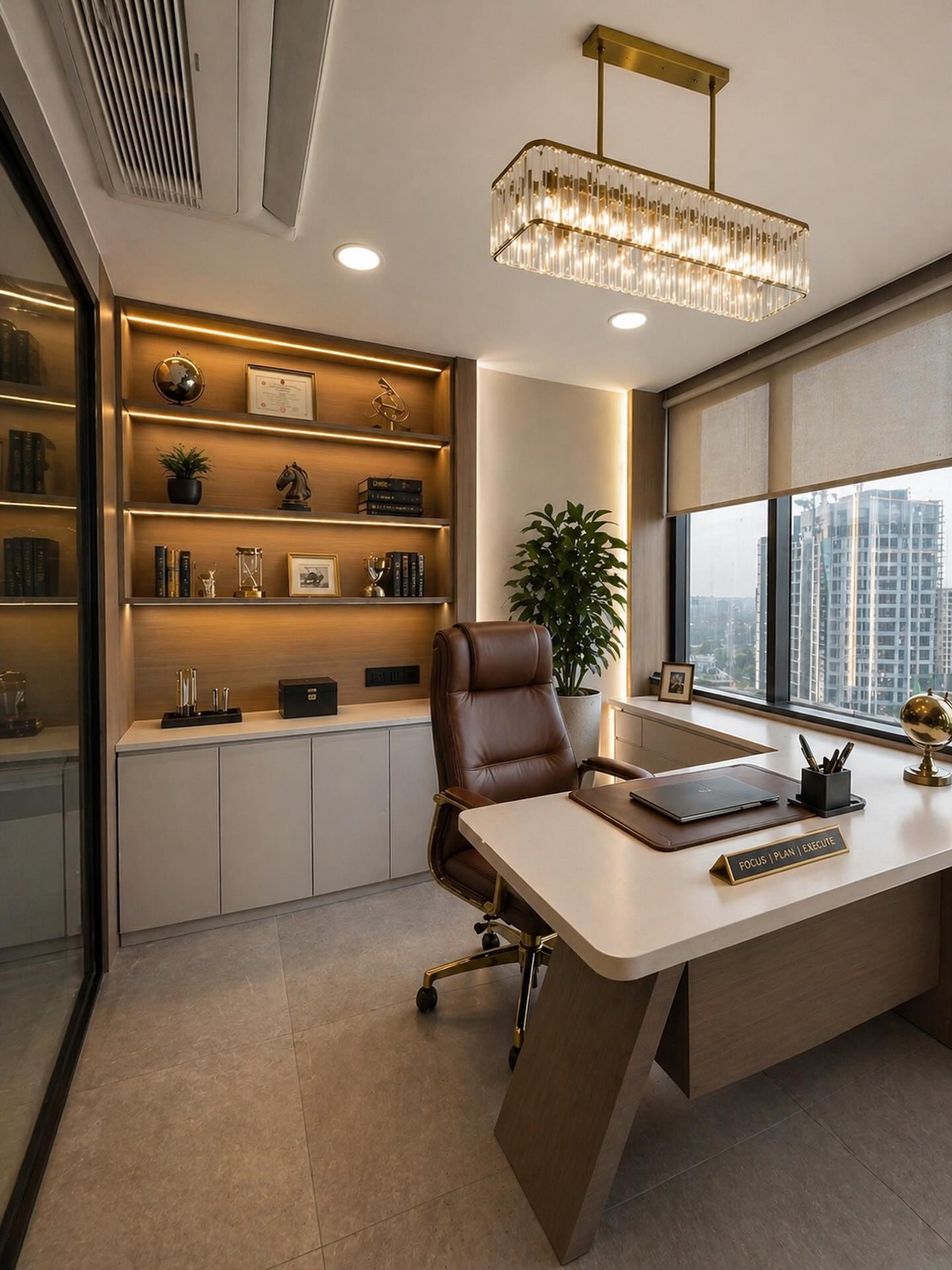
The glass-partitioned cabin is a good example of balancing privacy with openness. The framed glass separates the workspace from the surrounding office, but it doesn’t create the heavy feeling of a completely enclosed room.
This can be especially useful when a manager needs a private workspace but still wants visual contact with the rest of the team.
The wooden furniture inside also adds warmth to what could otherwise feel like a very glass-heavy environment.
The design lesson: Glass provides separation; wood and soft furnishings provide warmth. Using both together creates a more balanced cabin.
5# Make the Office Pinky with Wood Work
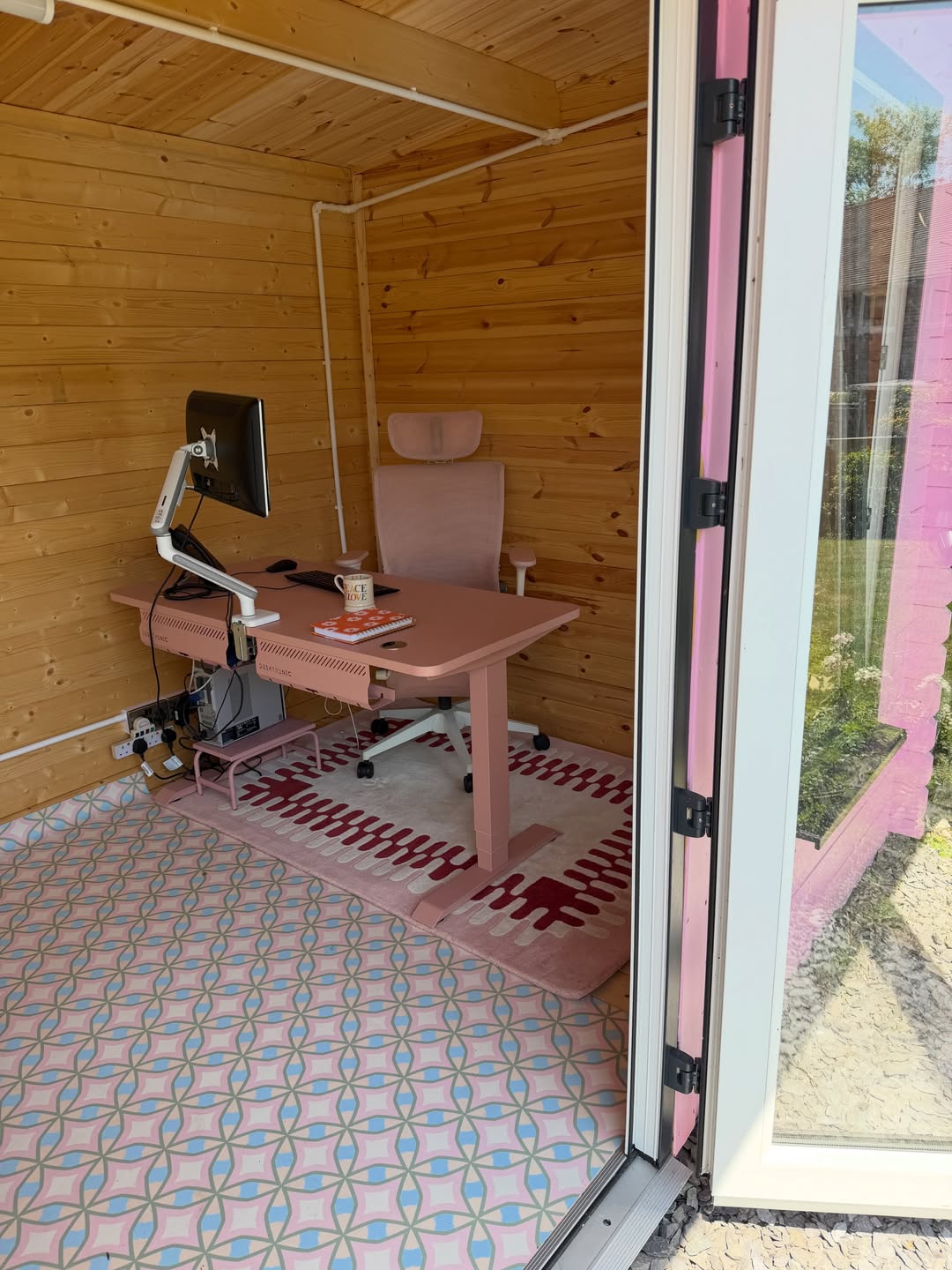
This design uses the wood wall behind the desk as more than a background. The combination of vertical wood detailing, shelving, storage, and warm illumination gives the wall both a decorative and practical purpose.
That is smart cabin planning because the desk doesn’t have to carry all the storage.
If you are designing a narrow office, consider using the wall vertically. A tall storage unit or built-in shelf can hold books, documents, awards, and decorative pieces without taking valuable floor space.
One thing to avoid
Don’t fill every shelf. A few carefully selected objects usually look more premium than rows of random files and accessories.
6# Turn an Awkward Corner Into a Private Work Nook
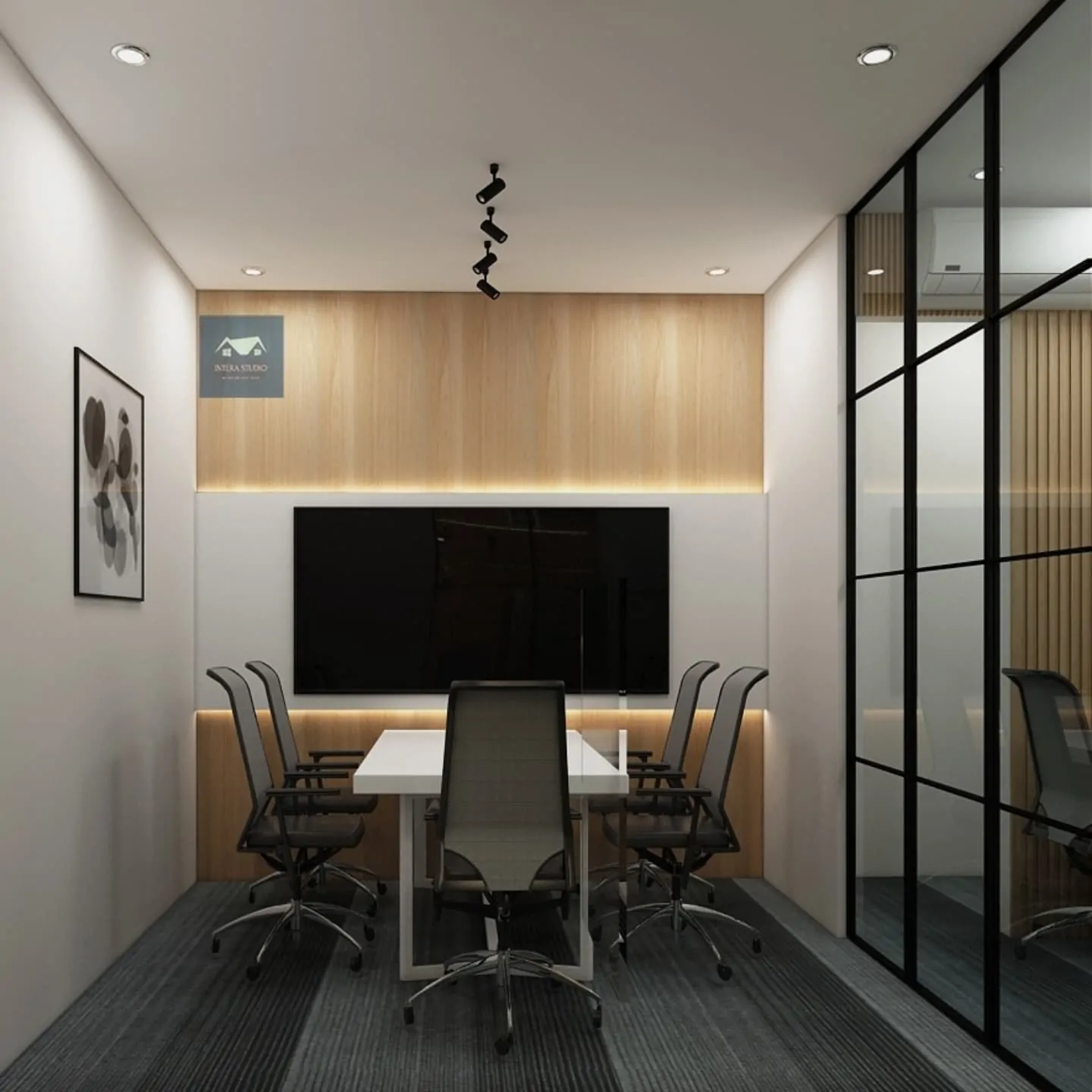
This smaller setup proves that an office cabin doesn’t always need a large room. The desk is tucked into a compact area, with surrounding colors and materials giving it a distinct identity.
The important idea here is using the available footprint rather than fighting it. If you have a narrow corner, a slim desk can sometimes work better than trying to squeeze a large executive table into the space.
The patterned floor and colorful surrounding elements also show that a professional workspace doesn’t have to be completely beige, gray, or brown.
For a small cabin: Spend more attention on proportions than on expensive furniture.
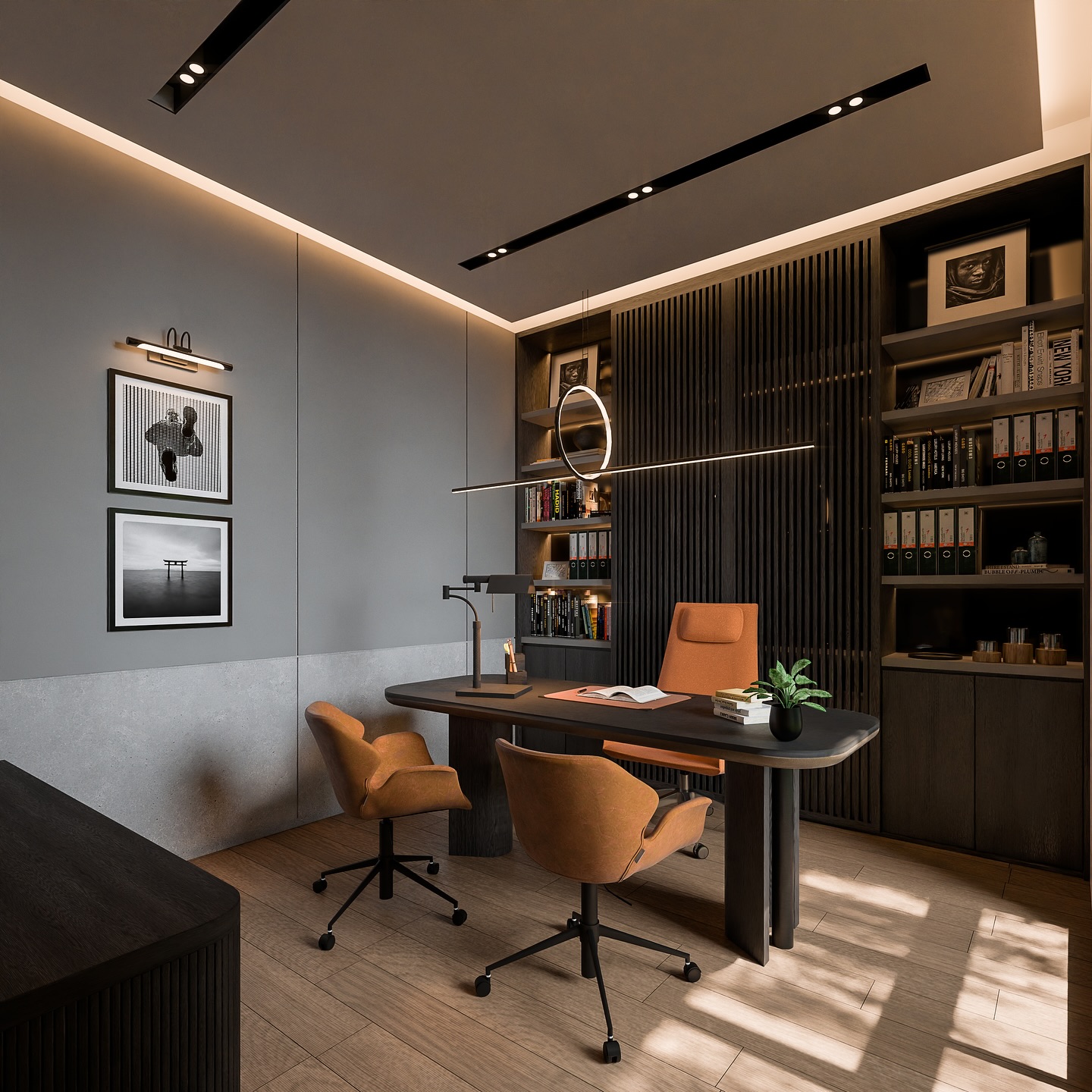
7# Formal Look for an Executive Cabin
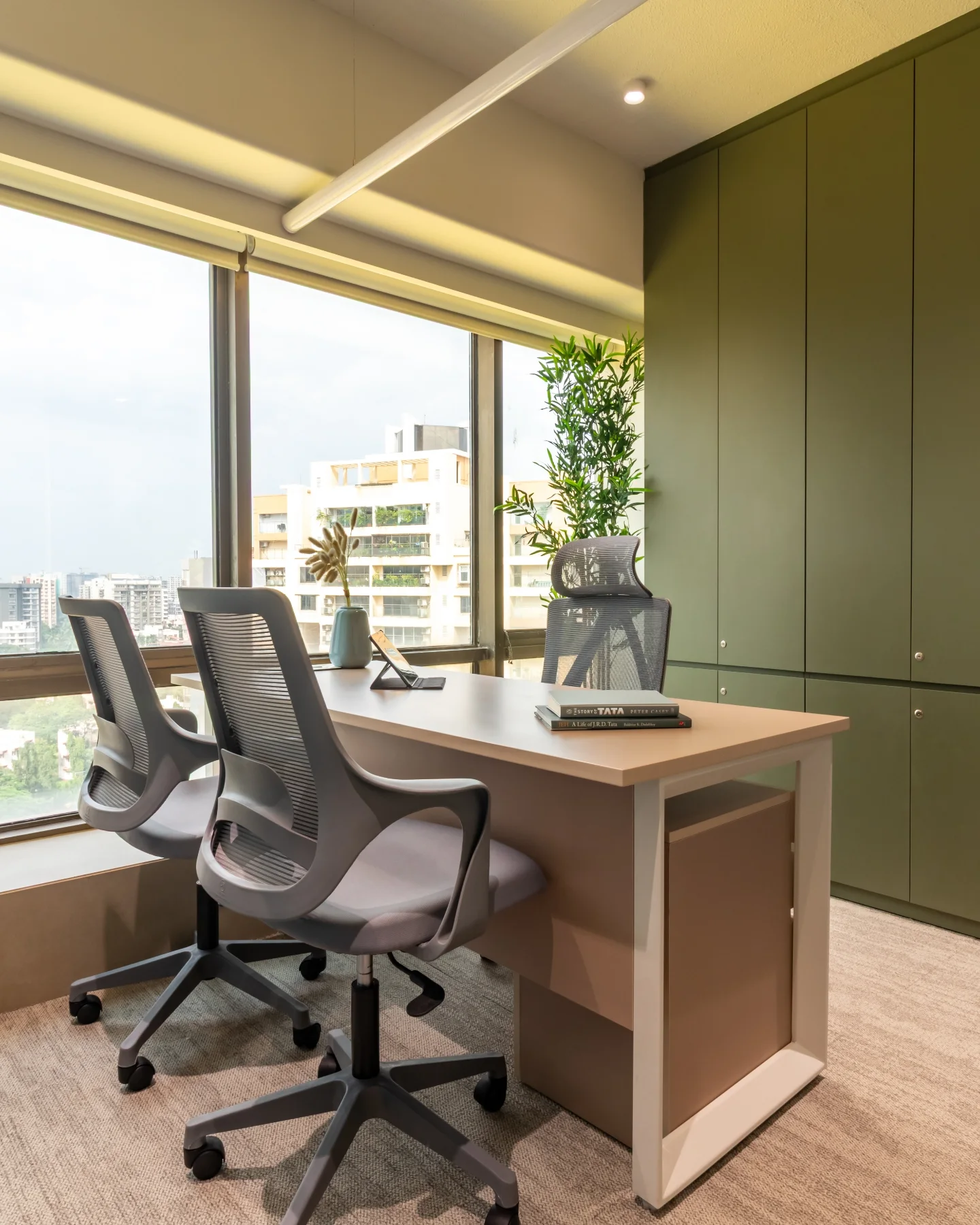
This office creates a completely different mood. The black and charcoal elements give the cabin a serious, executive character, while the large desk provides a strong central focus.
Dark interiors can look excellent, but they need careful lighting. Without enough illumination, a dark cabin can quickly feel smaller and heavier than intended.
The safest approach is to combine dark furniture with lighter flooring, controlled accent lighting, or natural light.
Best suited to
- Executive cabins
- Private meeting spaces
- Leadership offices
- Offices where a formal atmosphere is important
If you love this look but have a small cabin, use dark colors on one feature wall rather than covering everything in black.
8# Bring Nature Into the Cabin Without Making It Look Like a Garden
This office uses greenery to soften a modern workspace. The plants add color to the otherwise restrained interior and make the room feel less rigid.
You don’t need a huge collection of plants to achieve this effect. One larger plant beside the desk can have more impact than several tiny pots scattered across the room.
The wood-toned ceiling and furniture also work well with the greenery because the materials share a natural visual quality.
A useful rule: Pick one prominent plant location—beside the desk, near a window, or in an empty corner—and keep the rest of the cabin uncluttered.
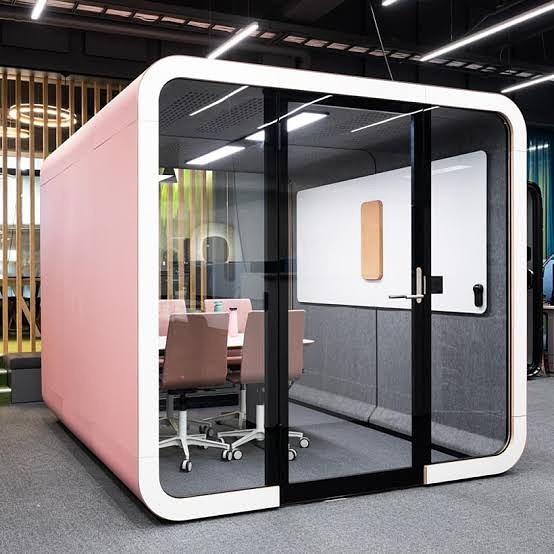
9# Use a Compact Office Pod When Privacy Matters
This is one of the more unusual ideas in the collection. Instead of building a traditional cabin with permanent walls, the workspace is enclosed using a compact office pod.
This type of setup can be interesting for modern workplaces where someone needs a quieter place for calls, focused work, or private conversations without constructing an entire room.
It also demonstrates an important design principle: privacy doesn’t always have to come from permanent walls.
For companies that frequently change layouts, a modular solution can be more flexible than a fixed cabin.
10# Combine Dark Walls With Warm Wood for a More Sophisticated Cabin
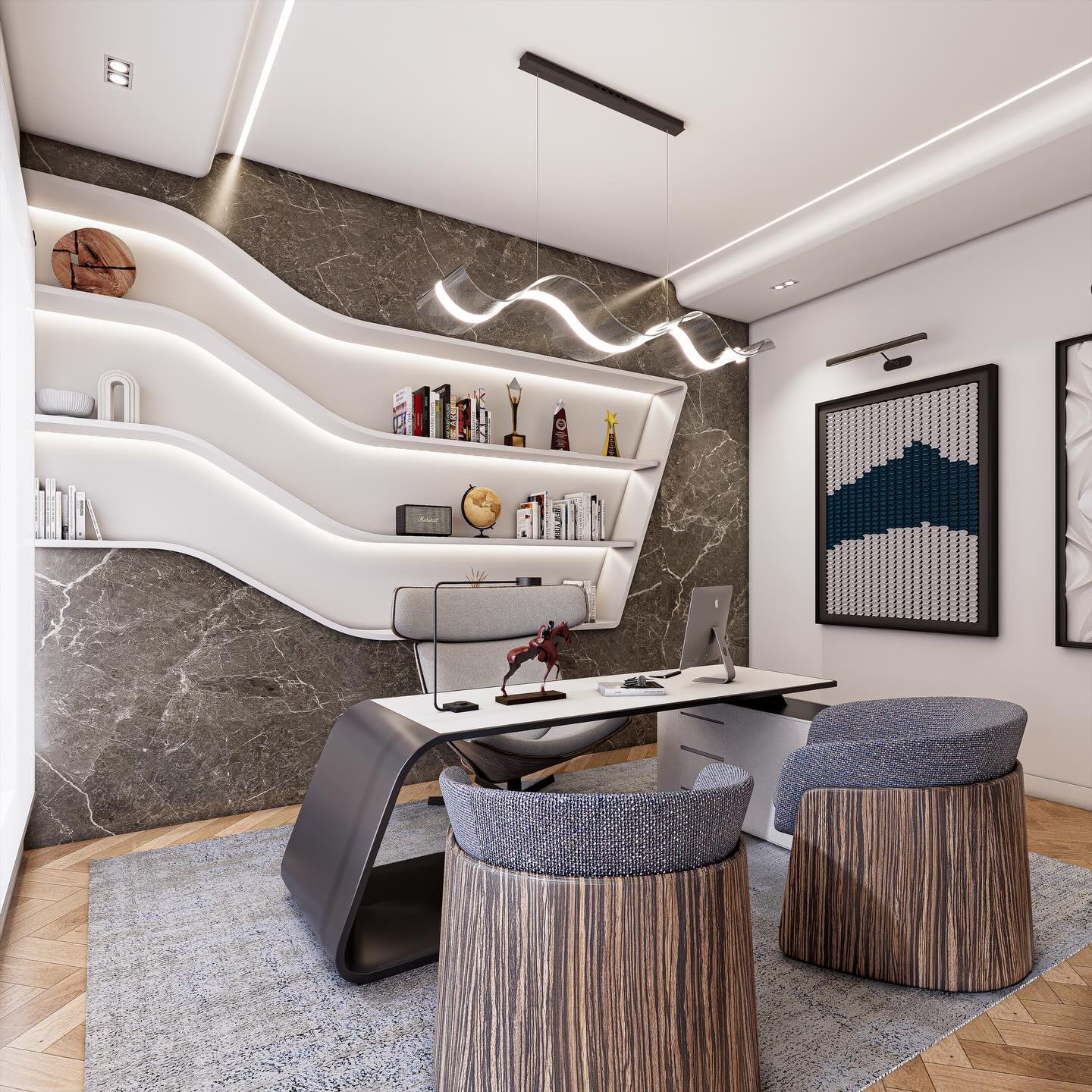
This cabin uses a dark wall treatment but avoids looking gloomy by introducing warm wood, lighting, and carefully selected furniture.
The desk is visually simple, allowing the wall and lighting to create much of the character. This is a useful reminder that you don’t need a complicated desk to make an office look expensive.
If your budget is limited, consider spending more attention on the wall behind the desk and lighting rather than buying an oversized executive table.
The formula
Dark feature wall + warm wood + soft lighting + uncluttered desk = sophisticated cabin
11# Make Natural Light Part of the Interior Design
The bright office shown here demonstrates how much natural light can change a workspace. Instead of trying to compensate for a dark room with excessive artificial lighting, the design makes the window and daylight an important part of the cabin.
The shelving and storage also stay relatively organized, so the room doesn’t lose its airy appearance.
If you have a window in your cabin, avoid blocking it with a tall cabinet unless there is no other option.
Keep the area around the window visually light. It can make the entire cabin feel larger.
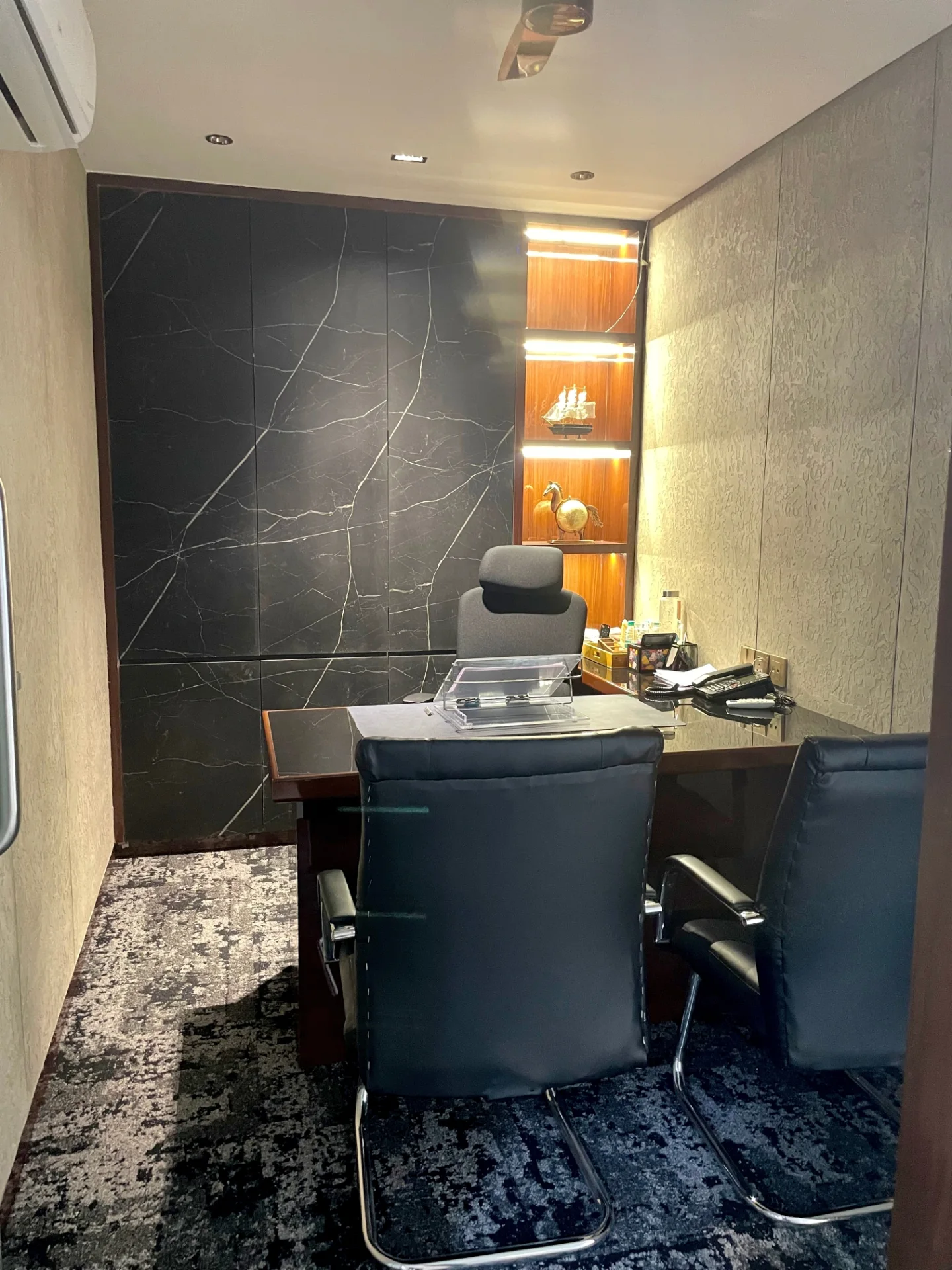
12# Use a Dark Feature Wall to Create a Strong Focal Point
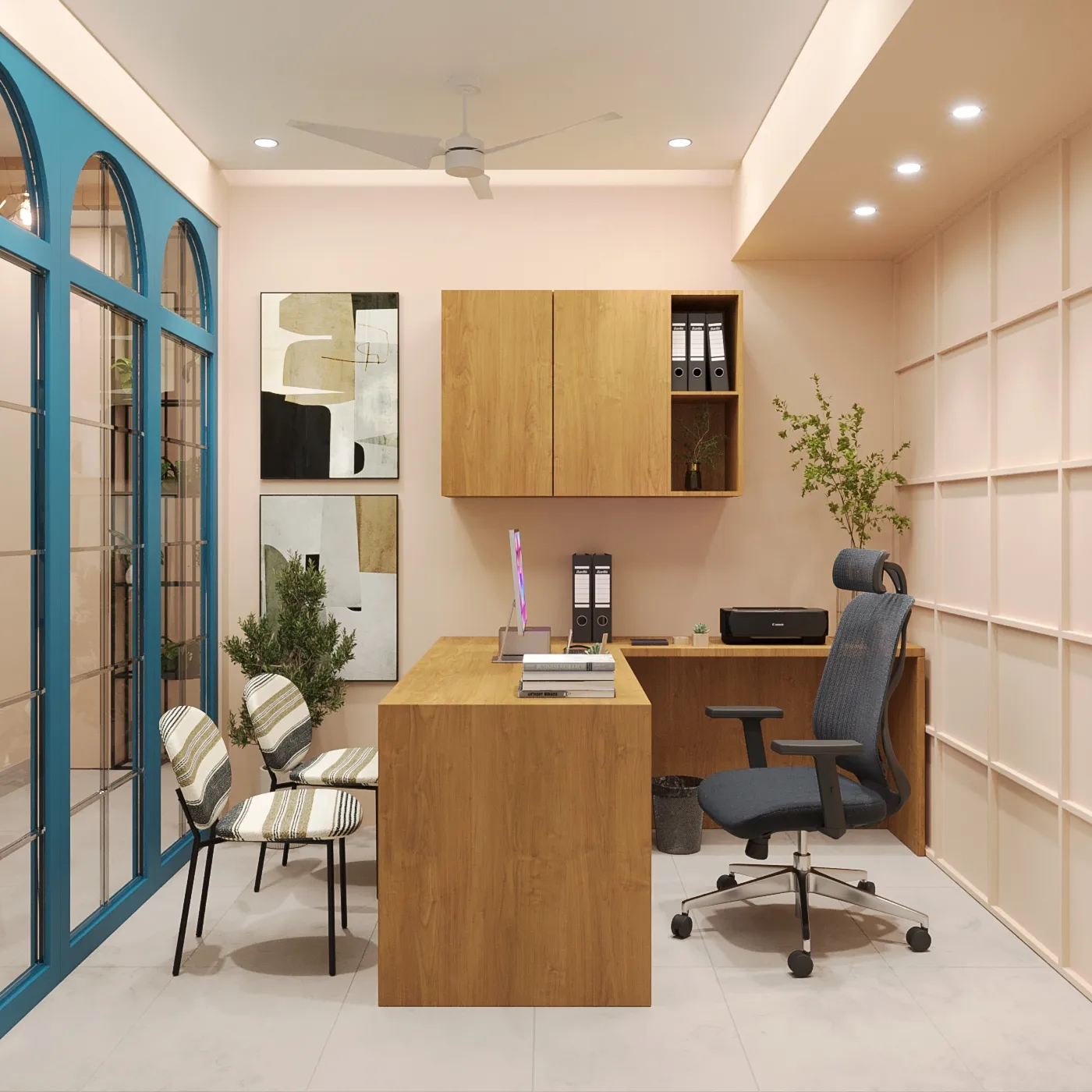
This cabin takes a bold approach with a dark, textured wall behind the desk. The result is dramatic without requiring a huge amount of decoration.
A feature wall like this works particularly well behind an executive desk because it naturally draws attention to the main working area.
However, the rest of the room should remain relatively controlled. If every wall has a different texture, the design can quickly become busy.
Best approach: Let one wall make the statement and allow everything around it to support that statement.
13# Keep the Executive Look Simple With Built-In Storage
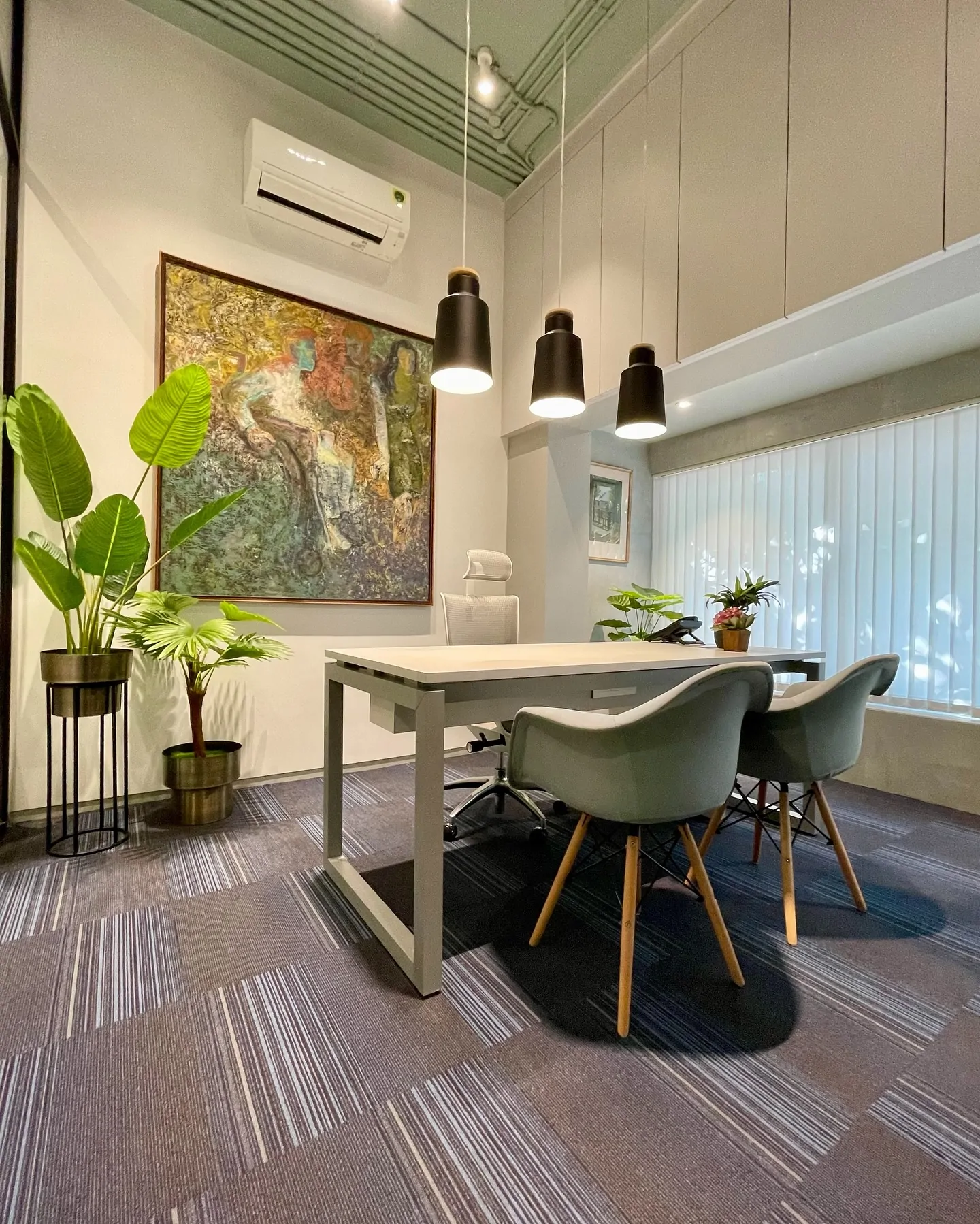
This office uses a combination of light surfaces and wood elements to create a polished appearance. Instead of relying on freestanding cabinets everywhere, storage appears to be integrated into the overall design.
That is something worth considering if you want a cabin to stay tidy throughout the day.
Why built-in storage helps
- It reduces visual clutter.
- It uses wall space efficiently.
- It gives the room a more finished appearance.
- Everyday documents can stay out of sight.
- The desk can remain mostly clear.
A clean desk doesn’t necessarily mean owning fewer things. Sometimes it simply means having a better place to put them.
14# Add Greenery to a Minimal Office Instead of More Decoration
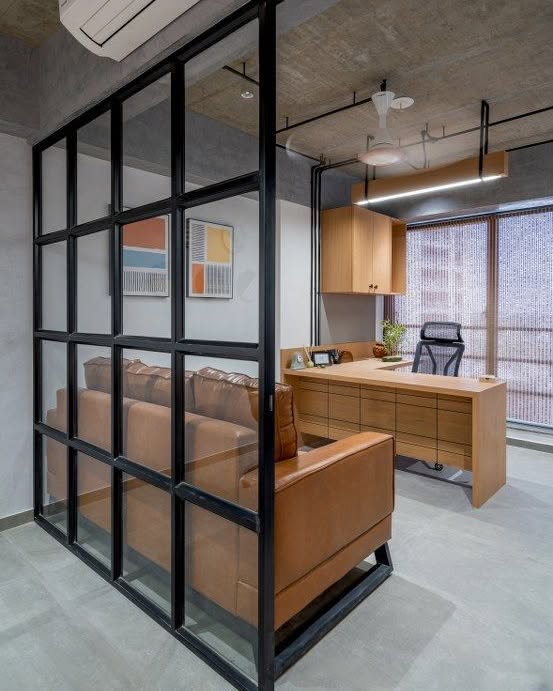
This setup uses plants as the main decorative element, which keeps the cabin fresh without making it look overloaded.
The desk is relatively simple, and the surrounding space has enough breathing room. That’s important because a minimalist cabin can easily become boring if everything is completely bare.
Plants solve that problem by adding texture, color, and life without introducing too many different design elements.
If you’re copying this look: Start with one medium or large plant, a simple desk, and a neutral color palette. Add more only if the room genuinely needs it.
15# Use Framed Glass and Wood to Create a Modern Manager Cabin
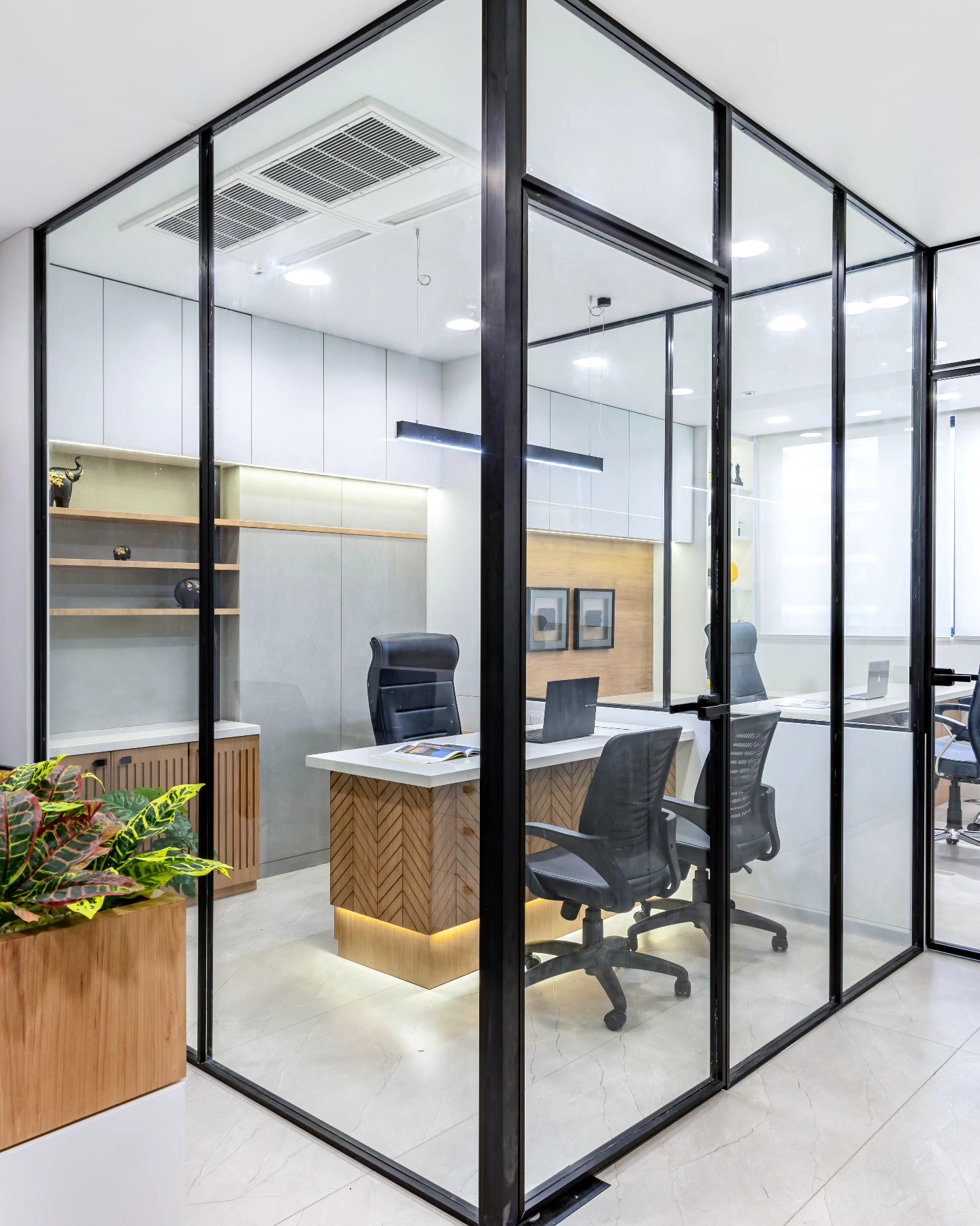
This glass cabin has a useful balance between transparency and privacy. The black framing gives the glass structure, while the wooden furniture prevents the space from feeling too industrial.
This is a particularly practical idea for a manager’s cabin. The person inside can maintain a visual connection with the team while still having a defined workspace.
If privacy is occasionally required, consider adding blinds or a frosted section to the glass rather than replacing the entire partition.
Good combination for a modern cabin
| Element | Purpose |
|---|---|
| Glass | Keeps the cabin visually open |
| Dark frame | Adds definition |
| Wood furniture | Adds warmth |
| Simple lighting | Keeps the room clean |
| Minimal decoration | Prevents visual clutter |
16# Go Almost Fully Transparent When You Want an Open Office Feel
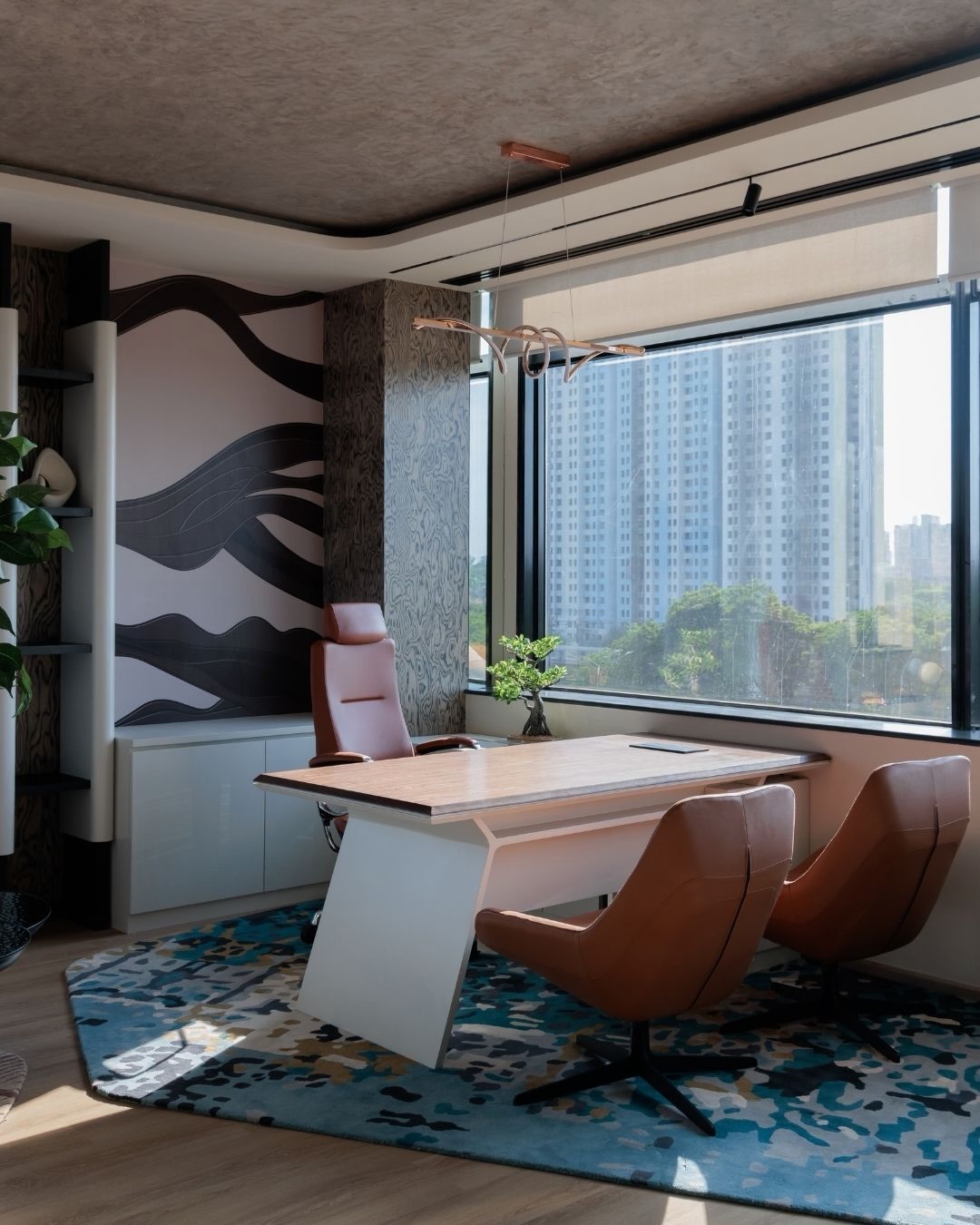
This cabin pushes the glass concept even further. Large glass surfaces make the office feel connected to the surrounding workspace and allow plenty of light to travel through the area.
It’s a good choice for organizations that want private cabins without creating a maze of dark, enclosed rooms.
The important thing is to think about acoustics as well as appearance. Glass can look beautiful, but a cabin intended for confidential conversations should also have a plan for sound privacy.
So if you love this style, consider combining the glass with acoustic materials, curtains, rugs, or other sound-absorbing elements.
17# Give the Cabin a Comfortable Client-Meeting Zone
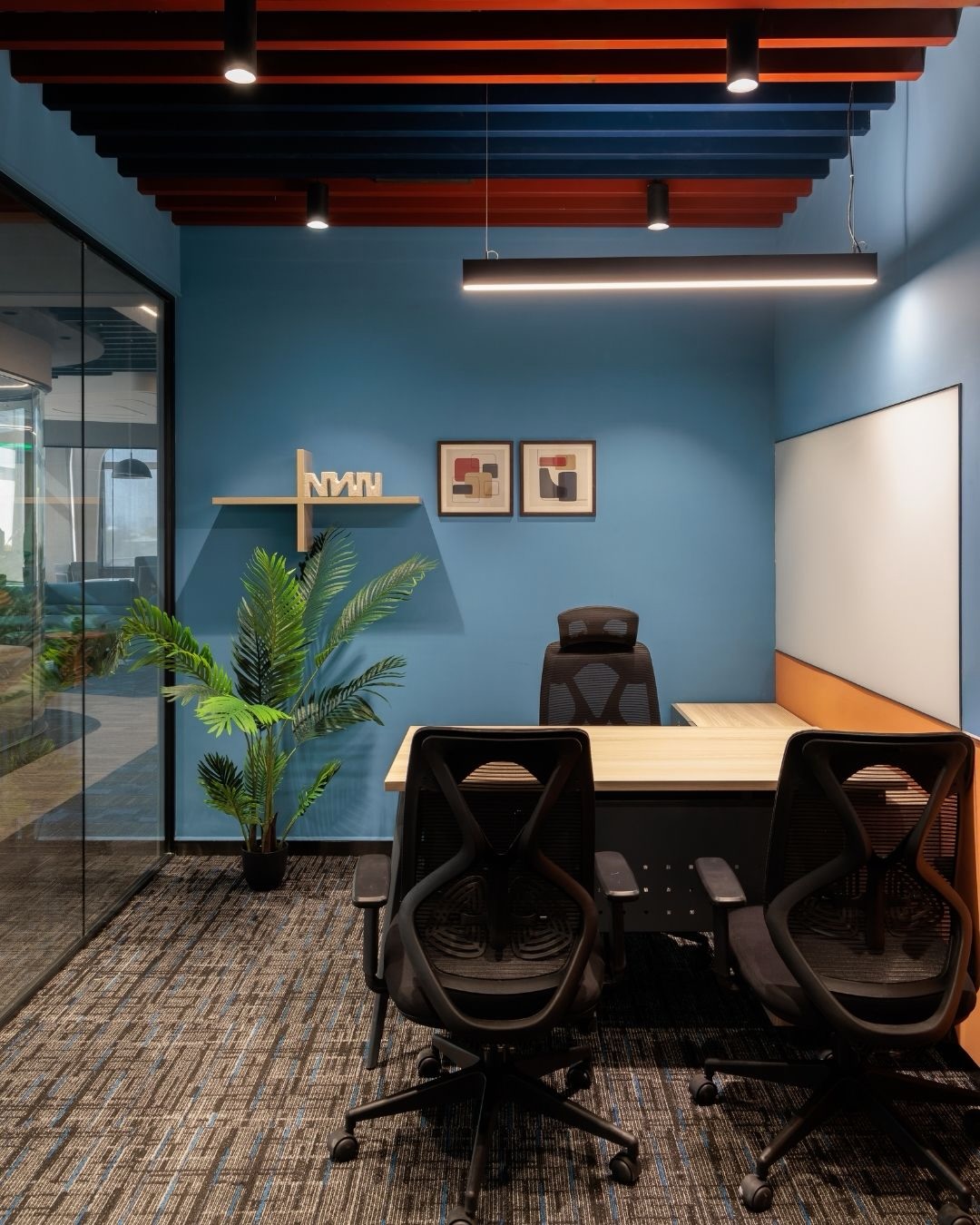
This design feels more like an executive lounge than a basic workstation. The seating arrangement creates a separate place for conversation instead of forcing every discussion to happen across the main desk.
That’s a valuable idea if your cabin is used for meetings.
A comfortable chair or small seating arrangement can make conversations feel less formal and more collaborative. It also prevents the desk from becoming the only functional area in the room.
If space allows: Create two zones—one for focused desk work and one for conversations.
Even a pair of comfortable chairs and a small table can create that separation.
18# Add Personality With a Strong Ceiling and Color Combination
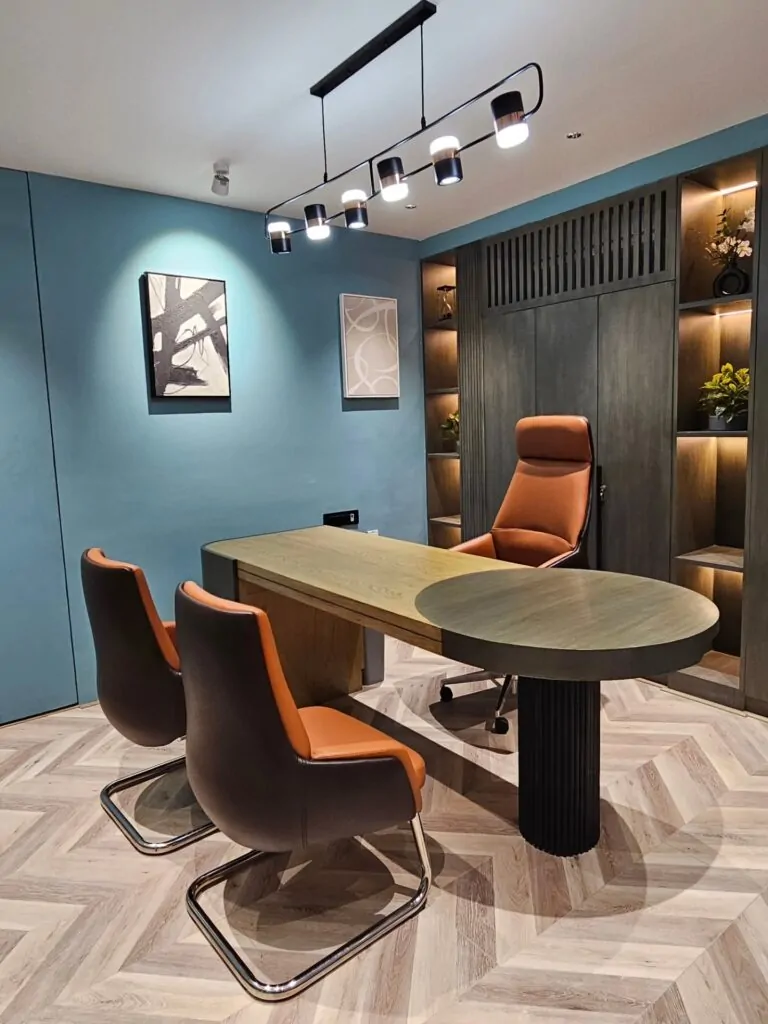
This office uses a more expressive ceiling treatment with bold colors and lighting. It shows that the ceiling doesn’t have to be ignored when designing a cabin.
Most office interiors focus almost entirely on walls and furniture. A distinctive ceiling can change the atmosphere of the entire room without taking up any floor space.
However, if you use a bold ceiling, keep some of the other elements quieter.
A good balance
One bold feature + several simple elements usually looks more intentional than several competing features.
19# Use Dark Wood and Layered Lighting for a Premium Feel
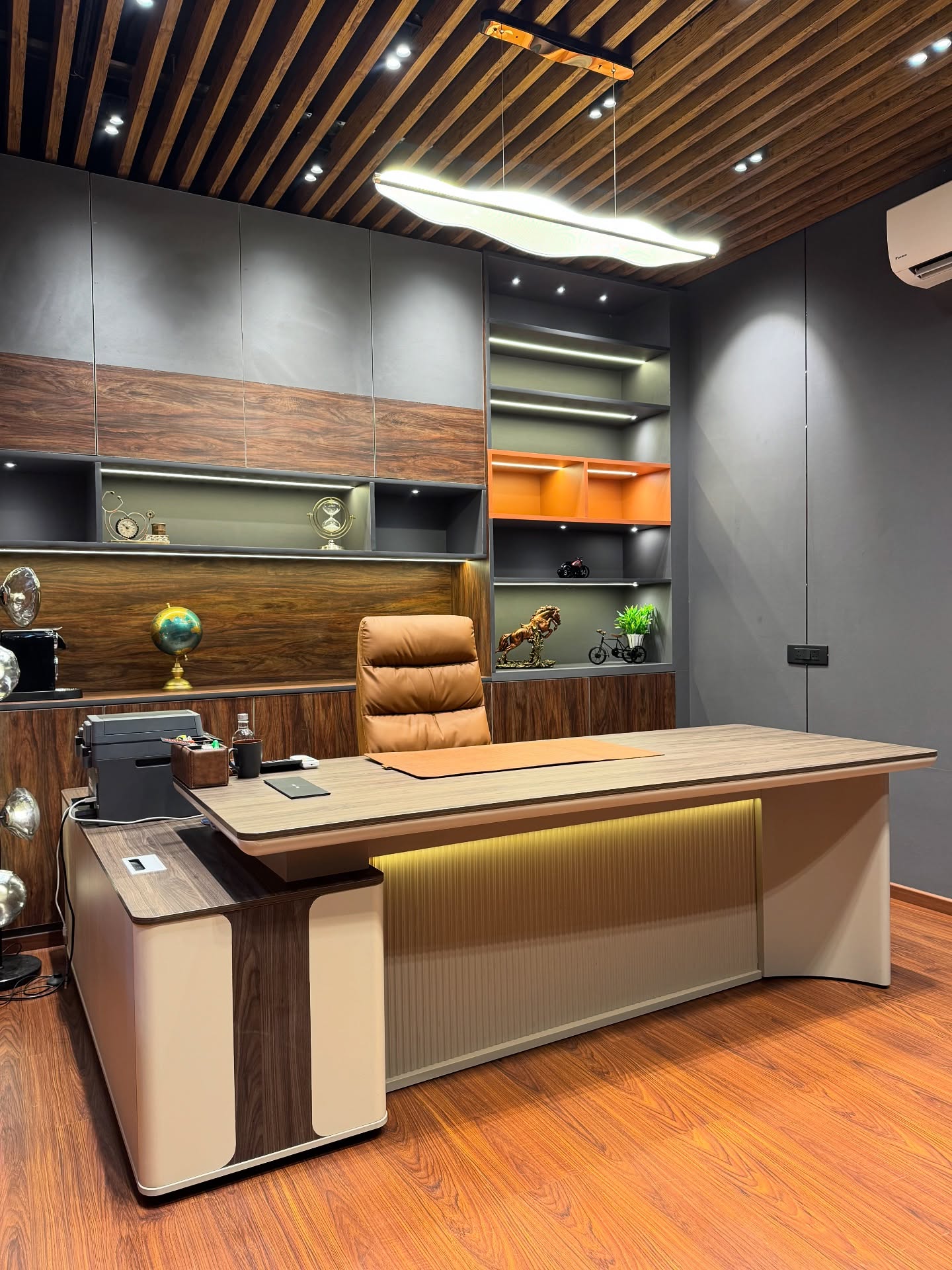
The darker cabin shown here uses wood, warm lighting, and rich furnishings to create a more luxurious atmosphere.
Notice how the lighting isn’t simply coming from one bright ceiling fixture. Multiple light sources create different levels of brightness, which gives the room depth.
This is an easy lesson to apply to almost any office.
Instead of relying only on overhead lights, consider combining:
- General ceiling lighting
- A desk lamp
- Warm shelf lighting
- Soft accent lighting behind a feature wall
That makes the cabin feel much more polished, particularly in the evening.
A Simple Way to Choose the Right Office Cabin Design
After looking at all ideas, you don’t have to copy one image exactly. In fact, combining the best parts of several designs may give you a cabin that works better for your own space.
Think about these five questions before buying furniture or choosing finishes:
| If you need… | Consider… |
| A small cabin to feel bigger | Light colors, glass and minimal furniture |
| More privacy | Glass partitions with blinds or acoustic treatment |
| A premium executive look | Wood, layered lighting and one strong feature wall |
| More storage | Full-height cabinets and built-in shelving |
| A warmer atmosphere | Wood tones, plants and comfortable seating |
The best office cabin is not necessarily the one with the most expensive furniture. It is the one where every major design choice has a reason. Keep the desk comfortable, give storage a proper place, use lighting intelligently, and leave enough empty space for the room to breathe.
That is what turns a good-looking cabin into a workspace you actually enjoy spending time in.