
5 Self-Discipline Rules That Instantly Fix Your Life (Start With Yourself First)

Most people carry a list in their head. Wake up at a set time. Eat with care. Do the work that needs to be done. Yet the list stays a list. The day ends, and the gap between what was meant and what was done just sits there, wide and quiet. That gap is not about being lazy. It is not about being less than. It is about not yet having a clear inner structure to lean on.
Self rule is a plain thing at its core. No big word wraps it up better than this: you act on what you chose, not on how you feel in that moment. Feelings shift. Moods drift. But a rule held with care does not move with the tide. The life most people want is close. Much closer than they think. What stands between them and it is not talent or luck. It is the small daily choices that either hold or fall apart.
What gets lost most often is this: people believe self rule belongs to a certain type of person. The rare, hard, focused few. But that is not how it works. It grows the same way a muscle does. With use. With small, repeated effort. The five rules below are not new ideas. They are honest ones. They hold up not from being clever, but from being grounded in how people truly work.
Rule One: Do the Hard Thing First
Every morning, there is a quiet tug toward the easy stuff. The short email. The fast fix. The task that feels like progress but does not move the needle. The heavy thing, the one that takes real thought or real effort, gets pushed to later. And later never quite arrives.
The rule runs like this. When the day starts and the mind is fresh, the very first real task must be the one that costs the most. Not the safe one. Not the one after the phone check or the second cup of tea. The hard one. Right at the top.
This is not about making the day feel painful. It is about what the mind does once the heavy lift is behind it. A kind of open space forms. A quiet ease. Not the noise of false cheer, but a real, grounded sense that the worst is already handled. The rest of the day becomes lighter in a way that is felt in the body, not just thought about.
So many people move through their hours carrying one undone task like a stone in the bag. Each hour it does not get done, it grows a little heavier. The weight is not in the task itself. It is in the waiting. And the longer the wait, the harder it gets to even look at the thing.
Mark Twain had a way of putting this that stuck. He spoke of eating a frog at the start of the day. The point was blunt. Do the worst task first and the rest of the hours are easy by that measure. Many have heard this. Few let it change how they actually plan their mornings.
The common mistake is to take this as a small trick. It is not. It reshapes the whole day. When the big task is behind you before noon, the mind is no longer split between what was done and what is still waiting. It is free. And a free mind works at a level a pulled, strained mind never reaches.
Rule Two: Keep It Very Small at the Start
Big plans have a short life. Not always because the plan itself is weak. But because the human mind can only hold high energy for a short stretch. After a day, maybe two, the size of the goal starts to feel like a wall, not a door. The distance from here to there feels too far. So the plan gets quietly dropped.
The fix is smaller than most expect. Start at a size that seems almost too easy. Not a full hour of work. Ten minutes. Not ten pages written. One. Not a whole new routine. Just one part of it. Just one.
There is a real reason behind this that goes beyond just “starting easy.” When a person says they will do a thing and they do it, the brain files that away. Over time, those small kept promises build into something that looks a lot like self-trust. And once that trust is there, the brain stops fighting the task. It just does it.
William James, who spent his life looking at how the mind works and moves, made the case long ago that the path to real change is through habit, not through force of will. The brain does not want to make a hard call every single time. It wants a worn path. A clear, low-effort route. The goal is to turn the act into something so normal that not doing it would feel more odd than doing it.
The people who stay on track over months and years are rarely the loudest or the most fired up at the start. They are the ones who set the bar so low at the beginning that there was nothing real to push back against. The aim is not to be easy on yourself in a weak way. The aim is to be smart about how change actually takes root.
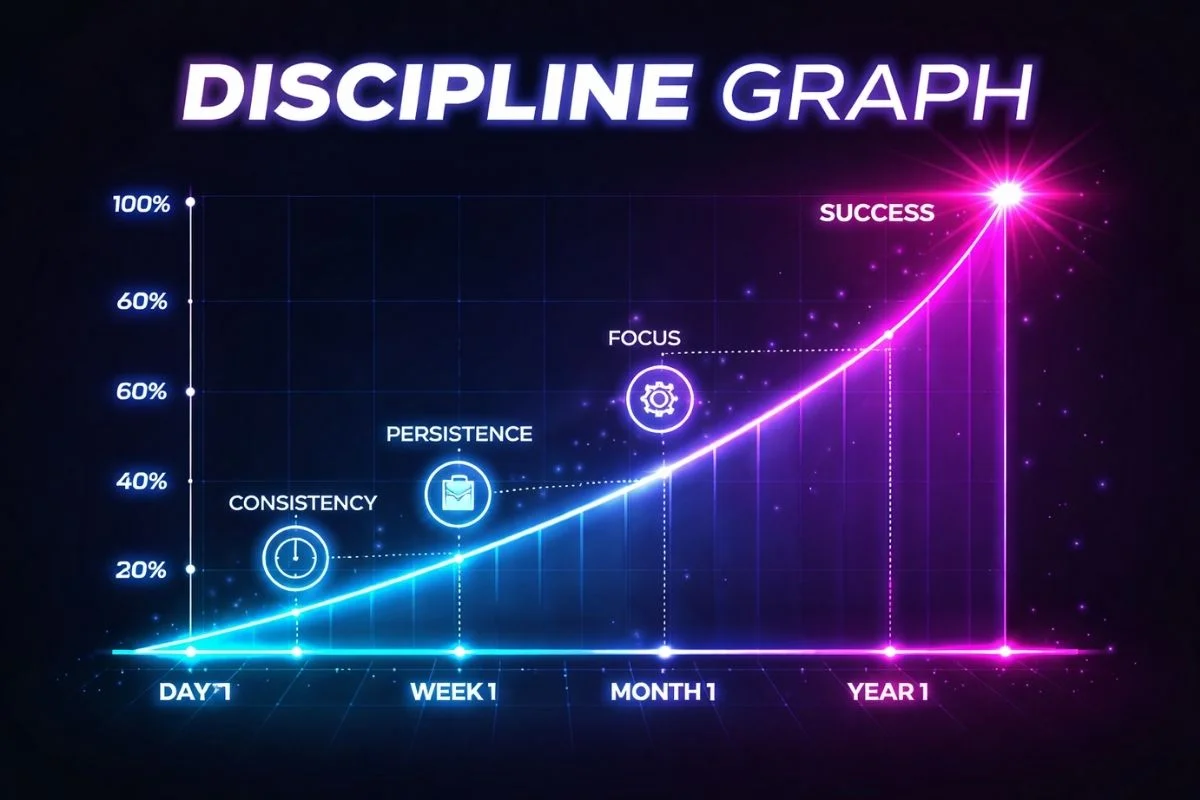
From that tiny, almost funny start, something real and lasting begins to grow. Not a fast jump. A slow, firm rise. The kind that holds.
Rule Three: Where You Work Shapes How You Think
The place a person sits down to do their work matters far more than most give thought to. The desk, the light, the sounds in the room, the pile of things not yet dealt with in the corner. All of it adds up. None of it is neutral.
When the space around a person is full of loose ends and mess, the mind picks up on that. Not in a loud or clear way. More like a low, soft hum that runs in the back. It does not stop the work fully, but it pulls a small share of mental energy that could go toward the actual task. Over a full day, those small pulls add up.
The rule is this. Fix the space before the task begins. Clear what does not need to be there. Move the phone out of arm’s reach. Set the surface so that the cue it gives the brain is simple and clean: this is where work happens.
That cue matters more than people think. The brain is a pattern reader. Over time, when a person sits at a clear, set spot, the brain begins to shift into work mode just from the act of sitting there. No push needed. No pep talk. The place itself does the work of getting the mind ready. That is not a small thing.
The people who seem to get the most done are often not the most gifted in a raw sense. They are the most designed. Their days are set up so that focus is the easy path, not the hard one. They do not wait to feel ready. They build a space that makes ready more likely.
If the space is not set, the mind will fill the gap on its own. It will notice the mess. It will find a small task that is not the real task. It will drift. But give the brain a clear, set stage, and more often than not, it will play its part.
Rule Four: Rest Is Not the Opposite of Work
This is a quiet place where most people lose ground without noticing. The belief runs deep that more hours at the task means more output. That rest is for those who do not care enough. That stopping is the same as giving up.
But the mind and the body run on real fuel. That fuel has a real limit. When the limit is ignored for long enough, the work does not just slow down. It gets worse. The thinking gets cloudy. The choices get poor. The mood drops. And the further down that path a person goes, the harder it is to climb back.
The rule is this. Plan the rest. Not wait for the crash. Not stop only when the body forces it. Put the rest in the plan the same way the work goes in the plan.
What that rest looks like will differ. A walk in the middle of the day. A full evening away from screens. A proper night of sleep on a fixed pattern. The shape is less important than the quality. The key thing is that the rest is real. Not half-rest with the mind still running on the problem. Not screen scroll that feels like ease but is not. True, full, done rest.
Alex Soojung-Kim Pang, a writer who spent years looking at the science behind rest, made a finding that went against the common view. Rest is not time taken from the work. It is a part of how the work gets done. The brain does not stop when the person stops. It keeps turning things over, quietly. Hard links form during rest that did not form during the push. Answers arrive in the morning that were not there the night before.
So when the urge comes to skip the break, to cut the sleep, to push for one more hour, the real question is not what it costs today. It is what it costs across the weeks and months ahead. A long habit of no rest does not build strength. It builds toward a point where the body simply stops.
There is a real kind of discipline in stopping on time. It takes something to close the work when part of the mind still wants to keep going. But that choice, made again and again, is what keeps the work alive over the long run.
Rule Five: The Way You Talk to Yourself Runs the Show
Of all five rules here, this one moves the most quietly. And does the most damage when it is left unchecked.
What a person holds as true about themselves tends to show up in what they do. Not in one loud moment. But across many small ones, over time, the inner story shapes the outer life in ways that are very hard to argue with.
When the belief running in the background is “this kind of person does not finish things,” then not finishing becomes the default. Not from lack of trying, but from the brain doing what it always does: acting in line with what it has been told is true. This is not some soft idea. It is just how the mind builds behavior from belief.
The rule runs like this. Pay close attention to the words used inside the head. Not to fake a bright mood. Not to pretend a hard thing is easy. But to be fair. Because most people are not fair when they talk to themselves. The words used would never be said out loud to a close friend going through the same thing.
The shift does not need to be large. It is not about loud, bright self-talk or a new mantra on the wall. It is just about giving the inner voice a bit more fairness. “This part is hard right now” holds more truth and more use than “this will never come together.” “That did not land well” is a better read than “this means nothing will ever work.”
Carol Dweck, a professor who gave decades to studying how people learn and grow, found a clear pattern in her work. People who frame a setback as proof of a fixed limit tend to stop trying. People who read the same setback as a part of a longer path tend to keep going. Across years, the gap in what each of those two groups builds is very wide.
Self rule, when it is working well, is not about being hard on yourself. It is about being clear-eyed and then kind. Clear about what is true right now. Kind enough to stay in the game anyway.
Key Things to Note
- Doing the hard task first frees the mind for the rest of the day in a way that nothing else quite does.
- A small, held start builds more than a large, dropped plan ever will.
- The space where work happens sends a signal to the brain before the first task even begins.
- Rest that is planned and real is what keeps long-term output from falling apart.
- The quiet, running story about who you are is the rule that shapes all the others.
To Close
None of these five rules ask for a fresh start on a new date. They do not need a big event to kick them off. They need only a small, honest choice made right now. One hard task moved to the top of the day. One clear surface to sit at. One real rest built into the week. One fair thought about what is possible.
The kind of life most people quietly want does not arrive in one large, clean moment. It gets built in plain, repeated acts done with care and without much noise. That is not a grim picture. It is, in fact, the most steady and real kind of hope. Because small is something anyone can do. One is something anyone can do. And one, held with care over time, grows into something that lasts.
As James Clear has noted, people do not reach their goals by aiming harder. They reach them by building the systems that make the right act the easy act. These five rules are that kind of system. Not complex. Not new. Just honest. And honest, held to long enough, tends to work.