7 Things You Should Never Do If You Want to Avoid Debt

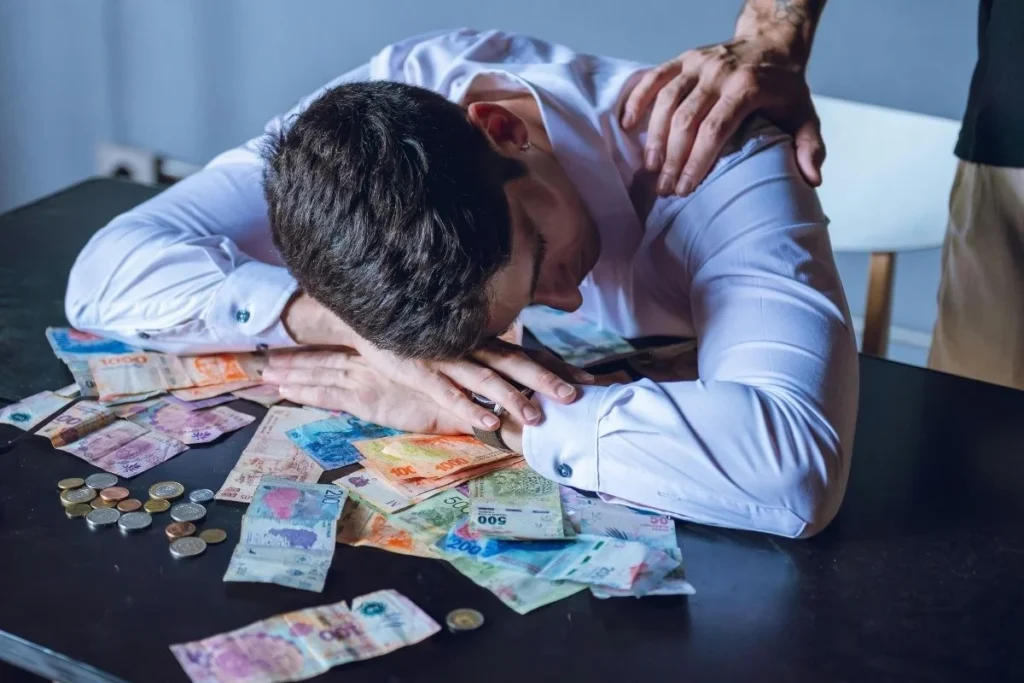
Debt does not show up one day out of thin air. It builds. Slowly, quietly, one small bad move at a time. And the hard part is that most of those moves feel completely normal when you make them. They feel like just how life works. That is what makes debt so tricky to see coming.
Most people who end up deep in money trouble were not reckless. They were just doing what everyone around them was doing. Buying what they could not yet pay for. Ignoring the numbers. Telling themselves it would sort itself out. And by the time the weight of it became real, it felt too late to turn back.
This is not a piece about fear. It is about patterns. The kind of patterns that most financial guides skip over because they are too ordinary to seem dangerous. What follows are seven things that quietly pull people into debt, often without them even noticing. Recognizing them is the first real step.
#1. Spending Without Knowing Where the Money Goes
Most people have a rough sense of what they earn. Far fewer know what they actually spend. And the gap between those two things is where debt is born.
It is not the big purchases that drain most people. It is the small ones. The daily coffee. The app that auto-renews. The takeout three times a week because cooking felt like too much. None of those things feel significant in the moment. But when you sit down at the end of the month and try to trace where the money went, the picture is often shocking.
There is a common belief that budgeting is for people who are struggling. That if you earn a decent wage, you do not need to track every little thing. That belief is one of the most expensive ideas a person can hold. Because money that is not watched tends to leave faster than money that is. Not because of any magic. Just because awareness changes behavior. When you know you have spent half your food budget by the 12th of the month, you make different choices. When you have no idea, you just keep spending.
Financial teachers often point to something called the “spending gap,” which is the distance between what a person thinks they spend and what they actually spend. For most households, that gap is not small. Research from various consumer behavior studies suggests people routinely underestimate their monthly spending by 20 to 40 percent. That is not rounding errors. That is an entire category of expenses that simply goes unseen.
Tracking spending does not mean obsessing over every cent. It means having a clear enough picture that surprises are rare. A simple habit of reviewing purchases once a week is enough to shift the dynamic. Not because it makes you richer. Because it makes you honest.
The people who avoid debt most naturally are not always the ones with the highest income. They are the ones who know, more or less, where their money is at any given time. That awareness alone changes everything.
#2. Living a Life Built on “I’ll Pay for It Later”
There is a way of thinking that treats the future as a place where everything will be easier. Where there will be more money, more time, more ability to handle the things being put off today. That mindset, comfortable as it feels, is one of the most reliable paths into financial difficulty.
The “pay later” approach shows up in many forms. It is the furniture bought before the savings were there. The vacation taken on the assumption that next month’s check would cover it. The phone upgrade made because the old one still worked but not as fast as the new one. Each of these choices, on its own, seems manageable. Together, they create a pattern of living slightly ahead of what is actually available.
What makes this dangerous is not the individual purchase. It is the habit. When “pay for it later” becomes the default response to wanting something now, debt stops feeling like a burden and starts feeling like a tool. A normal tool. One everyone uses. And that normalization is where the real trap is set.
Think about how most consumer culture is designed. The message, almost everywhere, is that you do not need to wait. That having things now is the point. That delayed satisfaction is old-fashioned, even unnecessary. This messaging is not accidental. It is designed to feel like freedom while quietly building dependence.
The people who stay debt-free tend to have a different relationship with time. They are comfortable waiting. Not because they are more patient by nature, but because they have seen what “later” actually costs. They understand that buying something you cannot yet afford does not move the purchase into the future. It moves it into debt. And debt has a way of making everything more expensive in the end.
Wanting things is human and completely fine. The question is whether the timing of getting them is being chosen, or whether impulse is doing the choosing. That distinction is quieter than it sounds, but it matters enormously.
#3. Keeping No Money Set Aside for Emergencies
One of the most common reasons people fall into debt is not poor spending habits or lack of planning for regular expenses. It is the absence of any buffer for things that were never planned at all. A car that needs repair. A medical visit. A job that ends without warning. A home appliance that stops working on the worst possible week.
Life is not consistent. Everyone knows that on some level. But financial planning often ignores it. People budget for rent, for food, for transport, and sometimes for fun. But very few build in a real cushion for the things they cannot predict. And when those things happen, which they always do eventually, the only place to turn is often debt.
The concept of an emergency fund is not new. Financial advisors have talked about it for decades. Most guidance suggests keeping three to six months of essential expenses accessible and untouched. But in practice, that number feels abstract to many people, especially those who are already stretching to cover month-to-month costs.
What often gets missed is that the emergency fund does not need to be built all at once. It is not a destination. It is a practice. Setting aside even a small fixed amount each month, before anything else is spent, creates a slow but real cushion over time. The amount matters less in the early stages than the consistency. Because what is being built is not just a balance. It is a habit of protection.
There is also something psychologically important about having an emergency fund that rarely gets discussed: it reduces the urgency of every crisis. When a car breaks down and there is money set aside for exactly this kind of moment, the situation is still inconvenient. But it does not become a spiral. It gets handled and life moves on. Without that buffer, the same event can trigger weeks of stress, difficult decisions, and financial damage that takes months to recover from.
The absence of savings for unexpected events is one of the most overlooked risk factors in personal finance. Not because people do not understand its value, but because they keep treating it as something to start later. Later, when income is better. Later, when the bills settle down. Later, when life gets a little more stable. That later almost never comes on its own. It has to be made.
#4. Trying to Match the Life You See Around You
There is quiet pressure in how people around us live. The neighbor with the new car. The colleague who just posted photos from another trip abroad. The family member who always seems to have the newest version of everything. That pressure is rarely spoken out loud. But it shapes decisions in ways that most people do not fully realize.
This pattern has a name in behavioral economics: social comparison. The idea, studied widely by psychologists including Leon Festinger who first outlined it in the 1950s, is that people naturally measure their own lives against those around them. It is not vanity. It is how human minds are wired. The problem is that this instinct was designed for small, visible communities where comparison was realistic. In a world of social media and global marketing, it has been stretched far beyond what it was built for.
When someone buys a car because everyone in their circle seems to drive a certain kind, or upgrades a phone before the old one has stopped working because the new model looked too good to resist, they are not really making a financial decision. They are making a social one. And social decisions are notoriously immune to budgeting.
The insidious part of this is how normal it feels. It does not feel like keeping up with anyone. It feels like just living. Like participating in the world. Like being a reasonable adult who wants nice things. The gap between what a person can afford and what they feel they need to have in order to feel okay about themselves is where lifestyle inflation quietly begins.
Lifestyle inflation is the gradual increase in spending as income grows, often at a rate that equals or exceeds the income growth itself. It is why many people who earn twice what they did five years ago feel no more financially secure. Because every raise, every bonus, every small improvement in income got absorbed by a corresponding rise in the cost of daily life. Not through necessity. Through the invisible pull of keeping pace.
People who stay out of debt for the long run tend to have made some kind of peace with this. Not by becoming monks who want nothing. But by getting clear on what they actually value versus what they are consuming just to feel adequate. That clarity is harder to build than it sounds. But it is also one of the most freeing things a person can develop.
#5. Making Big Money Choices When Emotions Are Running the Show
Money and emotion are far more connected than financial guides usually acknowledge. The idea that good financial decisions are purely rational, made with a clear head and a spreadsheet, is mostly fiction. In reality, people spend, save, and decide about money in states of stress, joy, loneliness, boredom, excitement, and grief. And those states change everything.
Research in behavioral economics, particularly work done by Daniel Kahneman and Amos Tversky, showed that humans are not the rational money managers that classical economics assumed. People avoid losses more strongly than they pursue gains. They make worse decisions under pressure. They value things more when they already own them. They overestimate how good a purchase will make them feel, and underestimate how quickly that feeling fades.
Retail therapy is a phrase that exists because the experience is real. When life feels hard, spending sometimes feels like relief. Not because it solves anything, but because buying something creates a brief sensation of control. Of agency. In a world that often feels uncertain, clicking “purchase” or walking out of a shop with something new can feel like a small win. The problem is that this win is temporary and often comes with a cost that lasts much longer than the feeling did.
The same pattern plays out in reverse. During moments of joy, like a bonus, a celebration, or a windfall of any kind, the feeling of abundance can make it easy to spend as though the feeling will continue. Money feels looser when it arrives unexpectedly. The brain does not always treat it with the same care as money that was earned in the usual way.
Being aware of this does not mean freezing every financial decision until all emotion is gone. That is neither realistic nor particularly useful. What it does mean is building in a pause. A simple rule that many who manage money well use without calling it anything fancy: when a purchase feels urgent and emotionally charged, wait. Sleep on it. Give the feeling a chance to settle. If after that the purchase still makes sense, it probably does. If the urgency has faded, that tells its own story.
This one habit alone, waiting before large or emotionally charged spending decisions, has prevented more debt than most formal financial strategies. It costs nothing. It just requires a bit of friction between the feeling and the action.
#6. Ignoring Small Leaks That Add Up to a Flood
People often imagine financial ruin as a dramatic event. A single catastrophic decision. A moment where everything changes. Sometimes that is true. But far more often, debt builds through the accumulation of small, invisible leaks that no one ever stopped to fix.
A subscription that was signed up for two years ago and forgotten. A membership that gets renewed automatically. A habit of eating out that started as an occasional treat and became the default. A small finance charge on a bill that gets paid late each month because the date always seems to sneak up. None of these feel significant. All of them, together, can represent hundreds of dollars a month that quietly disappear.
Morgan Housel, who writes about money and human behavior with unusual honesty, has noted that a person’s financial life is not determined by any single big decision but by the accumulated weight of many small ones. The choices that happen without much thought. The defaults that were set up once and never revisited. The recurring costs that exist below the threshold of active awareness.
This is the kind of financial damage that tracking solves, but that most people are reluctant to look at because it requires honesty about habits that have become comfortable. It is easier to leave the subscription running than to feel the small embarrassment of canceling something that was never really being used. It is easier to keep the habit than to see the math of what it actually costs over time.
The idea of “latte factor” made popular by David Bach, while sometimes oversimplified, points at something real. Small daily costs, when repeated, become large annual ones. The math is not the interesting part. The interesting part is how easily those costs go unexamined because each individual instance feels trivial.
Doing a regular review of recurring expenses, say once every few months, is not exciting. But it is effective. It is a chance to see the landscape of what money is going toward without the pressure of the original decision. And often, in that calm light, it becomes clear that several of those costs are not actually tied to anything valued. They are just inertia.
#7. Having No Plan and Hoping Things Will Work Out
This one is perhaps the quietest of all the traps. Because hoping is natural. And it often works in other areas of life. But hope, as a financial strategy, is not a strategy. It is a wish. And wishes do not stop debt from forming.
There is a particular kind of optimism that makes people feel that things will simply improve. That next month will be better. That the raise is coming. That something will shift. That the current pressure is temporary and does not require any change in behavior. This optimism is not irrational exactly. It is just incomplete. Because without a direction, even a genuine improvement in circumstances tends to get absorbed without creating real stability.
A financial plan does not have to be elaborate. Many of the people who manage money most effectively use remarkably simple systems. A rough idea of what comes in each month. A clear view of what must go out. A target for what gets set aside before anything else is spent. And some sense of what they are building toward. That is really the core of it. The details can get more sophisticated over time, but the foundation is simple.
What a plan actually does is create intentionality. Instead of money flowing in one direction by default, toward comfort, convenience, and consumption, it starts flowing in multiple directions, including toward safety, toward goals, and toward future freedom. The difference in outcome over even a few years can be dramatic.
One framework that gets recommended often in personal finance is the “pay yourself first” principle. The idea is that savings should come out of income before spending decisions are made, not after. Because if savings are treated as what is left over after everything else, there is rarely anything left. Human spending tends to expand to fill available income. The only reliable way to interrupt that tendency is to take the savings out of the equation before the spending begins.
Without a plan, money has no direction. And money without direction tends to flow toward whatever is easiest and most immediate. Which is usually spending. Which is usually, over time, debt. The absence of a plan is not neutral. It is a default setting that almost always points in the same direction.
Key Takeaways
- Debt rarely starts with one big mistake. It builds through small repeated choices that each feel harmless on their own.
- Knowing where money goes each month is not obsessive. It is the most basic form of financial self-respect.
- An emergency fund is not a luxury for people with extra income. It is a basic shield that everyone needs before anything else is built.
- Social comparison shapes financial behavior more than most people are willing to admit. What the people around you spend is not a guide for what you can or should spend.
- Emotional spending is real, common, and worth understanding. A pause between feeling and purchasing is worth more than most formal advice.
- Hoping things improve is not a plan. Even a rough, simple one changes outcomes in ways that are hard to overstate.
Before the Page Ends
Debt is not a character flaw. It is usually the outcome of patterns that were never examined closely enough. And most of those patterns feel, from the inside, completely reasonable. That is what makes them worth understanding rather than judging.
The things listed here are not rare mistakes that only careless people make. They are common. Almost universal in some form. The difference between the people who avoid debt and the people who struggle with it is rarely intelligence or discipline in some dramatic sense. It is awareness. Small, patient, honest awareness of where money is going and why.
As the writer James Baldwin once observed in a different context, not everything that is faced can be changed, but nothing can be changed until it is faced. That is as true of money as anything else.
The goal is not perfection. It is clarity. And clarity, even when it is uncomfortable, is always worth more than the comfort of not looking.