7 Things Millionaires Stop Buying After They Get Rich

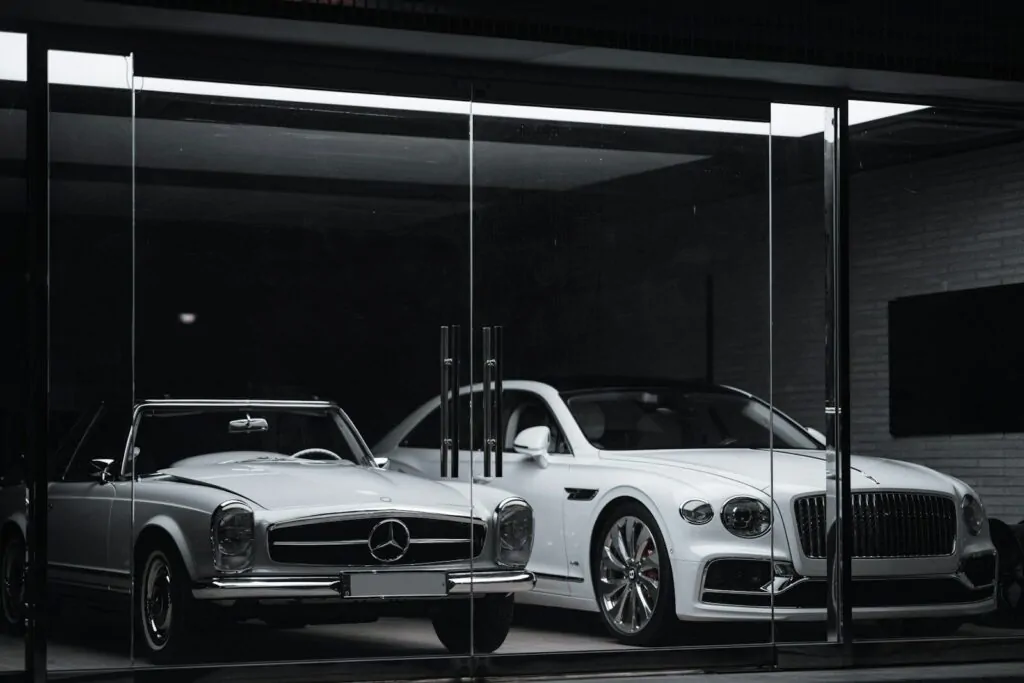
Most think rich people shop more once the money hits.
They picture bigger carts, fancier stores, and tabs that never end. But that picture is not quite right.
The truth is, wealthy people change what they stop buying, not just what they start buying. And a lot of what they drop from the cart, regular people keep tossing in every single week.
This is not about being cheap. Wealthy people still enjoy life. They eat good food. They travel. They spend on things that matter to them.
But there are 7 specific things most millionaires quietly walk away from after they build real wealth. Not because they have to. Because they finally see what those things were really costing them.
“You can either look rich, or you can be rich. But you probably won’t live long enough to accomplish both.” Stacy Johnson, personal finance expert and author
That one line says a lot. Let us unpack it.
Why Rich People Spend Less on Things That Look Impressive
There is a pattern that shows up again and again in wealth research.
Tom Corley spent five years talking to 233 real millionaires. He asked them about habits, money, and what they gave up on the way up.
What he found was not what most people expected. Most millionaires live below their means. They drive old cars. They skip the logos. They do not rush to upgrade every device.
This is not an accident. It is a quiet decision they made at some point.
Wealth is built on two sides: how much comes in, and how much stays. A person can earn a lot and still end up with nothing if the spending side has too many holes. Millionaires figured this out and plugged the holes.
Here is a quick look at the mindset shift:
| Average Earner | Millionaire Mindset |
|---|---|
| Buys new car every 3 years | Drives used car for 8 to 10 years |
| Upgrades phone every year | Uses phone until it stops working |
| Buys cheapest item to save now | Buys quality item that lasts longer |
| Pays for brand name status | Pays for function and durability |
| Chases lottery and quick wins | Puts money in steady, growing assets |
| Buys timeshares and vacation plans | Travels on their own terms |
| Pays extended warranty fees | Self-insures and saves the difference |
That table tells a story. Let us go through each one.
1. Brand New Cars Right Off the Lot
A new car loses about 20% of its value the moment it leaves the dealer.
That is not a small number. On a $40,000 vehicle, that is $8,000 gone in a single drive home. By the end of year one, some cars lose even more.
Financial advisor Ali Dhanji at Raymond James says something that surprises people when they hear it for the first time: many of his clients worth $5 to $10 million drive eight-year-old Toyotas. Not because they cannot afford anything else. Because they have done the math.
Wealthy people tend to view cars as tools, not trophies.
They ask: does this get me from one place to another safely and reliably? If yes, that is enough. The logo on the hood does not make the drive faster.
What millionaires do instead:
- Buy cars that are two to three years old and let someone else take the first big hit in value
- Hold on to their vehicles for years, sometimes a decade or more
- Spend the money saved on assets that grow in value, not shrink
- Choose reliability over how something looks from the outside
Pro Tip: A two-year-old reliable car with low mileage gives most of the benefit of a new car at 30 to 40% less cost. That difference, put into an index fund, can grow into something serious over ten years.
The shift is simple. Stop treating cars like status and start treating them like tools. The savings stack up fast.
2. Extended Warranties That Sound Smart but Are Not
Walk into any electronics store. Buy a laptop or a washing machine. The person at the register will push the protection plan hard.
It feels like the smart thing to buy. Something breaks, you are covered. Sounds logical.
But here is the real picture. Retailers make enormous margins on extended warranties. In 2024, consumers in the US spent an estimated $48.4 billion on protection plans for electronics and home goods. A large chunk of that money was pure profit for the seller.
The math rarely works out for the buyer.
Most items either fail quickly under the basic manufacturer warranty or last well past the extended plan period. The window where the extended plan actually helps is surprisingly small.
Warning Box: Extended warranties on small electronics are almost always a bad deal. The item usually either breaks early (covered by manufacturer) or lasts fine for years. The extended plan often sits unused while the seller keeps the full fee.
Quick checklist before buying any extended warranty:
- Does the item already have a manufacturer warranty?
- Is the item likely to break within the extended plan window?
- Could the money saved go into a small “self-repair” fund instead?
- Is the warranty fee more than 20% of the item cost?
If the answer to that last question is yes, skip it almost every time.
Wealthy people often set aside a small emergency fund just for home and tech repairs. They self-insure. And over years, they come out ahead every time.
3. Brand Name Clothes With Giant Logos
Here is something a bit uncomfortable to hear.
A $600 shirt and a $60 shirt keep you equally warm. They cover the same amount of skin. They both wash the same way. The only real difference is the label and what someone else thinks when they see it.
That is what many people are actually paying for: other people’s reactions.
Wealthy people, especially those who built their money from scratch, tend to quietly walk away from logo-driven fashion. Not all of them, but most of the ones who actually stay wealthy.
The research on this is interesting. Studies on high-net-worth individuals find that many prefer clothes that look clean, well-fitted, and quality-made but carry no visible branding at all. It is sometimes called “stealth wealth” by finance writers.
The difference between looking rich and being rich is mostly in this one area.
What to look for in clothes instead of logos:
- Good fabric that holds its shape after many washes
- Fit that works for the body, not just the trend
- Neutral colors that last across seasons
- Durability that means buying the same item less often
Important Note: Fast fashion brands replace quality with volume. A $15 shirt bought six times costs $90. A $70 shirt bought once and worn for three years costs less and looks better doing it.
The logic is simple. Wealthy people are not cheap with clothes. They are smart. They pay for quality, not the right to show off a brand name to strangers.
4. Lottery Tickets and Get-Rich-Quick Traps
This one is a little blunt.
The lottery is a tax on hope. The odds of winning a major jackpot are so small they are hard to even picture. In most big lotteries, the chance of winning is around 1 in 292 million.
That number is not scary. It is just a fact.
Tom Corley found in his research that wealthy millionaires consistently refused to buy lottery tickets, even small ones. They also steered people close to them away from them. Not from a place of judgment. From simple math.
Warning Box: $10 spent weekly on lottery tickets adds up to $520 a year. Over 20 years, that is $10,400 gone with near-zero chance of return. The same $10 per week invested in a basic S&P 500 index fund over 20 years, at average historical returns, becomes approximately $27,000 to $30,000.
The same thinking applies to get-rich-quick schemes, meme stocks bought on panic, unproven crypto coins, and high-risk day trading done without real skill.
Wealthy people do take risks. But they are calculated ones, with research behind them and time on their side.
Here is what real wealth-building looks like compared to lottery-style thinking:
| Lottery Mindset | Wealth-Building Mindset |
|---|---|
| Big win, fast, all or nothing | Slow and steady, compounding over time |
| Luck-based outcome | Skill and patience-based outcome |
| Emotion-driven decision | Research-driven decision |
| Rarely works, high cost | Usually works with enough time |
The pattern is clear. Millionaires do not wait for luck. They put money in places where time does the heavy lifting.
5. Cheap Low-Quality Goods That Break Too Fast
There is a concept called the “cost per use” that wealthy people seem to understand naturally.
Two options sit in front of someone. A $30 pan or a $120 pan. The cheap pan seems like the smart buy. But if the $30 pan warps after six months and needs replacing, and the $120 pan lasts twelve years, which one actually cost more?
Over twelve years, four cheap pans cost $120. Same price. But the cheap pans caused frustration, wasted time on replacements, and probably performed worse the whole time.
Wealthy people did not get to where they are by buying cheap things constantly. Many of them learned this lesson the hard way before they had money.
Categories where quality over cheap almost always wins:
- Shoes and footwear worn daily
- Kitchen tools used often
- Mattresses and sleep items
- Basic electronics like laptops and phones
- Outerwear worn in hard weather
Pro Tip: Before buying anything that will be used daily, divide the cost by how many times it will likely be used. A $200 backpack used 400 times costs $0.50 per use. A $40 backpack that falls apart after 80 uses costs $0.50 per use too. But the $200 one lasts and serves better the whole time.
Research from Ramsey Solutions, which studied over 10,000 millionaires, found that most wealthy people focus heavily on living below their means. But they are not cutting corners on items that matter daily.
The frugality of the wealthy is not about buying the cheapest. It is about not overpaying for things that do not add real value, while being willing to pay well for things that last.
6. The Newest Phone Every Single Year
Every September, a new phone comes out.
The ads are beautiful. The features sound incredible. And millions of people stand in lines or click buy before fully reading what actually changed.
In most cases, the change from one year to the next is about 5 to 10 percent in actual performance. The camera might capture slightly better photos in very dark rooms. The chip runs a bit faster. But for most daily tasks, last year’s phone does the same job just as well.
Wealthy people tend to treat phones the same way they treat cars: tools, not trophies.
The real cost of annual phone upgrades:
- A flagship phone costs between $900 and $1,300 per year now
- Trade-in values drop fast, often giving back only 40 to 60% of cost
- Carriers spread payments across plans, making the cost feel invisible
- Over five years, an annual upgrade habit can cost $4,000 to $6,000 more than keeping a phone for three or four years
Important Note: Keeping a phone for three years instead of one, while it still works well and gets security updates, is one of the simplest ways to redirect thousands of dollars toward something that actually grows in value.
Most millionaires surveyed in various studies use their phones until performance genuinely drops or security updates stop. That is it. Not until the new model drops. Not until the new color comes out.
There is something freeing about realizing the phone in a pocket does not need to be the newest one on the market. It just needs to work.
7. Timeshares and Overpriced Vacation Plans
Few things drain wealth as quietly and stubbornly as a timeshare.
The pitch always sounds good at the resort. A weekend of sun, free meals, a friendly presenter, and then a very persuasive offer for “a piece of paradise” at a locked-in price.
But the reality of timeshares is a well-documented financial trap.
Upfront costs often run from $10,000 to $50,000. Annual maintenance fees start around $1,000 and rise every year. And the exit, when most people eventually want out, is nearly impossible.
The phrase used by many timeshare owners when they try to sell is: “I cannot even give it away.”
What makes timeshares a poor financial decision:
- They carry massive upfront costs with no equity growth
- Annual maintenance fees increase regardless of whether the owner uses them
- Resale value drops to nearly zero almost immediately
- Exit contracts are complex and often require legal help to escape
- The same travel experience can almost always be replicated more cheaply by booking directly
The timeshare industry generates over $10 billion per year in sales. That money comes largely from people who felt pressured during high-energy sales presentations at vacation resorts. Once signed, most contracts are extremely difficult to leave. Never sign a timeshare agreement at a resort presentation without taking it home and reviewing it separately with a neutral financial advisor.
Wealthy people who love travel do so on their own schedule, their own terms, and almost always at lower cost by booking directly. They value flexibility too much to lock themselves into a rigid system that benefits the seller far more than the buyer.
The Quiet Pattern Behind All 7 of These
Look at all seven things on this list.
New cars. Designer logos. Extended warranties. Lottery tickets. Cheap disposable goods. Annual phone upgrades. Timeshares.
What do they have in common?
Each one of them costs more than it appears to at first. Each one sells a feeling more than a function. Each one tends to benefit the seller more than the buyer.
Wealthy people are not smarter than everyone else. They are not born with some special code. But at some point, most of them started asking a different question before spending.
Not “can this be afforded?” but “does this actually serve a real purpose?”
That shift in question changes everything over time.
Key Takeaways
- Millionaires stop buying things that depreciate fast and start valuing things that last
- Status purchases (new cars, logos, flashy goods) cost more than the price tag suggests
- Slow and steady investing beats lottery-style thinking every single time
- Quality over cheap is not the same as expensive over affordable
- The best financial tool many people have is learning to wait and think before a purchase
- Wealth stays with people who protect it, not just those who earn it
What This Actually Looks Like in Everyday Life
None of this requires being wealthy to apply.
A person earning $40,000 a year can drive a reliable used car. They can keep their phone for three years. They can buy one good jacket instead of three bad ones. They can skip the lottery and put the same money into a basic fund.
The behaviors that wealthy people use to stay wealthy are available to most people right now.
The gap between the rich and everyone else is not always income. A lot of it is just what gets bought on a Tuesday afternoon without much thought.
Morgan Housel, author of “The Psychology of Money,” writes that wealth is what people do not see. The car not bought. The watch not purchased. The vacation plan not signed.
Wealth hides in what people choose to keep, not just what they choose to spend.
That idea is simple enough for a child to understand. But it takes most people decades to truly feel the weight of it.