7 Simple Ways to Read the Stock Market Like a Book, the Warren Buffett Way

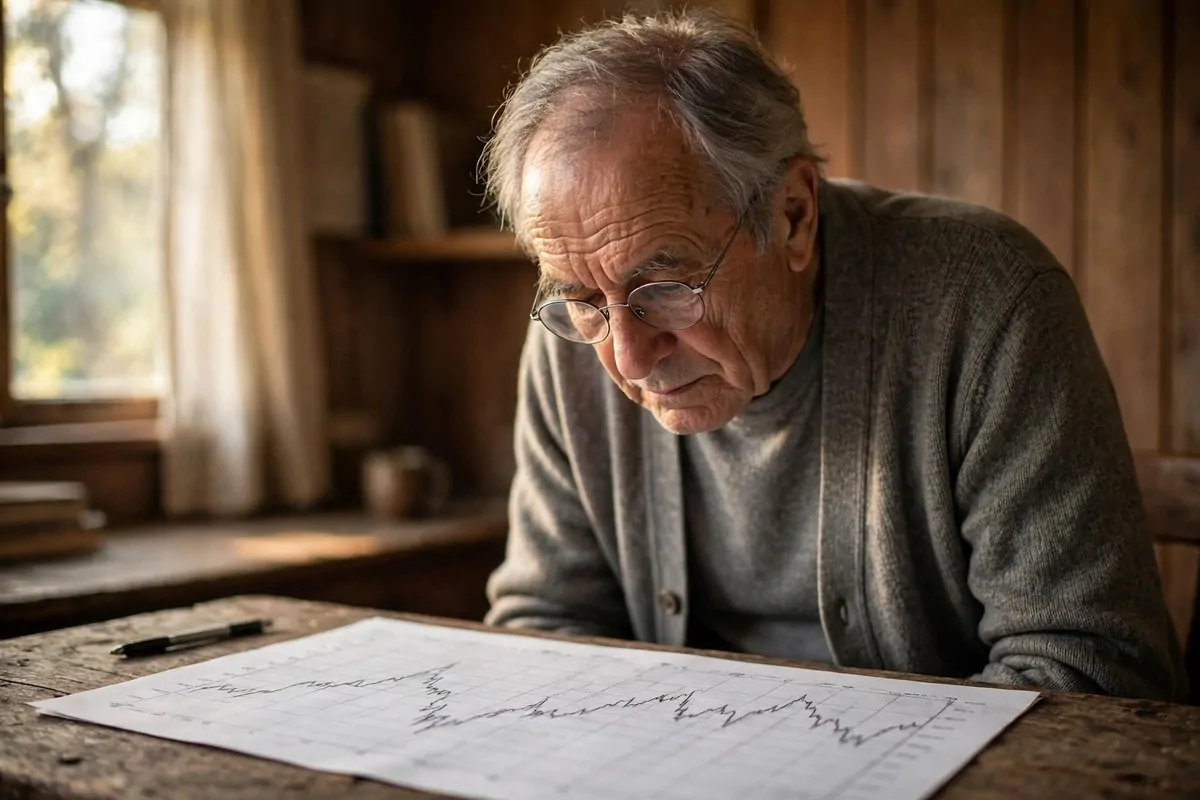
Well, the stock market talks all day long. It shouts in the morning, it whispers at lunch, and it panics before the close. Most people hear the noise, but they never learn the language.
Warren Buffett learned that language long ago. He does not stare at flashing screens all day. He reads the mood hiding behind the numbers, and that is why he stays calm when others shake.
I once knew a man who checked stock prices ten times a day. He bought when prices climbed and sold when they dropped. Year after year his money went nowhere, because he read the numbers but never read the story.
Reading the market like a book means learning to see fear and greed in action. It means knowing the gap between a price and a value. It means hearing what the crowd feels, then thinking for yourself.
The good news is that this is a skill, not a gift. You can learn it the way you learn any new language, one small lesson at a time. These seven tips will walk you through it, step by step.
The short answer: The stock market moves mostly on human mood. Fear pushes prices down, greed pushes them up, and the true worth of a business moves far slower than both. Spot the mood, compare price to value, and keep your own feelings quiet, and you will read the market better than most.
Key Takeaways
- Prices move on fear and greed more than on facts.
- Price is what you pay today; value is what a business is truly worth.
- High volume shows real interest; low volume shows weak hands.
- Loud headlines move crowds, but quiet money moves first.
- Market moods run in a loop: fear, calm, greed, then fear again.
- A falling price is not proof of a falling business.
- Your own mood is the hardest chart to read, so read it first.
1. Watch the mood, not just the price
A stock price is only a number on a screen. The mood behind that number is the real story. When you learn to read the mood, the number starts to make sense.
Fear makes people sell in a rush. They do not stop to study the business. They only want out, and that rush to the exit drags prices down hard.
Greed works the same way in reverse. Prices climb, people feel rich, and more buyers jump in. The good mood feeds itself until it breaks, and it always breaks.
Picture a fruit market on a hot day. When a rumor says the mangoes are bad, everyone runs and prices crash. When the rumor fades, buyers return and prices climb. The mangoes never changed, only the mood did.
Stocks behave the same way every single day. Strong firms fall on weak moods, and weak firms rise on strong moods. The mood shouts, while the facts whisper.
So before you study any chart, ask one plain question. Are people acting from fear right now, or from greed? That single question tells you more than most charts ever will.
Build this habit in a small way. Each morning, read one money headline and name the mood inside it. Within a few weeks you will feel the market pulse without even trying.
2. Learn the gap between price and value
Price is what the crowd will pay today. Value is what the business is worth over the long run. These two numbers are rarely the same, and the gap between them is where smart readers look.
Warren Buffett built his wealth inside this gap. He hunts for strong firms selling at low prices. Then he waits patiently while the mood catches up with the facts.
Think of a house on your street. One nervous seller lists it far too low. The house did not change, only the price did. A calm buyer spots the gap and acts with a clear head.
Stocks work just like that house. A fine firm can trade cheap for months when fear rules. A weak firm can trade high for months when greed rules.
Here is a plain test you can run yourself. Ask what the firm earns in a normal year, then set that next to the price. If the price looks small beside years of steady profit, the gap may favor you.
Do not rush this part of the reading. Value moves slowly, like a large ship. Price moves fast, like a small boat in a storm. The patient reader wins by waiting for the two to meet.
Pick one firm you know well today. Write down its price and what you think it earns. Check back in three months and watch the gap move. This live practice teaches faster than any book.
3. Let volume show you where real interest is
Volume means how many shares changed hands in one day. High volume means many people acted. Low volume means few people cared enough to move.
A price rise on high volume sends a strong signal. It means real money flowed in, not just a few hopeful buyers. The move carries weight behind it.
A price rise on low volume sends a weak signal. A small group nudged the price up, but the crowd did not follow. Moves like that often fade within days.
The same logic holds on the way down. A sharp fall on huge volume means true panic, and panic often pushes too far. A slow drift down on thin volume means boredom, not fear.
This lesson cost one trader dearly some years back. He bought a stock that jumped twenty percent in a single week. The volume was tiny, yet he brushed that fact aside. The price slid back within a month, and he sold at a loss.
Smart readers check volume before they trust any move. It takes about ten seconds. Most free charts show it as bars under the price, tall bars for busy days and short bars for quiet ones.
Make this your firm rule from now on. Never trust a price move until volume backs it up. Volume is the market raising its voice, and a loud true voice beats a quiet rumor.
4. Tune out loud headlines and watch quiet money
Headlines are built to grab you. They use bold words and strong feelings to win your click. By the time you read them, the patient money has already made its move.
Quiet money means the big, calm buyers. They buy slowly over many weeks. They never announce plans on the news, but you can spot them in steady buying that lifts prices without noise.
Think of a river after heavy rain. The surface looks wild and fast, yet the deep water moves slow and strong. Headlines are the surface, and quiet money is the deep water.
In 2008 Warren Buffett made a famous million dollar bet. He wagered that a simple low cost market fund would beat a basket of costly hedge funds over ten years. He won with ease, as the plain fund gained about 126 percent while the hedge funds gained only about 36 percent.
The lesson is plain for any reader. Noise costs money, and calm keeps it. Each headline that makes your heart race is a headline trying to reach into your wallet.
So build yourself a simple filter. Read the news once a day instead of once an hour. Watch what the quiet buyers are doing rather than what the loud writers are saying.
Test this for one full week. Check prices only once each evening and skip the midday noise. Notice how much calmer you feel, and how little of the missed noise ever mattered.
5. Learn the market’s mood cycles
The market runs in a loop that never quite ends. Fear melts into calm, calm warms into greed, and greed cools back into fear. This loop has repeated for more than a hundred years.
In the fear stage, bad news feels endless. Prices sink, sellers rush out, and hope is hard to find. Strong firms go on sale here, but very few readers can see it.
In the calm stage, prices stop falling and the news turns dull. Most people lose interest and walk away. That quiet moment is when the seeds of the next rise get planted.
In the greed stage, prices climb fast and everyone talks stocks at dinner. Late buyers rush in, and all warnings get laughed off. Danger stands highest right here.
No one times these turns with perfection. Even the sharpest minds mistime them. But you can learn to name the stage you are in, and naming it keeps you out of the rush.
| What you see | What it may mean |
|---|---|
| Prices fall fast and the news is full of fear | Panic selling, the fear stage is here |
| Prices rise daily and everyone brags about wins | Greed is spreading, be careful now |
| Quiet days, low volume, dull headlines | The calm stage, most people look away |
| Bad news comes but prices stop falling | Selling may be ending, fear is tired |
Glance at this table whenever the market feels wild. Match what you see on the left with what it may mean on the right. It works like a small phrase book for market language.
Keep a tiny mood diary of your own. Once a week, write one line about how the market feels to you. After a few months you will spot the loop with your own eyes, and it will rarely catch you by surprise.
6. Know that a falling price is not a falling business
Prices and firms move at very different speeds. A stock can drop twenty percent in a single week. A real firm cannot fall apart that fast.
Most sharp falls come from mood, not from facts. One scary headline, one bad day for the whole market, or one large seller can drag a good stock down. The firm keeps earning while the price shakes.
When you see a steep drop, ask a simple question. Did the firm’s sales fall, or did only the price fall? When sales and profits hold steady, you are watching mood, not ruin.
One plain rule helps in such moments. Wait three full days before judging any sharp fall. Most of the time the panic fades, and the true facts stand clear again.
Still, a fall can be real at times. A firm can lose its edge, and its profits can shrink for good. That is exactly why you study the business itself, not just its price.
Think of a strong tree in a storm. The wind shakes the branches hard, yet the roots hold firm. A sound firm is the tree, and a market panic is only the wind.
Train your eyes on the roots from now on. Read yearly sales instead of daily prices. The reader who watches the firm will stand calm while the crowd shakes.
7. Read your own mood before you read the market
This last tip is the hardest of all seven. Your own feelings can mislead you louder than any headline. Excitement, fear, and boredom each push you to act at the wrong time.
Excitement urges you to buy too much. Fear urges you to sell too soon. Boredom urges you to trade just to feel alive. Each one takes money in its own quiet way.
Warren Buffett once said that temperament beats brains in this game. In plain words, a calm mind outperforms a clever mind in the market. He also taught the world to stay careful when others grow greedy, and to stay brave when others grow scared.
Your body often spots your mood before your mind does. A racing heart before you buy means greed may be driving. A tight stomach before you sell means fear may be driving.
Watch for these five warning signs in yourself. They creep in quietly, and naming them takes their power away.
- You check prices many times each day.
- You buy only because a friend just bought.
- You sell on the same day bad news breaks.
- You feel rich when prices rise.
- You feel poor when prices fall.
Set one calm rule and guard it well. As an example, never buy or sell on the same day a strong urge hits you. Sleep on the urge first, since most urges fade by morning while good ideas stay.
Reading the market truly starts with reading yourself. The investor who masters his own mood has already beaten most of the crowd. That is the final page of this book, and it matters most of all.
Conclusion
You now hold the full set of reading skills. Mood, value, volume, noise, cycles, firm strength, and your own mind. Each skill is simple on its own, and together they change how you see the market.
Do not try to master all seven at once. Choose one tip and practice it for a full month. Watch how it shapes your choices, then add the next one.
Hold on to the core lesson from Warren Buffett. The market exists to serve you, not to lead you. Prices are offers from a moody crowd, and you are always free to say no.
Most people will keep chasing noise all their lives. They will buy high, sell low, and blame bad luck. You know better now, because reading beats luck every time.
Keep your notes close and your calm closer. The market will still surprise you now and then. But a true reader is never lost for long.
Begin tomorrow morning with a small step. Read one headline, name the mood inside it, and check the volume behind one price move. That daily habit will teach you more than any costly course. I still do this myself each morning.
The stock market talks all day long, and now you are learning its language. Keep reading, keep thinking, and let the mood of the crowd become your teacher instead of your master.