10 Things People Buy to Look Rich That Quietly Hurt Their Financial Freedom

Looking rich and being rich sound like the same thing, but they are not even cousins. One is a show you pay for every month. The other is quiet money working while you sleep.
I once knew a salesman named Adnan who looked like a millionaire. He wore a designer watch, drove a new car, and dressed sharper than his boss. Everyone at the office assumed he was the most successful man there. Then his landlord mentioned he was three months behind on rent.
Adnan earned a good salary, but every coin went to the show. The watch, the car, the suits, the dinners. He had nothing saved and nothing growing. He looked rich on weekdays and worried all weekend.
This pattern has a name among researchers. They call it status spending, which means buying things mainly to impress others. Studies on consumer behavior show it rarely brings lasting happiness. The thrill of a new purchase fades in weeks, but the cost stays for years.
The math is brutal. Every $1,000 spent on looking rich is $1,000 that cannot grow. At a steady 7 percent yearly growth, $1,000 becomes about $2,000 in ten years and nearly $4,000 in twenty. The show you buy today eats the freedom of your future self.
The short answer: ten common purchases, from designer bags to big weddings, buy a feeling of wealth while quietly draining real freedom. Each one below shows what it costs, what it steals from your future, and the smarter move. You can look successful without going broke for it.
Key Takeaways
- Looking rich and being rich are opposites: one spends, the other grows.
- Every status purchase has a hidden price: the future growth of that money.
- A $1,000 splurge today can cost nearly $4,000 of future freedom.
- Nobody remembers your watch, but your savings remember everything.
- The people you impress with spending will not pay your bills.
- True wealth is quiet: savings, skills, and income that nobody sees.
- Before any big purchase, ask what it costs your future, not just your wallet.
- You can enjoy nice things later, paid for with money your assets earned.
1. The Designer Bag That Costs More Than the Price Tag
A designer bag can cost $2,000 or more. It carries your phone and keys exactly like a $40 bag. The extra $1,960 buys one thing only. The logo other people see.
The feeling is real for about a month. Compliments come, photos get likes, you feel polished. Then it becomes just your bag. The thrill fades, but the $2,000 is gone for good.
Here is the freedom math. That $2,000, growing at 7 percent a year, becomes about $3,900 in ten years. In twenty years it passes $7,700. The bag cost you not $2,000, but the future those dollars could have built.
Nobody at work got a raise because of your bag. Clients do not sign bigger deals over a logo. The people who notice it most are the ones selling you the next one.
A smarter move is simple. Buy a well-made bag you love for under $100. Put the other $1,900 into savings or investments. In ten years you will have the bag worn out and nearly $4,000 working for you.
If you truly love fashion, set a small yearly fun budget. Enjoy it guilt-free inside that limit. The rule is not never spend. The rule is never let a logo spend your future.
Ask one question before you buy. Will anyone remember this bag in a year? Almost never. But your account balance remembers every dollar.
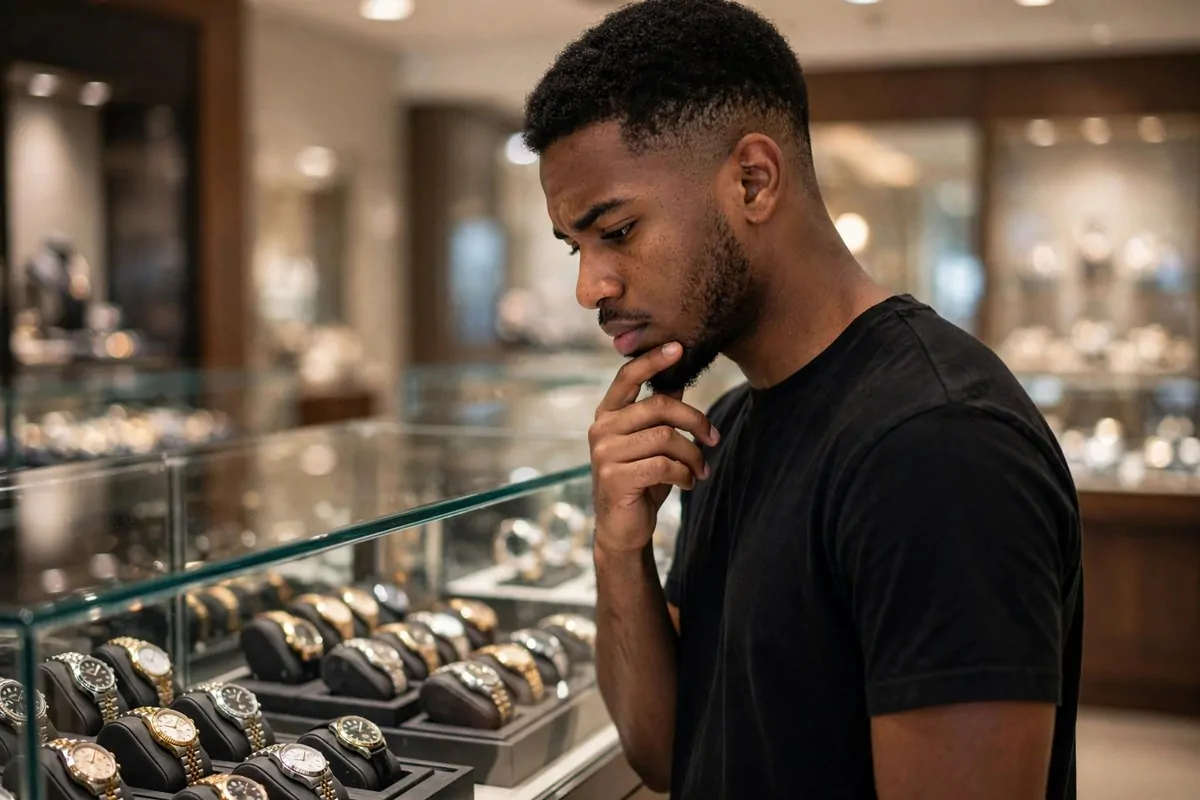
2. The Luxury Watch Bought to Impress the Room
A luxury watch is the classic look-rich purchase. Prices start around $3,000 and climb past $20,000. It tells the same time as the phone in your pocket. You are buying what it says about you.
In the meeting room it works for about ten seconds. Someone notices, someone nods. Then the meeting starts and nobody cares again. Ten seconds of status for thousands of dollars.
Run the numbers on a $5,000 watch. At 7 percent yearly growth, that money becomes about $9,800 in ten years. In twenty years it is over $19,000. You traded a future of nearly twenty thousand for ten seconds of nods.
Watches also cost money after you buy them. Servicing, insurance, the fear of scratches. Owners check their wrist the way parents check sleeping babies. That is not freedom, that is worry you paid for.
Here is the honest test. Cover the logo with your thumb and ask if you would still pay $5,000. If the answer is no, you were buying the logo and not the watch. Logos are the most expensive thing in the store.
A clean simple watch under $150 looks sharp on any wrist. Spend the rest on assets that grow. When your investments pay for the luxury watch one day, buy it then. It will feel completely different.
Real status in a room comes from what you say, not what you wear. People remember sharp thinking for years. They forget your watch before lunch.
3. The New Car That Wows the Neighbors
Nothing says look-rich like a brand new car in the driveway. The neighbors notice, friends ask for rides, you feel like you arrived. The feeling lasts about three months. The cost lasts for years.
I watched a cousin trade a fine old car for a shiny new one. His monthly transport cost tripled overnight. Fuel, upkeep, and the higher price of everything around a new car. He worked overtime just to feed the car.
New cars lose value fast. A $30,000 car can be worth $24,000 after one year. You paid $6,000 for the smell of new seats. A two-year-old car gives you the same ride for far less.
Do the freedom math on the difference. If the new car costs you $400 more per month than a good used one, that is $4,800 a year. Over ten years that is $48,000 gone, and growing at 7 percent it passes $68,000 of lost future.
Ask who you are buying it for. If the honest answer is the neighbors, keep your old car. Neighbors admire the car for a week. Then they go back to their own bills.
The wealthy-looking move is actually the opposite. Drive a clean, reliable, paid-for car. Put the savings into investments. Let your money look rich instead of your driveway.
Cars are tools that move you from place to place. Buy the tool, skip the trophy. Your future self will thank you at every traffic light.
4. The Big Wedding That Starts a Marriage in a Hole
A big wedding is the most expensive photo shoot of your life. Halls, food for hundreds, clothes, music, flowers. The bill often passes $20,000, and in some families it passes $50,000. All for one day.
The pressure is real and I will not pretend it is not. Families expect a show, relatives compare, and saying no feels impossible. But the show is bought with your future.
Two people starting life together need a cushion, not a party. Studies on marriage and money find that couples who start with savings argue less about money. A wedding that eats the savings plants the first big argument.
Compare the two paths side by side. The gap is where your future lives:
| Choice | Wedding cost | What the $20,000 gap becomes in 10 years |
|---|---|---|
| Big wedding for 300 guests | $25,000 | Nothing left growing |
| Small warm wedding for 50 | $5,000 | About $39,000 at 7% yearly growth |
Guests remember the food for a week. You remember the bill for years. Nobody at the wedding is thinking about your happiness as much as you are. Spend on the marriage, not the performance.
A small warm wedding can be more beautiful than a big cold one. Fifty people who love you beat five hundred who came for dinner. Put the savings toward your first home or your investments.
Start your marriage as a team with money in the bank. That calm first year is worth more than any hall decoration. The best wedding gift is the one you give yourselves: a strong start.
5. The Latest Phone, Upgraded Every Single Year
A new flagship phone every year is a quiet money leak. Each one costs $800 to $1,200. Your old phone still works fine. You are paying for the unboxing feeling.
Phone makers count on this habit, with small upgrades, big ads, and trade-in offers that hide the real price. The camera is just a little better. The screen is just a little brighter. Your life is not a little better.
The math adds up fast. Spending $1,000 every year instead of every three years wastes about $670 a year. Over ten years that is $6,700, and growing at 7 percent it passes $9,200 of lost future.
Nobody respects you more for the newest phone. In meetings people barely glance at it. The status lasts until the next model comes out, which is always about twelve months away.
Break the cycle with three simple steps. Small rules beat big willpower:
- Turn off the new-model alerts and ads on your phone.
- Set a rule: a new phone only when the old one truly fails.
- Move the money you would have spent into investments the same week.
Keep your phone for three or four years. A fresh case and a new battery make an old phone feel new for under $100. The phone companies will survive without your yearly gift.
Use your phone as a tool to earn, not as a jewel to show. The richest phone is the one that helped you build a skill or a business. Pixels fade, assets stay.
6. The Premium Wardrobe for Social Media Photos
Some people dress for their followers, not their life. New outfits for every photo, tags still on, worn once for the camera. The closet looks rich. The bank account tells another story.
Social media makes this trap ten times stronger. You see strangers in new clothes daily and feel behind. What you do not see is their savings, which are often as empty as the likes are many.
Add it up honestly. Spending $300 a month on clothes you barely wear is $3,600 a year. Over ten years that is $36,000, and growing at 7 percent it is nearly $50,000 of lost freedom.
Clothes have the fastest-fading status of all. Last season’s logo is this season’s old news. You are renting admiration by the month, and the rent keeps rising.
Build a small wardrobe of quality basics instead. Fifteen good pieces that mix and match beat fifty trendy ones. You will look sharper, spend less, and stop thinking about clothes entirely.
If you love fashion, make it a bounded hobby. A fixed monthly amount, spent joyfully, harms nothing. The trap is not the clothes. It is the endless chase for approval.
Dress neatly, keep it simple, and let your work do the talking. The most respected people in any room are rarely the flashiest. Confidence is the only outfit that never goes out of style.
7. The Fancy Address You Cannot Really Afford
Living in the fancy part of town feels like success. The address impresses, the building shines, the neighbors drive nice cars. The rent quietly eats your future.
Housing is your biggest bill, so overspending here hurts the most. Paying $2,000 instead of $1,300 for the same size flat costs $8,400 extra a year. That is a full investment account contribution, gone to an address.
Over ten years the gap is $84,000 in extra rent. Growing at 7 percent, it passes $116,000 of lost future wealth. You bought a zip code with a six-figure price.
The irony is painful. People stretch for the fancy area to look successful, then cannot save enough to become successful. The address becomes the reason they stay stuck.
A good area does not have to be the priciest one. Safe, clean, close to work, that is what matters. Put the savings into assets. In ten years you can buy in the fancy area with cash if you still want it.
No successful person ever asked for my address before respecting my work. They asked what you can do. Skills open doors that addresses only decorate.
Live below what you earn and let the gap make you rich. The fanciest address is the one you own outright. Everything else is just expensive scenery.
8. Fine Dining Out to Look Successful
Weekly dinners at expensive restaurants are a slow leak dressed as a lifestyle. Spending $150 a night, twice a week, feels normal after a while. The bill at month end tells the truth.
That is $1,200 a month on dining out, which is $14,400 a year. Over ten years that is $144,000, and growing at 7 percent it is nearly $199,000 of lost future. You ate a house.
The status is invisible anyway. Strangers at the next table do not know or care that you are there. You are paying full price for a feeling only you feel.
Food joy has a cheap version that is just as good. Cooking at home with people you love beats a lonely fancy table. A monthly special dinner feels like a treat. A weekly habit feels like a bill.
Business meals are different when they truly build business. But most expensive dinners build nothing. Be honest about which ones earn their cost.
Set a dining budget that fits your goals and enjoy it fully. Limits do not kill joy, they protect it. A $60 dinner you can afford tastes better than a $150 one you cannot.
Wealthy people often eat simply, and it is not an act. They know the math. Save the fine dining for real celebrations, and let your savings do the feasting.
9. Flashy Jewelry That Sits in a Drawer
Gold chains, diamond rings, heavy bracelets bought to be seen. Jewelry is sold as an investment, but most fashion pieces lose value the day you leave the shop. You are buying shine, not wealth.
A $4,000 bracelet might resell for $1,500 if you are lucky. The shop keeps the rest as its profit. That $2,500 gap is the price of looking rich for a while.
Worse, jewelry sits in a drawer most days. It does not work, grow, or earn. It waits for special occasions while your money could have been compounding.
The $4,000 growing at 7 percent becomes about $7,900 in ten years. The bracelet in the drawer becomes an old bracelet. One of these is an asset. The other is a memory.
If you love jewelry, buy one simple piece you wear daily. Cost per wear drops to almost nothing. Skip the collection bought for other people’s eyes.
Real collectors buy knowledge first and pieces second. Most buyers do the opposite. Do not be most buyers.
Shine that you paid for with grown money feels best. Let your investments buy the jewelry one day. Then it is a trophy of patience, not a monument to impulse.
10. The VIP Lifestyle: Clubs, Bottles, and Front-Row Seats
Bottle service, VIP tables, front-row seats, the nightlife show. A single big night out can cost $500 or more. Do it twice a month and you have a second rent payment made of fun.
That is $1,000 a month on the VIP life, which is $12,000 a year. Over ten years that is $120,000, and growing at 7 percent it passes $166,000 of lost future. The party ends, the bill compounds.
The status here is the fakest of all. The club treats you like royalty because you pay like royalty. Stop paying and the velvet rope forgets your name by next weekend.
Fun is not the enemy. Bought status disguised as fun is. A barbecue with friends, a hike, a game night, these cost little and the memories last longer. Joy does not need a VIP wristband.
Watch who profits from your nights out. The club, the brands, everyone but you. You are funding their wealth with your freedom.
Budget your fun like an adult and enjoy it like a kid. A fixed fun amount each month keeps joy guilt-free. The trap is not the party. It is the autopilot spending.
One day your assets can fund any lifestyle you want. Build first, celebrate later. The best VIP section is a life you own outright.
Before your next big purchase, ask yourself these five questions. Honest answers save fortunes:
- Will anyone remember this purchase in one year?
- What does this money become if it grows for ten years?
- Is this for me, or for people watching me?
- Does this move me closer to freedom or further from it?
- Can my investments pay for this one day instead of my salary today?
Now look at the true cost of the ten traps side by side. These numbers tell the real story:
| The purchase | Money spent | True cost after 10 years at 7% growth |
|---|---|---|
| Designer bag | $2,000 once | About $3,900 |
| Luxury watch | $5,000 once | About $9,800 |
| Newer car ($400/month extra) | $48,000 over 10 years | About $68,000 |
| Big wedding (the $20,000 gap) | $20,000 once | About $39,000 |
| Fine dining ($1,200/month) | $144,000 over 10 years | About $199,000 |
| VIP nights ($1,000/month) | $120,000 over 10 years | About $166,000 |
Conclusion
Adnan eventually sold the watch and the car. It hurt, but his savings started growing for the first time in years. I ran into him last spring, and he told me the quiet months felt richer than the flashy years ever did.
Every item on this list sells the same lie. That you can buy the feeling of wealth without building wealth. The feeling always fades. The building always lasts.
You do not need to live like a monk. Spend on what you truly love, inside clear limits, and invest the rest. The goal is not to look rich for a day. It is to be free for a lifetime.
Start today with one trap from this list. Cut it, redirect the money, and watch your freedom grow. In ten years you will not miss the show. You will be too busy enjoying the real thing.