10 Home Study Room Essentials for a Better Setup
Disclosure: This article contains affiliate links. If you make a purchase through these links, we may earn a small commission at no extra cost to you. See our Affiliate Disclosure

A home study room is not just a spot with a desk and chair. It is a space made for focus, note work, reading time, and deep work. When the room has the right plan, even a small nook can feel calm, neat, and easy to use. The goal is to make each part of the room serve a clear use, from the desk and seat to the light, wall, shelf, and room decor.
A good study room can also help cut the mess that tends to grow with books, files, pens, tech gear, wires, and day to day work. A desk with no room for key tools can feel tight, while a room with too much stuff can make the mind feel busy. The best setup finds a fair mix of form and use. Open desk space, smart shelf use, soft light, and a good seat can make long work feel less hard.
The room ideas in these pics show many ways to plan a home study room. Some use a slim desk in a small nook, while some use a full wall for books or art. Some rooms use wood for a warm look, while white walls and pale tones give a clean and fresh feel. Green plants, soft chairs, lamps, wall art, and open shelf space can add more life with no need to make the room feel full.
A key part of a good study room is ease. Books need to be near when read time comes. Pens and notes need a set spot. A lamp needs to give good light with less glare. The chair needs to suit the desk. Even the wall can help with note work, task lists, or shelf space. With a smart plan, a home study room can feel like a calm work zone and not just a spare part of the home.
1. Use a Clean Desk With Wall Shelf Space
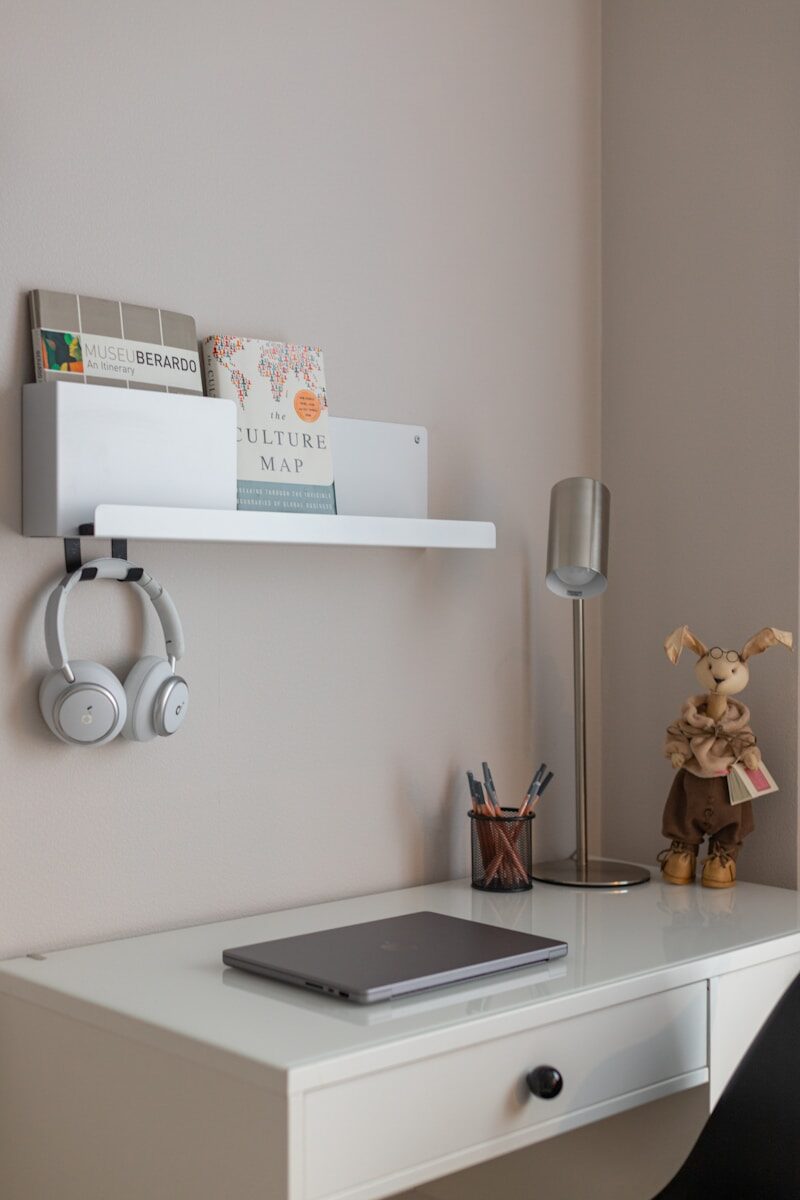
Look at this neat desk set with a wall shelf above it. This is a smart plan for a small room, as the wall can hold items that may take up key desk space. Books, small decor, pens, and note tools can stay on the shelf while the desk stays free for a laptop or book.
A slim desk can be a good fit when floor room is low. It can sit close to the wall and still give room for a seat. A small shelf above the desk adds more store space with no need for a large shelf unit. This type of setup can work well in a bed room, flat, or small home nook.
Keep the desk top as clear as you can. A lamp, laptop, note pad, and one or two key desk tools may be all that need to stay out. The more open the desk is, the more room there is for real work.
2. Let Daylight Lead the Room
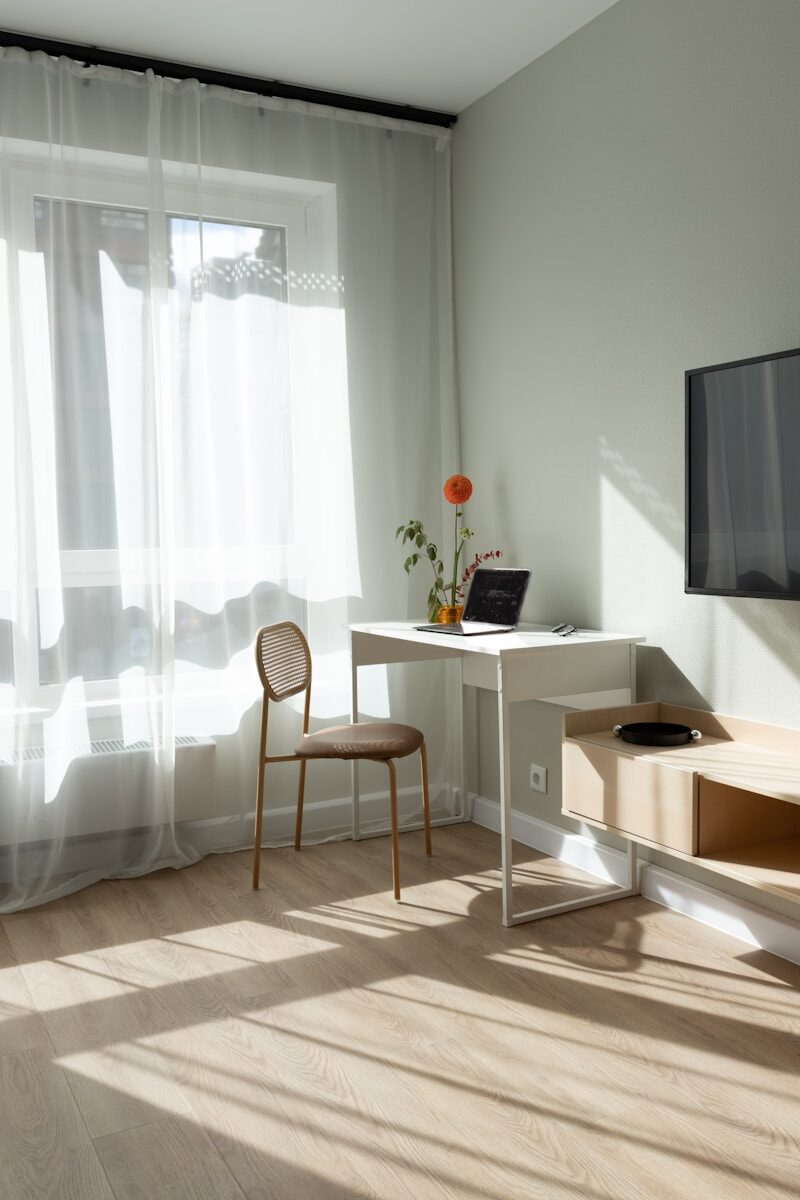
The next room uses a large glass area to let soft day light fill the space. Light can have a big role in how a study room feels. A room with good day light may feel more open and less dull, which can make it a nice spot for long read or work time.
A desk can sit near a window, but screen glare needs care. If the sun hits the screen at the wrong spot, the eyes may tire fast. A thin blind or soft sheer drape can help cut hard rays while still let some light pass.
The room also uses pale tones, which can help spread light through the space. A light wall, soft rug, and pale desk can give a clean look. A wood seat or warm decor can then add some depth so the room does not feel too cold.
3. Add Small Plants for a Fresh Feel
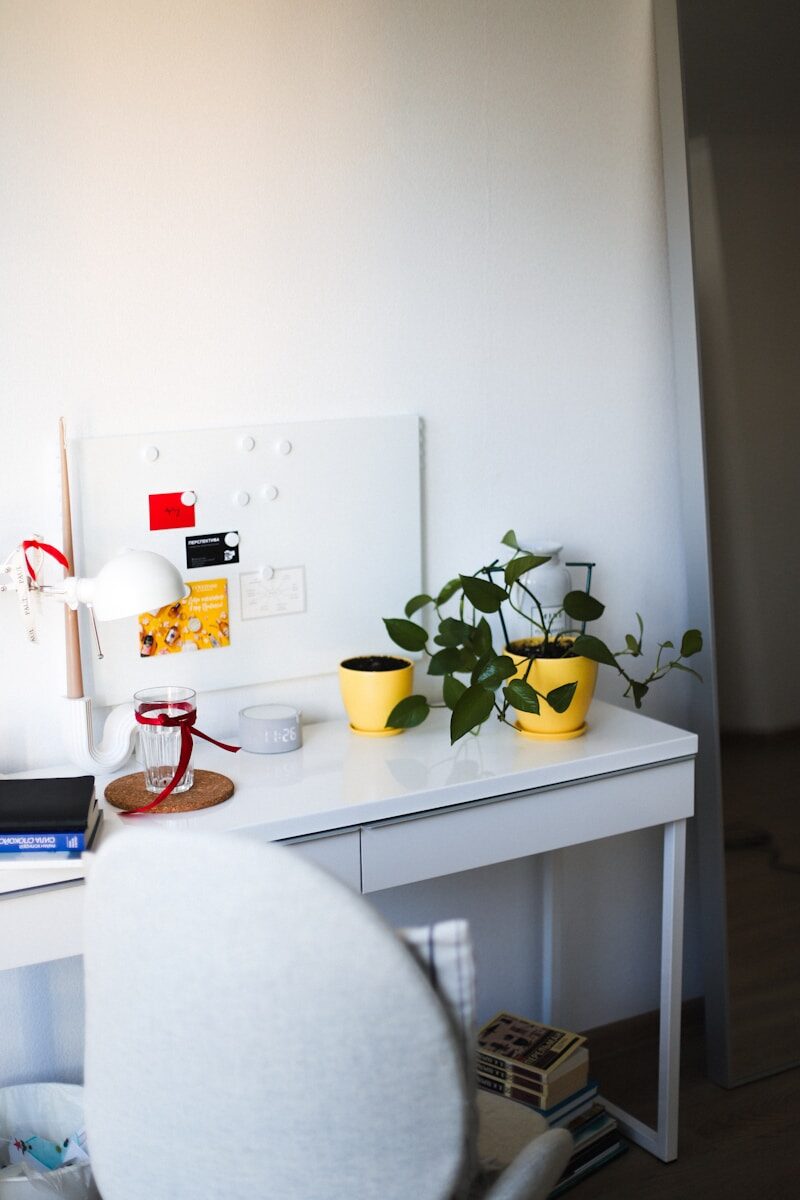
The third image shows a desk with small plants, wall art, and a soft chair. A plant can add a fresh note to a work room with very low fuss. Green leaves can break up a plain wall and give the desk a more warm and live feel.
Small pots are a good pick when desk room is low. One plant can sit on the desk, while two or three small pots can sit on a shelf. Avoid too many pots, as they can take up the room that is meant for books and work.
Plant care also needs some thought. A bright spot may suit plants that need more sun, while a dim room calls for types that can do well with less light. Pick a plant based on the light in the room, not just the look.
4. Turn a Wall Nook Into a Study Zone
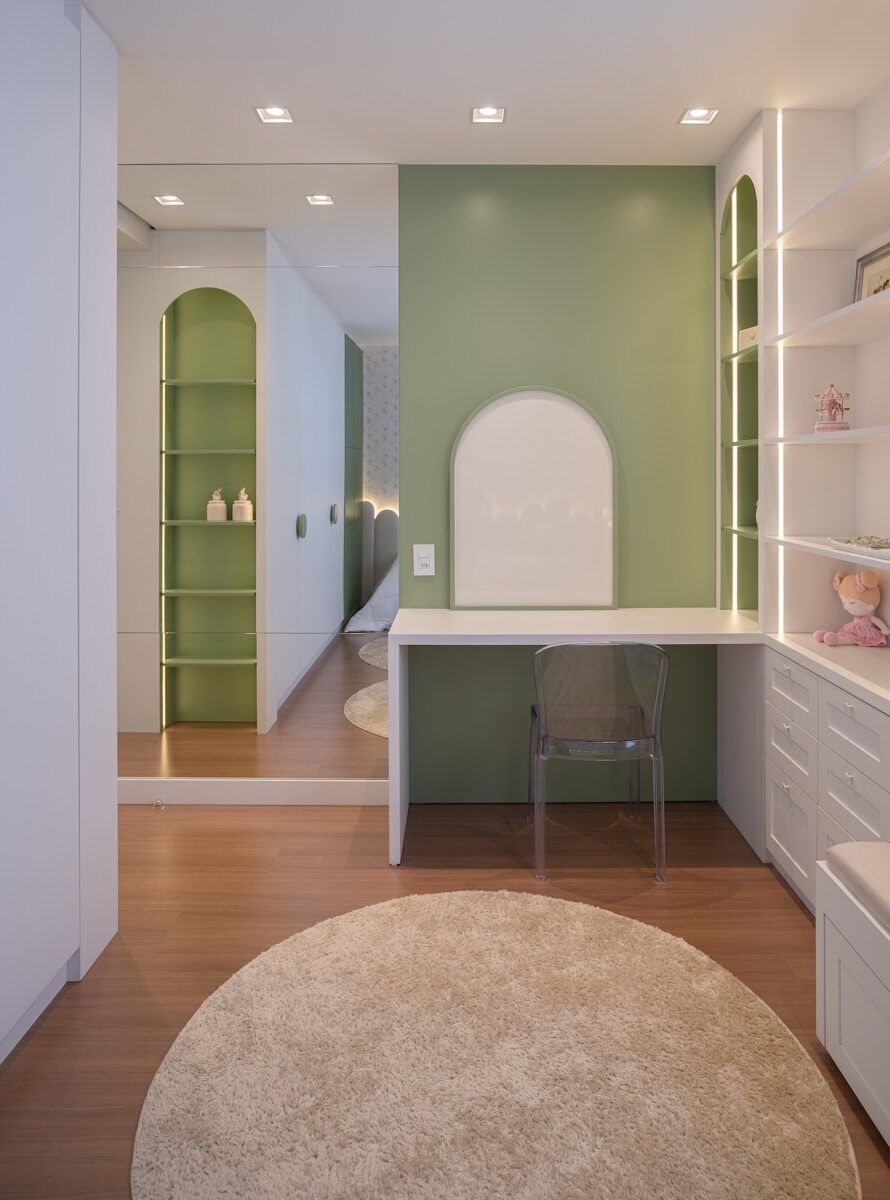
The fourth image shows a desk placed in a wall nook. This is a good way to use a part of the home that may not seem useful at first. A nook can be made into a full study zone with a desk, seat, light, and a few wall items.
A wall nook can help make the room feel more set and calm. The desk can fit right under the shelf or wall space, while the area above can hold books, art, notes, or a pin board. This gives the room more use with less need for floor space.
For a small nook, a slim desk is often the best fit. Keep the desk depth in mind, as a desk that is too deep can make the path feel tight. A good fit should let the seat move with ease and still give enough room for work.
5. Choose a Seat That Suits Long Work
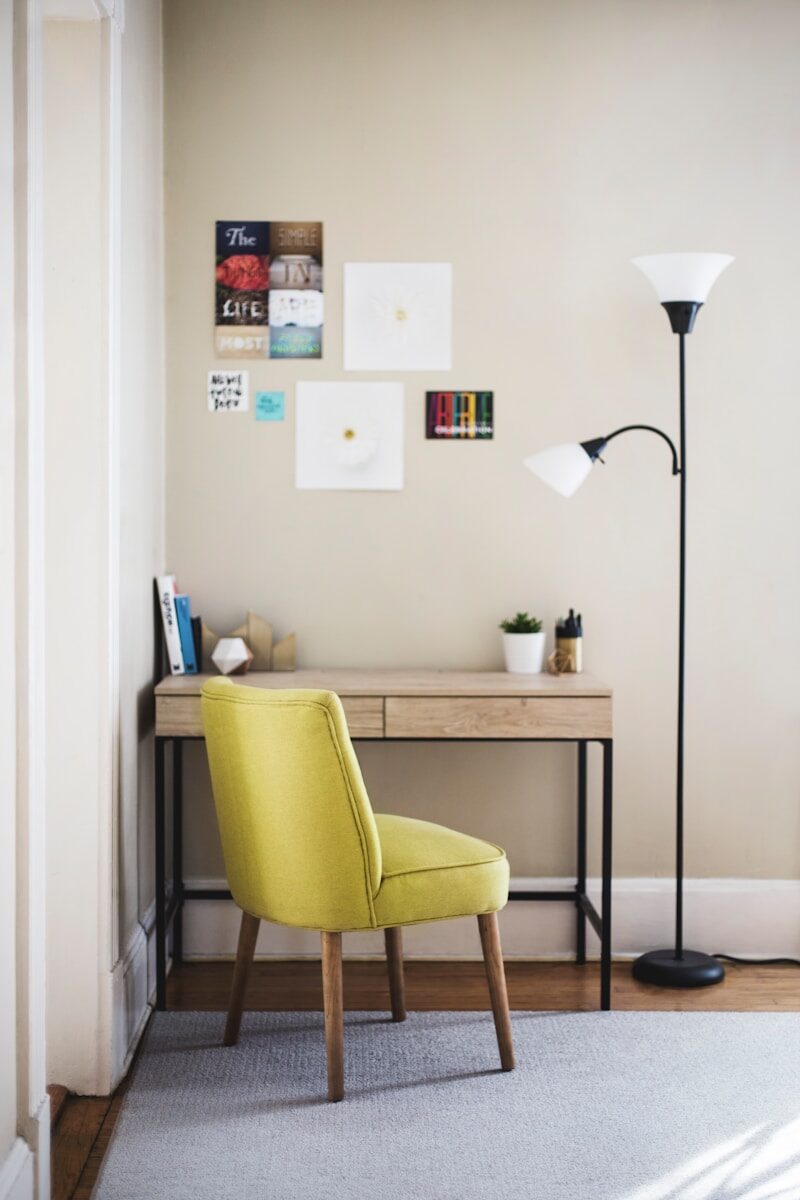
The fifth image shows a small desk with a bright green chair. The chair adds color, but its main role is to give a good seat for work. A chair that feels fine for ten mins may not feel good after two or three hours, so the seat needs more care than just a nice look.
The feet should sit flat on the floor when the seat is at a good desk level. The back should feel well held, and the seat should not push the body too far from the desk. The screen and desk tools should also sit at a level that lets the neck stay in a calm pose.
Color can add charm to the room too. A bold chair can act as the main color point in a room with pale walls. This can give the room more life with no need for lots of wall art or decor.
6. Keep a Small Desk Setup Simple
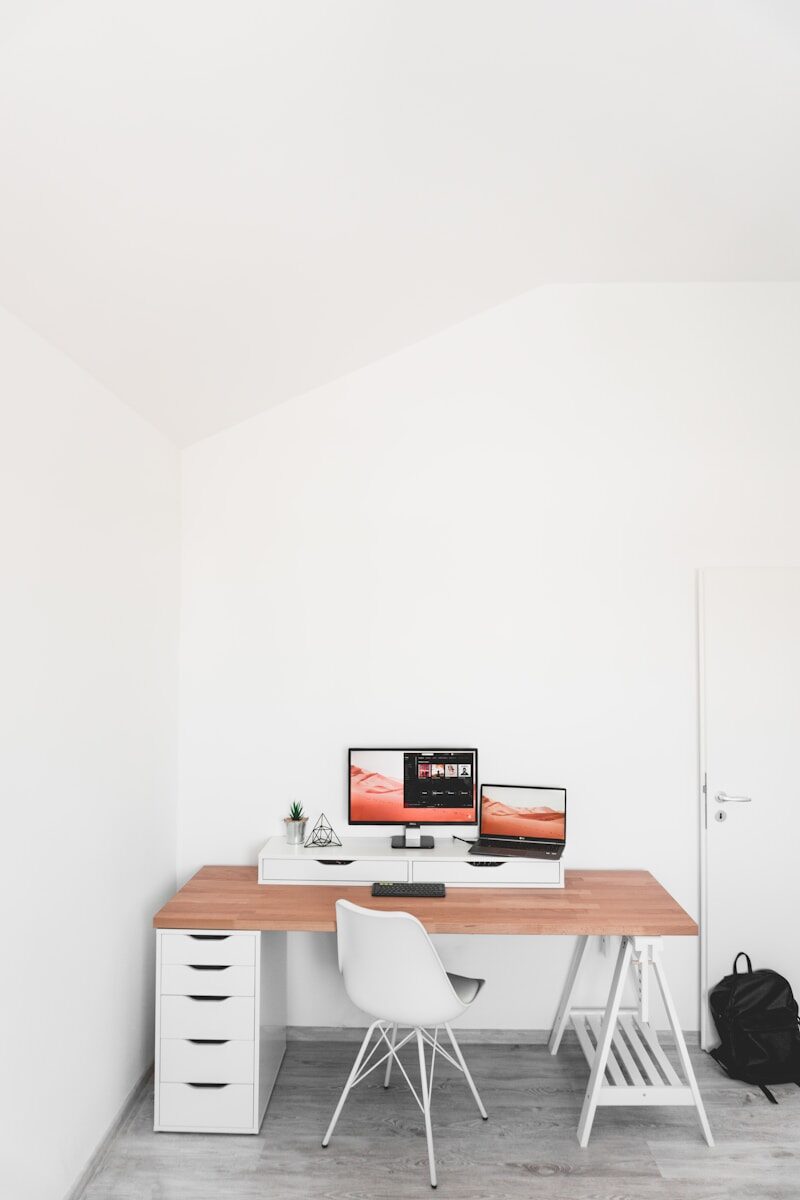
The sixth image shows a very clean white room with a small desk and chair. This style proves that a study room does not need lots of items to look good or work well. A desk, seat, lamp, screen, and a few key tools can be enough.
A plain room can also be easy to keep neat. With less gear on the desk, there is less to move each day. A small drawer unit can hold files, pens, wires, and other items that need to stay close but do not need to sit in view.
White can make a room feel more open, but too much white may feel cold. Add a wood tray, small plant, soft rug, or warm lamp to give the room a more calm feel.
7. Make a Book Nook Near the Study Desk
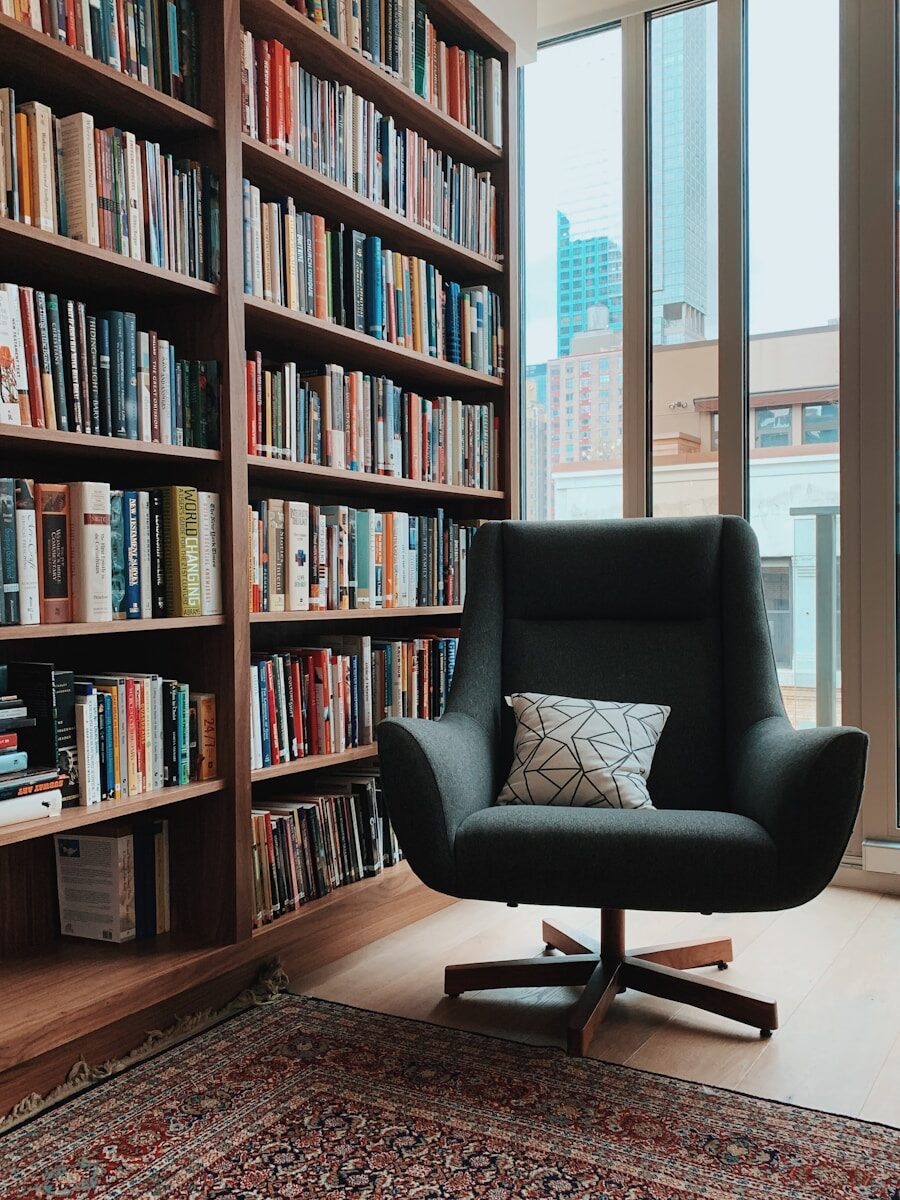
The seventh image uses tall book shelves and a deep chair near a large window. This type of space is ideal for homes where books are a key part of work or study. A shelf can hold text books, novels, files, and key ref items in one clear spot.
A book shelf can also shape the room style. Books can be set by size, use, or color. Keep the most used books at an easy reach so there is no need to get up each time a text or ref book is needed.
A soft chair near the shelf can make a calm read nook. Add a small lamp and side table if there is room. This gives the home two clear zones, one for desk work and one for read time.
8. Use a Desk Lamp for Late Study
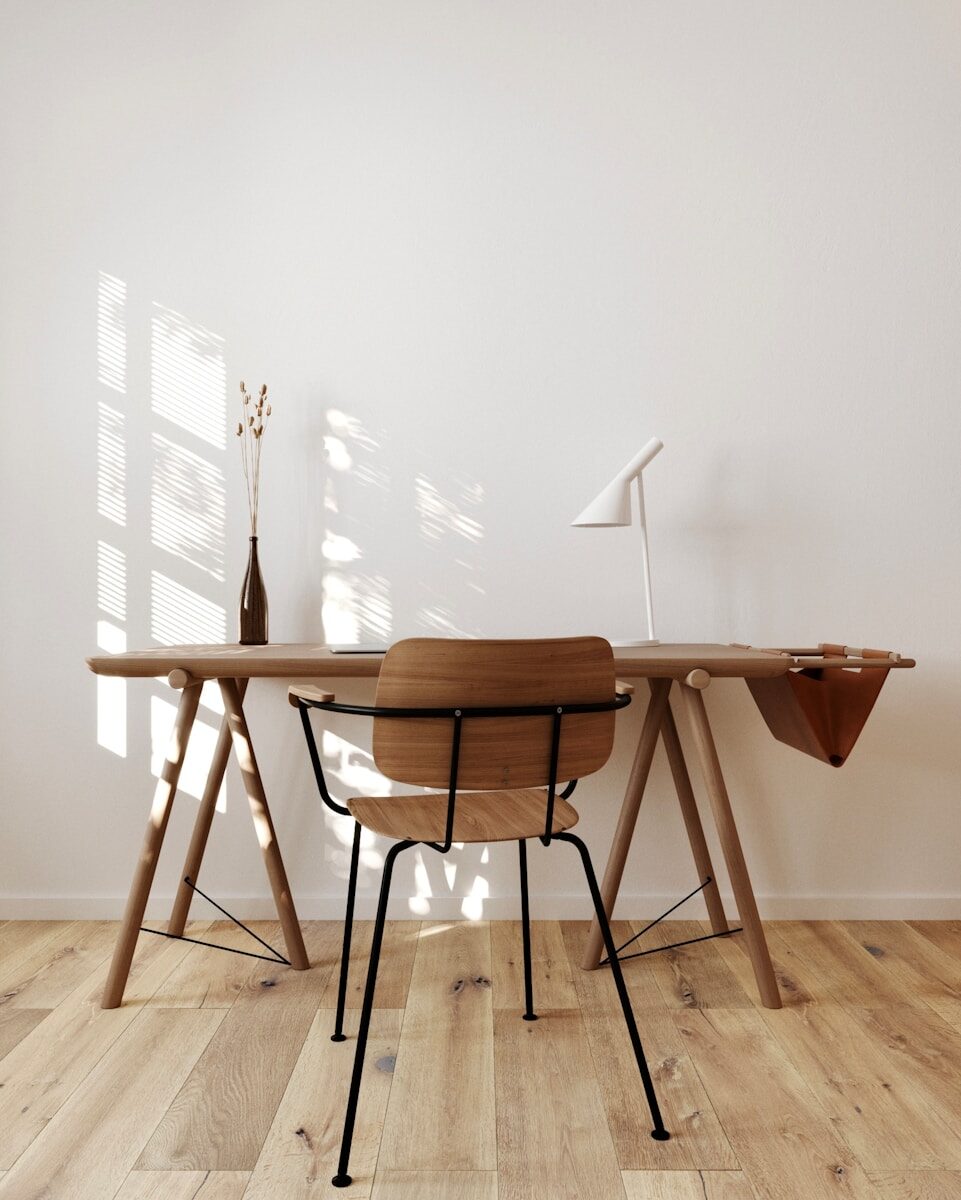
Room light may look fine in the day but may not be enough at night. A desk lamp can give more light right where the work is done. This is useful for note work, read time, and tasks that need close eye work.
The lamp should sit in a spot that does not make a hard glare on the screen. A lamp with a head that can move is a good pick, as the light can be aimed at the page or desk top as the task shifts.
A floor lamp can add more room light too. Use both desk and room light when needed, as a very bright desk lamp in an all dark room can feel harsh on the eyes.
10 Home Study Room Must-Haves for a Better Setup
Loved one of these home study room setups? Now let’s see the right products that can help bring the same clean, calm feel into your own space. A good study area does not need to be filled with costly gear. The key is to pick items that solve real needs such as poor posture, weak light, desk mess, low storage, and a lack of space.
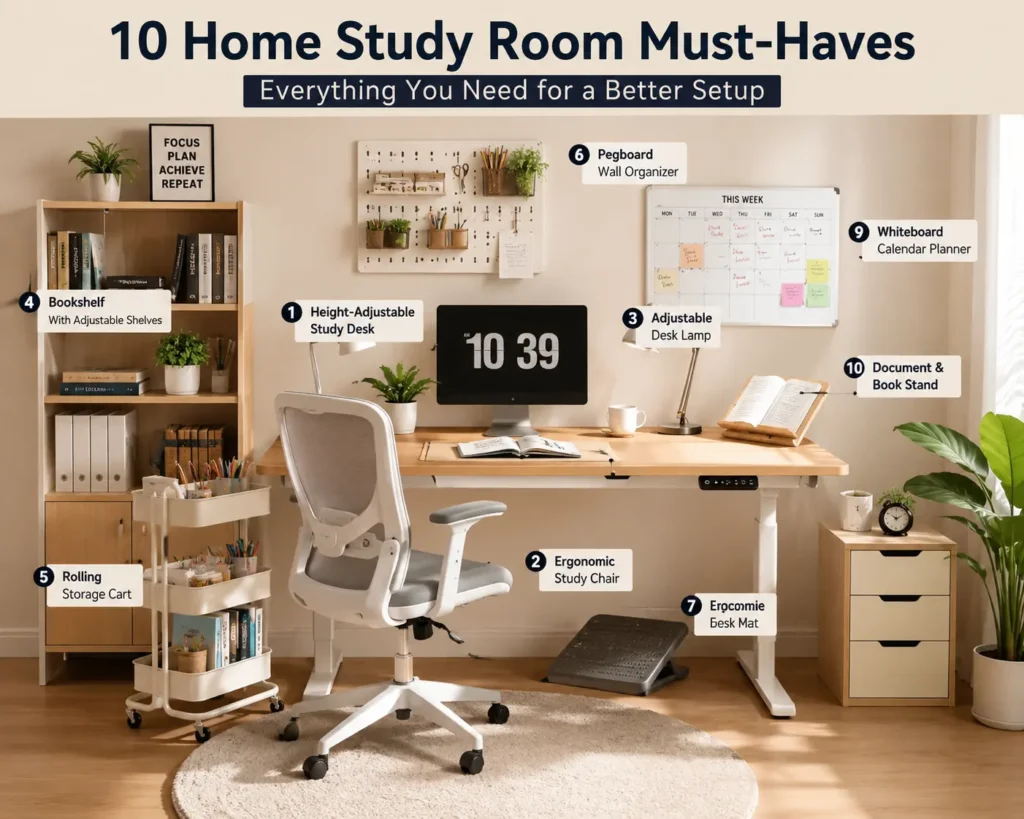
Start with the core items first. A desk gives the room its work base, while a good chair supports long study hours. Light helps with close work, storage keeps books and files in order, and small desk tools help cut clutter. The best home study room is not the one with the most items. It is the one where each item has a clear job.
A useful rule is to think about the full study setup as one system. Desk height affects chair use. Chair height affects foot support. Desk depth affects how books and screens fit. Light affects where the desk should sit. Storage affects how much clear desk space stays free. Even a small room can work well when these parts are planned as one setup.
1. Height-Adjustable Study Desk
Why you need it:
A study desk is the main work zone, so it should fit the person and not just the room. A fixed desk may look good, yet the height may not suit every user. A height-adjustable desk gives more room to set the work surface at a level that feels right for writing, reading, or using a screen.
This can be useful in a shared home study room too. A desk used by a child, teen, and adult may need a very different setup for each person. With an adjustable frame, the same desk can serve more than one user.
Desk depth also matters. A desk that is too shallow can leave little room for a screen, book, keyboard, and note pad. A recent study-room design guide suggests about 60 cm as a basic desk depth, with more depth giving extra room for a monitor and open book.
What to look for:
- Adjustable height range
- Strong metal or steel frame
- Stable feet with low wobble
- A wide work top
- Built-in cable holes or cable tray
- Enough room for a laptop or monitor
- Easy controls for height change
- A finish that fits the room style
Best for: Students, remote workers, adults, and shared study rooms
Amazon: 👉 Check the latest price
A good desk does not have to fill the whole room. For a small home study room, a slim desk with smart cable control may be a better pick than a wide model with more space than needed.
2. Ergonomic Study Chair
A chair can make or break a study setup. Even a great desk will not feel good if the seat is too high, too low, too hard, or lacks back support. A study chair should give the body a stable base while still letting the user sit in a relaxed pose.
Look for a chair with seat height control, back support, and a seat depth that fits the user. Armrests can help, but they should not stop the chair from moving close to the desk. The feet should have a firm base on the floor or on a footrest.
A chair should also fit the desk. If the seat is set too low, the arms may rise toward the desk. If it is too high, the feet may hang. A good chair and desk work best as a pair. Research on computer lab furniture has also found that adjustable seat height can improve the match between furniture and body size.
What to look for:
- Adjustable seat height
- Firm back support
- Good seat depth
- Breathable back mesh or soft fabric
- Stable five-wheel base
- Smooth wheel motion
- Adjustable armrests if needed
- A seat size that fits the user
Best for: Long study sessions, online classes, homework, and home work
Amazon: 👉 Check the latest price
Do not pick a chair based on looks alone. A bright green or soft tan chair may look great in a room, but comfort should come first. Style can then be used to match the desk, wall, rug, or other room decor.
3. Adjustable Desk Lamp
Room light may be enough for a quick task, but close work often needs more direct light. A desk lamp places light where the work is done. This is useful for books, note work, drawing, craft work, and late study.
An adjustable lamp gives more control than a fixed lamp. The head can be moved toward a book or note pad without moving the whole lamp. A dimmer can also help when the room shifts from day to night.
Try to place the lamp so it does not create a harsh glare on a laptop or monitor. If the lamp is too bright or sits at the wrong angle, the light may feel more like a problem than a help.
What to look for:
- Adjustable lamp head
- Adjustable arm
- Multiple light levels
- Warm and cool light modes
- Touch or simple button control
- Stable base
- Low heat LED light
- USB or power port if useful
Best for: Night study, reading, writing, art work, and screen-based tasks
Amazon: 👉 Check the latest price
Good room lighting also helps define the study zone. A desk lamp can make a small desk feel like a clear work area even when the desk is part of a bedroom or living room. A study space does not need its own room to work well.
4. Bookshelf With Adjustable Shelves
Books can take up a lot of room when they have no set home. A bookshelf gives books, files, boxes, and small decor a clear place. Adjustable shelves make the unit more useful because the shelf gaps can be changed to suit large books, small paperbacks, folders, or storage bins.
A tall shelf can make use of wall height while leaving more floor space open. This is useful in a small home study room where every part of the floor has a job.
Keep the books used most often at hand level. Less-used books can go on the top or lower shelves. Small boxes can hold loose notes, pens, wires, or old papers.
What to look for:
- Adjustable shelf height
- Strong shelf panels
- Stable base
- Wall anchor option
- Shelf depth that fits your books
- Enough shelf levels for future use
- A finish that matches the room
Best for: Students, readers, home workers, and rooms with lots of books or files
Amazon: 👉 Check the latest price
Do not fill every shelf to the edge. A mix of books, boxes, and small decor can make the shelf feel neat rather than packed.
5. Rolling Storage Cart
A rolling storage cart is a small item that can solve a big space issue. It can hold books, files, art tools, school gear, chargers, paper, or daily study items. Since the cart has wheels, it can move from the desk to another part of the room when needed.
This is a smart pick for a small study room. Instead of adding a large cabinet, a slim cart can slide beside the desk or under a shelf. At the end of a study session, loose items can be put back in the cart and moved out of the main work zone.
A cart can also be set up by task. One level can hold books, one can hold paper and note tools, and one can hold tech gear. This makes it easy to find what is needed without filling the desk top.
What to look for:
- Slim width
- Smooth wheels
- Locking wheels if needed
- Two or three shelf levels
- Strong frame
- Easy-clean surface
- Handles for easy movement
Amazon: 👉 Check the latest price
Best for: Small rooms, students, craft work, shared rooms, and flexible study zones
6. Pegboard Wall Organizer
When floor and desk space are low, the wall can become the next storage zone. A pegboard turns an empty wall into a flexible place for small tools. Hooks, cups, shelves, and clips can hold pens, scissors, headphones, notes, cables, and other desk gear.
The best part is that the layout can change. If the study needs change, the hooks can move. A large item can get its own spot, while small tools can stay in cups or small bins.
A pegboard also helps keep the desk clear. Instead of having pens and cables spread across the work top, items can stay on the wall within easy reach.
What to look for:
- Strong wall mount
- Metal or hard board build
- Easy-to-move hooks
- Small shelf add-ons
- Cups or bins
- Enough board size for future use
- A color that blends with the room
Best for: Small study rooms, art spaces, students, hobby desks, and tech setups
Amazon: 👉 Check the latest price
Keep the board neat. A pegboard can become cluttered if every hook gets filled. Use it for items that need quick access, not for every item in the room.
7. Large Desk Mat
A desk mat may seem like a small add-on, but it can change how the work area feels. It gives the desk a clear work zone and can protect the top from marks, small spills, and daily wear.
A wide mat also gives the hands a soft area when typing or writing. It can fit under a keyboard, mouse, laptop, and note pad, which helps bring the main desk tools into one visual zone.
For a clean home study room, a large mat can also add a small touch of style. Black, tan, grey, green, and soft brown can work with many desk and chair colors.
What to look for:
- Wide desk coverage
- Non-slip base
- Smooth top
- Easy-clean surface
- Water-resistant finish
- Edges that do not curl
- Size suited to the desk
Best for: Laptop desks, PC setups, writing desks, and shared study spaces
Amazon: 👉 Check the latest price
Do not buy a mat that leaves no room for the desk tools. Measure the desk first and leave some free space where needed.
8. Ergonomic Footrest
Feet should have firm support while sitting. If a chair is set high enough for the desk but the feet no longer sit well on the floor, a footrest can help close the gap.
A footrest can also give the legs a place to rest during long study blocks. Some models have a flat surface, while others have a soft or angled top. The best choice depends on the chair, desk height, and user.
The goal is simple. The feet should not dangle for long periods. A stable footrest can also help make a small chair and desk setup work better for a shorter user. Guidance for at-home learning spaces similarly recommends keeping both feet supported by the floor, a footrest, or another stable support.
What to look for:
- Stable base
- Non-slip feet
- Wide foot area
- Easy-clean surface
- Slight tilt if useful
- Height that suits the chair
- Firm build
Best for: Students, shorter users, long study sessions, and desks with fixed height
Amazon: 👉 Check the latest price
A footrest should not force the knees into an odd pose. Set the chair and desk first, then use the footrest to fill the gap if needed.
9. Whiteboard Calendar Planner
A whiteboard planner gives the study room a clear place for plans and key dates. Instead of keeping every task in a phone app, important work can stay in view.
A weekly grid can show tests, class work, due dates, study blocks, and home tasks. A goal area can show the main target for the week. A small note area can hold short tasks that need to be done soon.
This can be even more useful during busy school weeks. A quick look at the board can show what is due, what has been done, and what needs more time.
Use it for:
- Study plans
- Exam dates
- Deadlines
- Weekly tasks
- Reading goals
- Project steps
- Class notes
- Short-term goals
What to look for:
- Clear weekly layout
- Easy-clean board
- Good size for the wall
- Dry-erase pens
- Pen tray
- Eraser
- Date or month area
Best for: School students, college students, exam prep, and home work
Amazon: 👉 Check the latest price
Keep the board simple. If every small task goes on it, the board may turn into more clutter. Use it for the tasks and dates that truly need to stay in view.
10. Document and Book Stand
A book or document stand can free up desk space while keeping text at a clear view. This is useful when a study task needs a book and laptop at the same time.
Instead of laying a large book flat beside the laptop, the book can sit upright on the stand. This can make it easier to move the eyes between the page and screen. It can also leave more room for a note pad or keyboard.
A stand is useful for text books, recipe books, printed notes, music sheets, tablets, and other flat items. Look for a model that can hold the size and weight of the items used most.
What to look for:
- Adjustable viewing angle
- Strong page support
- Foldable design
- Non-slip base
- Wide book ledge
- Easy storage
- A build that can hold heavy books
Best for: Students, readers, note work, tablet use, and desk-based study
Amazon: 👉 Check the latest price
This small tool can make a big difference on a tight desk. It gives the book a set place instead of letting it compete with the laptop, lamp, and note pad.
How to Put Everything Together
A good home study room does not need every item on day one. The better plan is to build the space in the order of real need:
Desk → Chair → Light → Storage → Organization → Planning → Comfort
Start with the desk because it sets the main size and layout of the room. Check its width, depth, height, and cable needs before buying other large items. Make sure there is enough space for the chair to pull out and for people to walk past. A well-planned study area should not block doors, windows, or the main path through the room.
Next, choose the chair to match the desk. Set the chair so the feet have support and the arms can reach the work surface without strain. If the feet do not reach the floor after the chair is set at a good desk height, add a footrest.
Then add light. Use natural light where it works well, but do not place a screen where strong sun creates glare. Add an adjustable desk lamp for close work and late study.
After that, add storage. A bookshelf can hold books and files, while a rolling cart can hold items used each day. A pegboard can use wall space for small tools. This keeps the desk free for the task at hand.
The last layer is organization and comfort. Add a desk mat, book stand, whiteboard planner, or footrest based on the needs of the person using the room. These items should solve a real problem rather than just fill empty space.
Do Not Buy Everything at Once
A common mistake is buying the full setup before testing the room. A better plan is to start with the desk and chair, then use the space for a few days. This can show what is truly missing.
If books keep piling up, add a shelf. If small tools keep spreading across the desk, add a pegboard or cart. If late study feels hard, add a task lamp. If the feet lack support, add a footrest. This approach can save money and stop the room from becoming full of items that are rarely used.
Room size should guide each choice too. A small room may need a slim desk, wall storage, and a narrow rolling cart. A large room can fit a full bookshelf, wider desk, reading chair, and floor lamp. The aim is not to copy a room from a photo. The aim is to take the parts that fit your space and daily study needs.
A useful home study setup should feel clear, calm, and easy to use. The desk gives a work base, the chair gives support, the lamp adds focused light, storage cuts mess, and planning tools keep tasks in view. Once these parts work as one system, even a small corner can become a strong study space.
Last Wording
The best home study room does not need a huge room, rare decor, or a high spend. A smart desk, good seat, soft light, clean shelf, and a few well picked items can form a space that feels calm and easy to use. The pics show that both small and wide rooms can work well when each part has a clear role.
For a small room, use wall shelf space, a slim desk, a chair that can tuck in, and a few key decor items. For a wide room, add a book shelf, soft read chair, floor lamp, or a small plant zone. Use day light when you can, then add task light for late work.
Most of all, keep the room free from things that do not help the work. Less mess can mean less time spent on clean up. More open desk space can mean more room for books and notes. A calm room can make the start of each task feel less hard.
A well made home study room should feel like a place that makes work easy to start. It should give each tool a set spot, each task a clear zone, and the room a calm look. With the right mix of light, form, store, and desk space, even a small home nook can turn into a smart and useful study room.