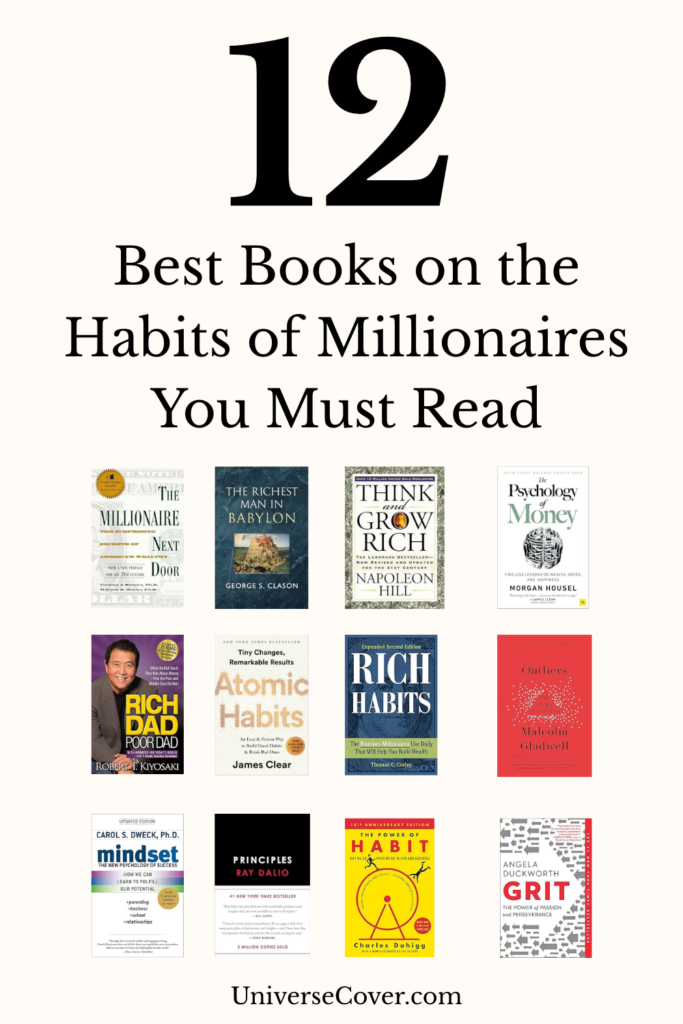
12 Best Books on the Habits of Millionaires You Must Read
Disclosure: This article contains affiliate links. If you make a purchase through these links, we may earn a small commission at no extra cost to you. See our Affiliate Disclosure

There’s a particular kind of quiet wonder that settles in when you watch someone who seems to have figured out life’s deeper rhythms. Not the flashy success, not the overnight transformation stories that flood feeds, and you know the kind I mean, the people whose habits seem stitched into their days so seamlessly that you almost miss them unless you pay attention. I’ve watched friends, mentors, and yes, even strangers from afar do this, and what strikes me isn’t a secret formula so much as a steady, almost unremarkable way of living that somehow yields remarkable results.
Maybe you’ve felt that stillness before, or maybe you’re chasing it now: that sense of understanding your own patterns, your daily gestures, not as problems to solve but as clues to who you are becoming. The books I’ve gathered here aren’t cheerleading from a mountaintop. They don’t shout “be rich fast.” They whisper. They insist you look at your routines, your curiosities, your unfinished habits, and in those reflections, there’s something urgent, not because you’re failing, but because time is already moving, one quiet habit at a time.

When someone begins to care about how they think, how they focus their attention, how they steward their choices and money, meaning, self, it often starts with a book that doesn’t lecture. It just meets you where you are. These twelve have done that for countless thoughtful, uncertain readers. They are available in the usual places, yes, on Amazon and beyond. But don’t think of them as products. Think of them as companions on those rainy afternoons when you’re quietly asking: How do I live more attentively, more deliberately?
The Shape of Daily Life: What Made These Books Worth My Time
There’s a surprising simplicity in discovering that the millionaires we tend to study aren’t wildly different from some of our own thoughtful neighbors. They read more than they watch. They give attention before they take it. They treat the act of choosing, not what they choose, but how they choose as a habit worth tending.
Maybe you’ve picked up a “self‑improvement” book before and felt your chest tighten, expecting a list of rules whispering do this, don’t that, change now. The books below don’t quite work like that. They offer reflections and stories and patterns that feel lived in. They invite you to recognize something in yourself first.
I didn’t plan to make this list; it emerged because over the years I kept returning to these titles when I caught myself asking the same quiet question: How do people build lives that feel as considered as they are successful? These authors, in their various gentle ways, helped me see that the architecture of habit isn’t about perfection. It’s about noticing. And that noticing, over enough days, begins to feel like freedom.
Below are twelve books that lingered with me and with many others because they don’t promise transformation. They offer perspective. They help you see your own days. And maybe that’s the first step toward whatever it means to you, to live well.
1. The Millionaire Next Door (Thomas J. Stanley & William D. Danko)
Opening a book that grew out of decades of interviews with people who amassed wealth quietly was startling for me, not because of the numbers, but because of the ordinary rhythms it revealed. These aren’t stories of wild ambition. They’re about people who managed their attention, their spending, and their commitments in ways that, in hindsight, were remarkably consistent. The value here isn’t the millionaire outcome but it’s the sense of seeing how someone’s everyday life reflects deeper priorities.
2. The Richest Man in Babylon (George S. Clason)
It’s curious how parables from ancient times can still feel so alive. I found myself returning to this title years after first reading it, not because it taught me new financial tactics, but because it reminded me of something we forget easily: that small, repeated habits build the architecture of a life. There’s something human in these old stories. They don’t feel distant or exclusive. They feel familiar, like advice from someone who’s lived long and noticed much.
3. Think and Grow Rich (Napoleon Hill)
You might have heard the title before. I was hesitant once, too, because it sounds like hype. But the real value lies in the way Hill frames the question of intention not as something mystical, but as something rooted in clarity and persistence. It’s less about getting rich and more about understanding how your inner narrative shapes what you reach for. I’ve re‑read sections when I felt lost, and each time it felt less like instruction and more like a mirror.
4. Rich Dad Poor Dad (Robert T. Kiyosaki)
I came to this book at a moment when the usual advice about work and security felt thin. What stayed with me wasn’t the money talk, but the contrast between two ways of thinking. One voice values safety and approval. The other values learning, ownership, and curiosity. Kiyosaki doesn’t argue or instruct; he reflects. As I read, I recognized how many of my own beliefs about money weren’t chosen, just inherited. That quiet realization is what makes this book matter. It doesn’t tell you how to get rich. It asks you to reconsider what you’ve been taught to value and whether it’s still serving you.
5. Atomic Habits (James Clear)
This one might be familiar. What I appreciate isn’t the bits about habits (many books touch on that) but the way Clear attends to the architecture of behavior. He invites you to look at tiny shifts, not as tasks to complete but as reflections of who you’re becoming. That felt like permission to be imperfect, and that subtle shift in framing changed how I think about my own routines.
6. The Psychology of Money (Morgan Housel)
Money isn’t a math problem. It’s a human story. I wish someone had said that to me clearly years ago. Morgan Housel doesn’t treat finance as something distant or technical. He treats it as a reflection of our fears, our hopes, our histories. That way of seeing soft, deeply human and stays with you long after the last page.
7. Mindset (Carol S. Dweck)
I returned to this book at a time when I was stuck, the kind of stuck that feels like waiting for a sign. What stayed with me was the simple idea that our beliefs about our abilities shape how we live our days. Not in a cheerleader way, but in a notice your inner narratives way. I noticed patterns in my own thinking I hadn’t seen before.
8. Principles (Ray Dalio)
This book is different. It feels like walking through someone’s mind and the actual architecture of decisions, reflections, failures, and adjustments. What lingered with me wasn’t how to build wealth, but how to approach decision‑making with honesty and transparency (with yourself, especially). Dalio’s reflections often feel like a conversation you return to when you want to think more deeply about how you think.
9. Outliers (Malcolm Gladwell)
Outliers didn’t teach me how to be successful. It helped me see that success is less about isolated genius and more about context, opportunity, culture, and practice. That perspective eased something in me, the assumption that if I wasn’t “there” yet, I was doing it wrong. Gladwell’s stories reminded me that timing and pattern matter, and noticing that felt like a relief.
10. Grit (Angela Duckworth)
There’s a tenderness in Duckworth’s exploration of effort and endurance. It isn’t glamorized. The book gently invites you to look at how passion and perseverance show up in your life. I found it calming and almost a companion on days when ambition felt heavy and uncertain. It’s not about pushing. It’s about steady attention.
11. The Power of Habit (Charles Duhigg)
Habit isn’t the enemy or the solution. It’s a structure. Duhigg doesn’t romanticize it. He explores it. And in doing so, he helps you see your own patterns without judgment. I recall reading a chapter and realizing I had been living certain behaviors on autopilot, missing the deeper reasons they mattered. That quiet realization was the real gift.
12. Rich Habits (Thomas C. Corley)
This title drew me in not because of its claims but because of its intimacy. Corley spent years observing the daily practices of people across income levels, and what he shares feels less like a prescription and more like a series of bedside conversations about what attention looks like over years. It reminded me that habits aren’t isolated; they’re woven into a larger tapestry of meaning and choice.
Conclusion
In conclusion, maybe what these books offer isn’t a roadmap but a companionable presence on the journey of noticing your own life more deeply. Maybe that’s what we’re all after: not a secret, but clarity.
And if you find yourself returning to the same questions, the same careful curiosity about your own days, these books might meet you there with something patient and reflective, not instruction, but understanding.