50 Closet Organization Ideas: Best Products, Hacks & Storage Solutions for Any Size Closet
Disclosure: This article contains affiliate links. If you make a purchase through these links, we may earn a small commission at no extra cost to you. See our Affiliate Disclosure

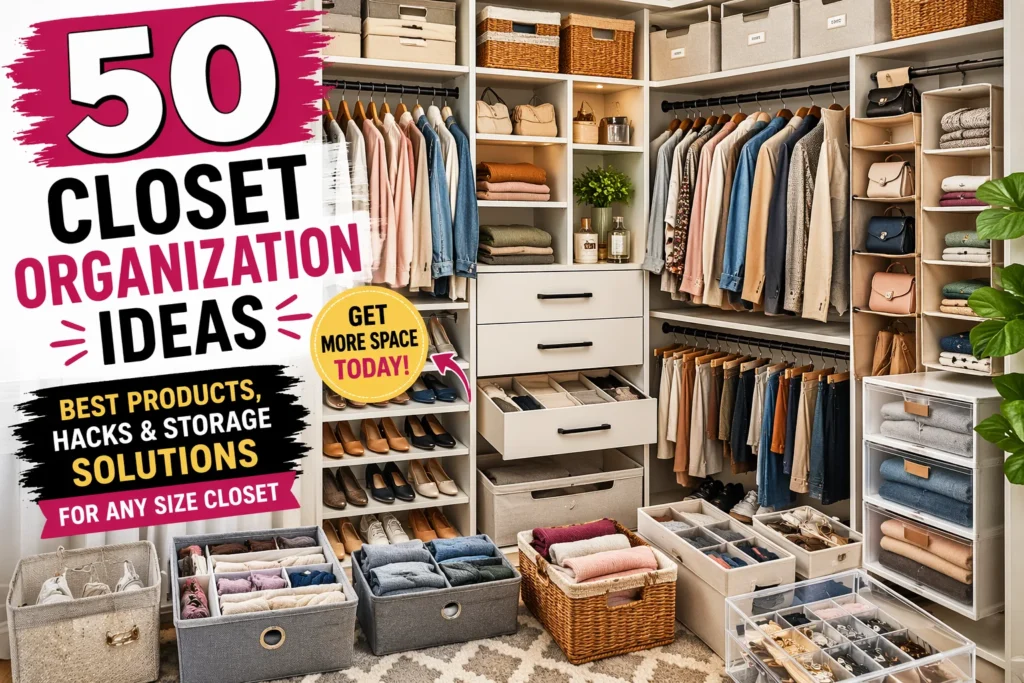
There is a kind of quiet stress that lives in a messy closet. Most people do not talk about it. But each time the door opens and things fall out, or when the search for one shirt takes five long mins, that stress is very real. It sits low and slow, day after day, and nobody thinks to fix it.
The good news is this. A clean, well-set closet does not need a big budget or a big home. It just needs the right plan and the right tools in the right order. After years of work with all kinds of spaces, big and small, tight and open, one truth stands very clear. The right kind of order makes each day feel light.
This post covers all 50 ideas, from simple rod hacks to full shelf set ups, from small flats to big walk-in spaces. Each idea comes with a real product tip so the next step is always clear. No fluff. No long lists of steps that go nowhere. Just real ideas that work in real homes.
Why Most Closets End Up in a Mess
Most closets are not bad by design. They just grow without a plan. Clothes go in. The system to hold them never gets set up. One hanger here, one pile there, and over time the space fills up with no real logic to it at all.
In most homes, the closet is the last space to get real care. The main room gets a new sofa. The kitchen gets new bins. The bath gets new towels. But the closet gets more clothes and no new plan. That gap is where the mess grows, slow and steady, until one day the door can barely shut.
The fix is not to buy more stuff. The fix is to first see what the space needs. A rod set too high for short tops. No shelf for fold clothes. No bin for small items like socks and scarves. Once the need is clear, the right tool is easy to find. That is what this post is here to help with.
Clean Out Before Setting Up
The first step in any closet fix is not to buy. It is to take out. Every item needs to come out of the space. Lay it all on the bed or the floor. Then sort in three piles: keep, give, and toss.
This step feels hard for most. But it is the most key part of the whole process. A full closet with no plan will stay full and messy no matter what tools go in. Space must first be made before any new system can work well.
Some find it easy to ask this one clear question. “Has this item been worn in the last full year?” If the answer is no, it goes in the give or toss pile. No guilt. No “what if.” Just clear eyes and a calm mind. The closet will thank the person who asks that question.
Once the closet is bare, the real work can start. The walls, the rod, the floor space, all of it becomes a blank start. And from that blank start, any of the 50 ideas below can be built, one step at a time.
The 50 Ideas: Full Guide With Best Products
Hanging and Rod Ideas
1. Add a Second Rod Below for Short Clothes
Most closets come with one rod, set high. But shirts, blazers, and fold jackets do not need all that height. A second rod hung below the first doubles the hang space in mins with no tools in most cases.
This one change alone can add room for 20 to 30 more items. It is one of the best and most cost-friendly ways to get more from a small space. Most homes with a single rod are only using half their full closet height and do not even know it.
The closet rod extender fits most rods and hangs in place with no drill. Pick one made of steel rather than plastic so it holds real weight over time. Look for one with an adjustable length so it fits the space just right. Many users say this one buy changed their whole closet feel.
2. Stop Losing Clothes to Messy Hangers
There is a kind of slow chaos that comes from mixed hangers. Wire ones, thick ones, thin ones, all in a row. Clothes slip off, get lost at the back, and the rod gets hard to move through. The fix is as simple as it sounds.
Slim velvet hangers hold clothes in place. They do not slip. They are thin so more items fit on the same rod. A set of 50 takes up less space than 20 old wire ones and holds clothes far more secure.
These come in packs of 50 to 200 and cost very little per piece. The non-slip coat keeps tops from sliding to the floor at night. A full set of matching hangers also makes the whole closet look clean and put-together at once. This is one of the top first buys for any closet clean-up project.
3. Sort Every Shirt by Type With Hanger Dividers
Once all the hangers match, the next step is to add order to the rod itself. Hanger dividers are small rings that clip to the rod and act as walls between groups of clothes. Work shirts go here. Casual tops go there. One divider makes that split clear and it stays clear.
This feels like a small thing. But on a busy morning, when the right shirt needs to be found in two mins flat, these dividers save real time and real stress. No more pulling out five tops to find the one that was needed.
Closet divider rings cost almost nothing and come in many styles and colors. Some are clear and simple. Some come with words like “tops” or “pants” already on them. Pick the ones that match the look of the space and the style of the user. They clip on in seconds and move fast if the need ever changes.
4. Hang More in Half the Space With Cascading Hooks
Cascading hooks are one of the most under-used closet tools in any home. One hook links to the next and each one holds a hanger. What once held five items on the rod can now hold ten or more in the same length of space.
This works great for pants, skirts, or any item that can fold over a hanger cleanly. It works best when the items hung are of the same type so the row stays neat and easy to browse through.
These hooks are made of metal or plastic and cost very little per set. Look for ones with a smooth curve so clothes do not get a crease or mark from hanging. A pack of ten is all most closets will ever need. This one small buy can free up more rod space than a full sort of the whole closet.
5. Keep Scarves and Belts Off the Floor
Scarves and belts are the small items that always end up in a pile or on the floor or draped over the rod in a way that helps no one. They do not fit well on a regular hanger and they are too small for a real shelf. A dedicated hook hanger solves this in one move.
A multi-hook scarf hanger holds up to 20 scarves on one rod space. Belts roll up and hang on each hook with ease. The whole thing takes up the space of one shirt but holds a full drawer worth of items that used to live in a pile.
Look for a hanger with smooth hooks so scarves do not snag or pull on the fabric. Metal ones last far longer than plastic versions. A swivel top lets the whole thing turn so the right item is easy to reach from any side. Most people who try this never go back to the pile on the shelf.
6. Use S-Hooks for Fast Extra Storage
S-hooks are one of the most simple and low-cost tools in any closet kit. They hang off the rod and hold bags, belts, small bins, or even other hooks. They can be moved in one second and cost very little for a full pack.
The best use for S-hooks is to add fast storage where there is none. A bag that once sat on the floor can now hang off the rod. A small set of them can hold light items on a hook rail along the wall inside the closet.
Buy a pack of steel S-hooks in two sizes, small and medium. The small ones work for light bags and belts. The medium ones can hold heavier totes or even a small bin. This is a five-dollar fix that works like a twenty-dollar one and lasts for years.
7. Hang Bags Without Damaging Them
Bags are one of the hardest items to store well in any closet. If they sit on a shelf they get flat on one side over time. If they hang by the strap alone the strap can stretch or break. A bag hanger solves both of these real problems at once.
A purse hanger fits over the rod and has rows of hooks, each one the right size for a bag handle. Every bag hangs free, keeps its shape, and is easy to see and reach with no digging or moving other items.
Look for one with soft hook tips so bag straps do not get marks or cuts over time. A metal frame is best for heavy bags and long-term use. Some styles have a clear cover so bags stay dust-free on the inside. This is a must-buy for anyone with a real bag collection.
8. Create a Full Double Hang Zone
Some closets have height that goes to waste every single day. The rod is set at one level and all the space above and below stays empty or ends up used for piles. A full rod extender set can turn one hang zone into two full zones.
This works best for closets where most clothes are short, shirts, blazers, folded pants. The lower rod holds the short items and the upper rod holds longer items or gets freed up for a whole new use.
A good rod extender kit comes with both rods and all the fittings needed to set it up. Look for ones that are easy to set up with no drill needed. Steel is better than plastic for long-term hold and weight. Read the weight limit on the pack before buying. A strong set can hold a full load with no sag at all.
Shelf Ideas
9. Stop Clothes From Falling Off Shelves
Every closet has that one shelf where fold clothes live. And every week the pile tips over to one side or the other. The fix is not to fold better or more often. The fix is to add a shelf divider that holds each stack in its own zone.
Shelf dividers are thin metal or clear walls that slide onto the shelf and stay in place with a firm grip. Each divider creates a small zone for one stack. The stacks stay tall and neat and do not fall into each other during the night.
Metal shelf dividers are the best long-term pick for most closets. They bend to grip the shelf with no screws at all. Look for ones with a smooth top edge so clothes do not catch when pulled out. A pack of six is enough for most single closets. One of the most bought closet items on Amazon and for a very good reason.
10. Stack More on Every Shelf
Most closets have only two or three shelves. But the space between each shelf is often more than it needs to be. A shelf riser sits on top of the existing shelf and adds a second level within that same gap without any tools.
This doubles the usable shelf space with no tools and no change to the closet walls or structure at all. The riser holds fold items on top and the space below the riser stays open for other things like small bins.
Look for a riser that matches the width of the shelf as close as possible. Wire risers let air flow and are easy to clean. Solid wood or bamboo ones look clean and styled. A set of two is all most closets need to feel twice as big inside.
11. Use the Top Shelf That Always Gets Ignored
The top shelf of most closets is where things go to be forgotten. It is too high to see clearly and too hard to reach without a step stool. But with the right basket, it becomes one of the best spots for bulk storage in the whole space.
An over-shelf hanging basket clips onto the shelf edge and hangs below the top shelf, adding a second layer of storage just under it. Items stored here are at near-eye level and easy to grab without any tool.
These baskets come in wire, plastic, and fabric styles. Wire ones are best for light items like scarves or small bags that need air flow. Go for one with a smooth hook so the shelf edge does not get any marks or damage. A set of two adds real storage right above the main hang zone.
12. Add Pull-Out Drawers to Any Shelf
Fixed shelves are one of the biggest limits in a closet. Items at the back get lost the day they go in. Things pile up. A pull-out drawer that sits on the shelf fixes this with no drill and no tool at all.
The drawer slides in and out just like a real drawer. Items at the back are just as easy to reach as those at the front. This works very well for fold clothes, bags, or any item that tends to form a pile on a flat shelf.
Look for a drawer with a smooth slide and a front lip so items do not fall out when the drawer moves. Clear plastic lets the user see what is inside with no need to pull it all the way out. A set of two for one shelf is a good start. Many people end up buying more once they see how well it works.
13. Store Fold Clothes Without Them Toppling
Fold clothes are the hard part of any closet set up. Shirts fold well for a day, then the stack starts to lean, then it falls into the next stack, and within three days the shelf looks like a pile again. The fix is not to fold again. The fix is to store them like files.
The file-fold method stores each item standing up on its edge, like a file in a drawer. Each item is visible from the top. Nothing hides under another. The stack can only fall if the whole bin tips and bins do not tip when they are full.
A file-style closet shelf organizer holds fold items in rows, each one standing tall. No more digging through a pile to find a tee. This one change makes fold-cloth storage feel as easy as hang storage. Look for one that fits the depth of the shelf with a little room to spare.
14. Sort the Linen Closet Shelves
The linen closet is the most ignored closet in most homes. Towels get stuffed in. Sheets go in folded and come out a mess. Extra rolls of paper get piled on any open space. It feels full but it is very hard to use well.
Shelf bins made for linen closets hold each type of item in its own zone. One bin for hand towels. One for bath sheets. One for spare sheets. The bins slide out and the right item is found in one clean move.
Look for bins with open fronts so items are easy to reach without tipping the bin. Fabric bins in a neutral tone make the whole closet look calm and clean at once. A set of six is a good start for a full linen closet. Add a small label to the front of each bin for even faster use on busy days.
15. Label Every Shelf and Bin
A label is a small thing. But it changes how a closet works in a big way every single day. When every shelf and bin has a clear label, every item has a home. And when items have homes, they go back to those homes even on the most tired and rushed of days.
This is not just about looks or style. It is about how the brain works in a real way. When the label says “scarves,” the brain knows where to look and where to put back. No thought needed. No mess made. The system runs itself.
A good label maker prints clean, clear text on small tape strips that stick to bins, shelves, and boxes. Some come with color-coded tape for even faster reading by type. The DYMO brand is one of the best-known and most-loved for home use by a wide margin. One pack of tape lasts a very long time.
16. Add Shelves Where There Are None
Some closets have only a rod and a floor and nothing in between. No shelves at all. A freestanding shelf unit fixes this with no tools, no wall damage, and no need for any kind of help to set up.
A tower shelf fits in the corner or along the side wall of the closet. It adds four to six shelf levels in a space that had none before. This is also a great fix for renters who cannot drill or build into walls.
Look for a unit that fits within the depth of the closet so the door can still close with ease. Metal wire shelves allow air flow and look open and light inside a small space. Solid shelves in white or wood tone look more built-in and styled. Check the total height before buying to make sure it fits under the rod or in the empty corner.
Bin and Basket Storage
17. Use Bins to Group Like Items
The fastest way to bring calm to a messy closet is to group things by type. All socks in one place. All scarves in one bin. All gym gear together in one zone. When things live in groups, they are fast to find and fast to put back even on the worst days.
Storage bins make this grouping real and keep it real. Each bin holds one type of item. The bin goes on a shelf. The shelf stays neat. The system works even on the worst days when there is no time to fold or sort each piece.
Fabric bins in a matching set look clean and are very cost-friendly. Look for ones with a firm top edge so they keep their shape when half-empty. A front label window is a great feature that saves a lot of daily time. A set of six in one size gives enough bins for most basic closets.
18. Store Off-Season Clothes Neatly
Winter coats in July. Summer dresses in December. Off-season clothes take up room that in-season items need every day. The fix is to move them out of the main closet and into sealed bins on a high shelf or in a spare space.
Clear bins with lids stack on the top shelf or on the floor and keep clothes safe from dust, bugs, and damp air. When the season turns, the bins swap and the right clothes come back into the main space.
Look for bins with a snap-close lid so they seal well and stay sealed. Clear sides make it easy to see what is inside with no need to open each one. A set of four works for most people with two full seasons of clothes. Add a small label to each lid for even faster swaps when the time comes.
19. See All Items With Clear Bins
There is a real and daily problem with bins that are not clear. The contents become a total mystery the day after they go in. “What is in this one?” becomes a real question with no fast answer. And the answer means opening every bin one by one to look.
Clear bins solve this at the very root of the problem. Every item is visible from the outside at all times. No guessing. No opening. No digging through the wrong bin. This is one of the most practical and low-cost fixes in any closet.
Clear plastic bins come in many sizes for many needs. Small ones work for socks and hair items. Medium ones hold fold tees. Large ones store bulky knits and sweaters. Buy a few of each size and sort by item type. The whole closet becomes readable at a glance every single morning.
20. Basket Storage for Hoodies and Sweatshirts
Hoodies are big, soft, and hard to fold neatly for more than a day. They take up shelf space fast. Hanging them stretches the neck over time. Stuffing them in a drawer makes them a wrinkled mess that takes time to fix. A large basket is the best fix.
A big woven or fabric basket holds three to five hoodies with no perfect fold needed. Just roll them or tuck them in loosely. The basket keeps them in one zone and they stay soft and ready to grab in one move any morning.
Look for a basket with strong handles so it can come off the shelf with ease. A firm base is better than a floppy one so the basket keeps its shape when full of thick items. A set of two large baskets, one for hoodies and one for sweatshirts, works well for most people.
21. Small Bins for Socks, Ties and Small Items
Small items are the source of most closet chaos if truth be told. Socks go in loose and come out single. Ties pile in a corner. Hair clips end up in shoe boxes. A set of small bins gives each small item a home that it can always go back to.
Small fabric or plastic bins sit in a drawer or on a shelf and hold one type of item each. Socks in one. Ties in one. Gym socks in another. Each item is fast to find and fast to put back. The whole morning gets easier.
Look for a set that comes in one style and tone so the look is clean and neat. Bins that stack save even more space on a tight shelf. A set of 12 small bins costs very little and solves a problem that seems small but causes real stress every single morning for most people.
22. Cube Storage That Works as a Full Closet
Not all homes have a real closet. Some have one small bar and nothing else. Some have no closet at all. A cube storage unit can serve as a full closet system on its own, with space for fold clothes, bins, and even a small hang bar.
A nine-cube or twelve-cube unit gives many zones for many types of items. Each cube holds a bin, a small basket, or a fold stack. Some units come with a hang bar that fits into one cube for shirts or short jackets.
Look for a unit that is easy to set up and comes with clear step-by-step instructions. Metal-frame cube units are strong and last long with heavy daily use. Fabric cube inserts add a clean look and keep items neat inside each cube. This is one of the best low-cost full-closet solutions for any home type.
Shoe Storage
23. Stop Throwing Shoes on the Closet Floor
The floor of the closet is not a shoe rack. But for most people it works like one by default. Shoes pile up in a heap. Pairs get split apart. The right shoe is always under three other pairs. A proper shoe rack changes all of this fast.
A stackable shoe rack holds each pair in its own row. Pairs stay together at all times. The floor stays clear. And the closet floor can now be used for bins or baskets instead of a shoe pile that grows every week.
Look for a rack that is adjustable so it fits the height of both flat shoes and taller ones. Wire racks keep air flowing which helps shoes stay fresh and smell-free. A set of two or three stackable rows handles most collections with ease. The floor of the closet will look like a new space.
24. See All Shoes at Once With Clear Boxes
Shoe boxes are a good idea that becomes a bad one very fast. Once the lid is on, the shoes inside become invisible. The boxes pile up. The right pair is always in the fourth box from the bottom and finding it means moving every box above it.
Clear shoe boxes let every pair be seen at once from the outside. Stack them up and every shoe is on display. This is also great for keeping shoes dust-free and in their proper shape over time.
Look for boxes with a drop-front opening so the top ones can be reached without moving all the rest. A set of six is a good start for a small to medium collection. These also look very clean and styled on any shelf in the closet. Many people say this one buy made their closet look like a real store.
25. Store Boots Without Them Folding Over
Boots are the hardest shoes to store well in any closet. Without support they fold over and lose their form fast. Over time the leather or fabric at the top gets a crease that will not go away no matter what. A boot shaper is the fix.
Boot shapers go inside the boot and hold the shaft upright at all times. The boot stays in form. It stands on the shelf or floor like a strong item, not a limp fabric pile that loses its look over months.
Look for shapers with an adjustable height so they work for ankle boots and tall knee-high ones. Some come with a hook at the top so boots can hang off a rod. A set of three to four pairs is enough for most collections and they last a very long time.
26. Use the Back of the Door for Shoes
The back of the closet door is one of the most wasted spaces in any home. It is flat, wide, and right there every day. An over-door shoe organizer turns this dead space into room for 12 to 24 pairs without using any shelf space at all.
Each pair goes into its own pocket. The pockets are clear so every pair is visible from the outside. The organizer hangs over the door with no tools and no holes in the door or wall.
Look for one with deep pockets so the shoes do not fall out when the door moves or swings. A fabric style is softer on the shoes than hard plastic over time. This works best for flats, sandals, and light sneakers. Heavy boots need a sturdier support than a door organizer can give.
27. Hang a Shoe Shelf Under the Clothes
The space below hanging clothes is often just bare floor. If the clothes are short, like shirts or blazers, there can be 12 to 18 inches of open air between the hem and the floor. A hanging shoe shelf fills this wasted space.
The shelf clips to the rod and hangs below the clothes. Shoes slide in on each level. The floor below stays clear for other use. This adds storage without adding a single new piece of furniture to the room or closet.
Look for one with adjustable levels so it fits the height of the empty space below the clothes. Canvas or wire styles both work well for most shoes. This is one of the best tools for anyone with a rod but no floor rack at all. It is also very easy to move or take down when not needed.
Drawer and Fold Clothes
28. Fold Clothes the Right Way to Save Space
Most people fold clothes the same way they were shown as kids. The shirt goes flat, folds in half, then folds again into a wide block. The result is a wide stack that takes up full shelf space and hides everything at the bottom of the pile.
The better way is the file fold. Each item is folded into a small flat shape and stored on its edge, just like a file in a drawer. Every item is visible from the top. Nothing is buried. And the stack does not tip over because each piece supports the next.
A clothes folding board makes this method fast and the same every time. The board guides the fold so every item ends up the same flat size. This is very helpful for tees, light sweaters, and jeans. The result is a drawer or bin where every item can be seen and grabbed in one move.
29. Keep Leggings Rolled and Ready
Leggings are small but they take up a lot of space if stored wrong. Fold them flat and they pile up fast into a hard-to-search stack. Roll them and store them standing and a drawer holds twice as many in half the space.
A legging organizer keeps each pair in its own slot, rolled and upright and easy to see. Every pair is visible at once. No more digging through a pile to find the right color or style on a busy morning.
Look for a drawer divider with tall sides so the rolled leggings stay in place and do not tip. Fabric dividers are soft on the material and do not stretch the fabric. A set of two fits most dresser drawers or closet bins well. This also works great inside a closet bin or basket on a shelf.
30. Sort the Sock and Underwear Drawer
The underwear drawer is one of the most chaotic spots in any bedroom without a system. Socks go in loose. They come out single. The right pair of underwear is always at the very back. A drawer divider fixes all of this in one easy step.
Small dividers split the drawer into clear zones. Socks in one zone. Underwear in another. Rolled or fold items stay in their zone and do not mix together over time. This one change saves two to three mins every single morning without fail.
Look for a set of dividers that is adjustable so it fits the exact size of the drawer. Honeycomb dividers are great for socks rolled into small bundles. A full set costs less than most people spend on one pair of socks and the return is felt every single day of the week.
31. Add Portable Drawers to Any Closet
Many closets have no drawers at all. There is the rod, maybe one shelf, and the floor. Fold clothes have no real home. A fabric drawer tower is the most cost-friendly way to add real drawer storage to any closet without tools or wall damage.
The tower stands on the floor inside the closet or just beside it. Each fabric drawer pulls out and holds fold clothes, gym gear, or small items. It is light, easy to move, and comes in many sizes for many spaces.
Look for a tower with at least four drawers and a metal inner frame for shape. A non-woven fabric outside is easy to wipe clean. Handles on each drawer make them easy to pull without the whole tower moving. Two towers side by side can replace a full chest of drawers for far less money.
32. Split Clothes by Type With Drawer Sections
Even in a well-set closet, different types of clothes end up in the same space over time. Tops mix with bottoms. Gym clothes mix with work ones. A set of drawer section dividers keeps each type in its own zone and keeps them there.
These small dividers fit into any drawer or bin and split the space into clear sections that stay put. Each section holds one type. The fold stays neat. The search time drops to near zero. Every morning runs faster.
Look for a set that is adjustable so it fits many drawer sizes from small to large. Bamboo dividers look clean and are very strong for long-term use. Plastic ones are lower cost and still work well for most needs. A set of four is enough for most people to sort all clothes in one clear system.
33. Store Hoodies Without Wasting Space
Hoodies are loved by most people but they are hard to store well. They are too thick to fold neatly for more than a day or two. Hanging them stretches the neck over time. Rolling them works but they need a space that keeps the roll tight and in place.
A shelf organizer made for thick items holds each hoodie in its own row with clear dividers between each stack. Each stack stays upright and separate from the next. The whole row is visible and easy to reach from the front.
Look for one with wide shelves so the hoodies do not overhang the edge. Adjustable dividers are a big plus for different sizes. This type of organizer works on a flat shelf or inside a cube unit. Pair it with a label on the front and the whole system becomes very easy to use and to keep neat.
Door and Wall Space
34. Use the Back of the Closet Door
Every closet door has a back side that does zero work in most homes. It holds no storage. It catches no items. It is just a flat panel that opens and closes each day. With one over-door organizer, this changes very fast.
An over-door organizer has rows of clear pockets that hold many items: scarves, small bags, rolls of tape, phone cables, belts, and more. All of these things that once had no home now have one that is easy to find and reach.
Look for one with clear pockets so items are easy to see from the outside. A sturdy metal hook at the top keeps it from shifting when the door moves. Deep pockets hold more without things falling out. A good one lasts for years and holds dozens of items at once.
35. Add Wall Hooks Inside the Closet
The side walls of a closet are often bare with nothing on them. No hooks. No rails. Just empty painted wall. A few adhesive hooks change that bare wall into useful storage in about ten mins with no tools at all.
Hooks on the side wall hold bags, hats, robes, and any other item that hangs well. They keep these items off the floor and off the rod so the main hang space stays clear for clothes only.
Look for hooks rated for at least two kilos of hold. Command hooks from 3M are a well-known brand that work well and come off clean with no wall damage when removed. A set of six gives enough spots for most items that need a quick hang home. A very good pick for renters.
36. Add a Mirror With Storage Behind It
A mirror in the closet is a great idea on its own. A mirror with storage behind it is an even better one. An over-door mirror with a built-in jewelry organizer does two jobs in one tight space.
The front is a full-length mirror for checking the full look each morning. The back holds rings, earrings, chains, and small items in rows of hooks and clear pockets. The whole thing hangs over the door with no tools.
Look for one with a latch or small lock so it stays closed when not in use. A full-length size gives the most useful mirror surface for the whole body. This is a top pick for anyone with jewelry that has no clear home. It also makes a great gift for any woman who loves a clean space.
37. Use Door Hooks for Robes and Towels
A robe needs a home. So does a towel after a bath or shower. If the bedroom is far from the bathroom these items often end up on a chair or on the bed for days at a time. A set of over-door hooks gives them a proper spot that they can always go back to.
These hooks hang over the door with no tools and no holes in the door or wall. Most hold two to four items at once. A robe on one hook, a towel on another, a gym bag on the third. Clean and simple.
Look for hooks rated for heavy daily use and real weight. Matte black or brushed steel finishes look clean and styled in almost any space. A set with at least three hooks is the most useful pick. These are also very easy to move from door to door if the need ever changes.
38. Add a Pegboard Inside the Closet
A pegboard is one of the most flexible storage tools ever made and it has been around for a very long time for good reason. It is a flat board with holes all over it. Hooks, small shelves, and bins go into the holes in any pattern the user wants. As the need changes, the layout changes too.
Inside a closet, a pegboard on one side wall becomes a full storage wall in one weekend. Bags hang on large hooks. Belts hang on small ones. A small shelf holds watches or glasses or keys. It is fully custom with no fixed spots that cannot be changed.
Pegboard kits come with the board and a full set of hooks and shelf pieces. Look for a kit that includes a range of hook sizes for many item types. Painted white, a pegboard blends into the closet wall and looks very clean. This is a great project for a weekend that needs no real skill to finish.
Small Closet Hacks
39. Go Vertical in a Tiny Closet
In a small closet, the floor and the rod are the two main zones. But the wall space between them is often empty air. Going vertical means using this wall space with tall, slim organizers that stack up instead of spreading out and taking up rod room.
A tall hanging organizer clips to the rod and drops down with five to seven shelf levels below the clip. Each level holds fold items of any type. The whole unit takes up the space of two or three hangers on the rod but holds a full drawer worth of clothes inside.
Look for one with rigid shelves not just soft fabric panels so items do not sag through the bottom. Zipper sides keep the look clean and the items dust-free. A set of two side by side can hold a full week of fold clothes in a very small closet.
40. Use Vacuum Bags for Bulky Items
Thick winter coats. Extra blankets. Heavy knit sweaters. These items take up more space than almost anything else in a closet during the months they are not needed. Vacuum bags compress them down to a very small flat pack.
The item goes in the bag, the bag seals tight, and a vacuum pulls all the air out in one step. What was once a big winter coat is now a flat pack that fits on any shelf or slides under the bed with ease. This is one of the best tools for a small closet with big seasonal needs.
Look for bags with a double-seal zip to keep the air out for the long term. A set of mixed sizes gives the most use for many item types. The bags can be reused many times before they need to be replaced. This one buy can free up two full shelf levels in a small closet with ease.
41. Use a Tension Rod to Create a New Shelf
A tension rod is one of the most underused tools in home storage across the board. It fits between two walls with no tools and no damage at all. Inside a closet it can create a whole new storage zone in about ten minutes.
Set a tension rod low in the closet and hang small spray items, clean tools, or even small bags on S-hooks from the rod. Set one higher and it works like a mini-rod for short items or for a row of hang bags that need to be off the floor.
Look for a rod rated for more than the weight that will go on it to be safe. Metal rods with rubber ends are the most stable and do not slip. The rod adjusts to fit most closet widths with just a twist of the body. A great tool for any renter or anyone who needs to add storage with no damage to the walls.
42. A Hanging Organizer for No-Shelf Closets
Some closets have no shelves at all. Just a rod. Nothing else. A hanging fabric organizer clips to the rod and adds six to eight shelf levels below in one fast move. Each level holds fold clothes, bags, or small bins with ease.
This is the fastest possible upgrade for a bare closet with no shelves. No tools. No holes. No real skill needed. Clip it on and start loading items in. The whole closet changes in under five minutes from a rod with piles on the floor to a real multi-level storage space.
Look for one with a firm base on each shelf so items do not sag or fall through the fabric. A top bar that grips the rod well is very important for heavy loads. Canvas or heavy-duty fabric versions last much longer than thin cheap ones. Pick quality here.
43. Use a Freestanding Rack When There Is No Closet
Some rooms have no closet at all. A small flat. A guest room. A kids’ room that is too small for a built-in. In these cases a freestanding clothes rack becomes the whole closet. It is a real solution, not just a quick fix.
A rack with shelves below and a rod above holds hang clothes and fold items in one unit. It takes up one corner of the room and serves as a full closet with no install, no tools, and no wall damage at all.
Look for a rack with a strong base so it does not tip when fully loaded. A lower shelf holds shoes or bins neatly. Some styles come with a fabric cover to keep dust off the clothes between uses. This is also a good add for anyone who has a closet but needs extra hang space in the room itself.
Budget and System Ideas
44. Build a Full Closet System Without Buying Custom
Custom closet systems cost a lot of money and take weeks to plan and build. But a modular closet organizer from any good home store gives the same result for far less money and far less time. The pieces connect and adjust to fit any space.
A modular system lets the user pick only the rods, shelves, and drawers they need. Nothing extra. The result is a closet that looks and works like a custom one but costs a small part of the price. This is one of the best long-term investments for any home.
Look for a system where each piece is sold on its own so only the needed parts are bought. Adjustable shelves are the most important feature. A system that can grow over time as the need changes is the best long-term pick. This is a great weekend project with a big and lasting result.
45. Add Drawers to Any Closet for Very Little
Closets without drawers feel incomplete and hard to use for fold items. Fold clothes pile on shelves. Small items have no proper home. A fabric drawer tower is the most cost-friendly way to add real drawer storage to any closet fast.
The tower stands on the floor inside the closet or just outside it. Each fabric drawer holds fold clothes, gym gear, or small items. It is soft, light, and very easy to move when the need changes. This is one of the most-bought items by people who want more closet function fast.
Look for a tower with at least four drawers and a metal inner frame for shape and strength. A non-woven fabric outside is easy to wipe clean. Handles on each drawer make them easy to pull. Two towers side by side can replace a full chest of drawers at a very low price.
46. Full Closet Makeover Under Fifty Dollars
A full closet makeover does not need a big budget to feel like a big change. The right set of tools at a low price can change the whole space in one day. A starter kit with a mix of bins, dividers, and hooks is the fastest way to get started with very little spend.
For under fifty dollars it is possible to get a set of slim hangers, a few shelf bins, one shoe rack, and a label maker. That covers hanging, shelf, shoe, and label storage in one single buy. The closet goes from chaos to order in one afternoon.
Look for sets that bundle more than one type of tool in one pack. Amazon often has closet starter kits that include the most-needed items in one box. Check the reviews and look for ones with four stars or more. A good kit saves time and money compared to buying each piece one by one over weeks.
47. Use Matching Baskets for a Clean Styled Look
A closet can be fully sorted and still look like a mess if the bins and boxes are all different colors and styles. Matching baskets in one tone make the whole closet look put-together with very little real effort or extra cost.
A set of wicker or fabric baskets in the same tone makes the closet feel calm and styled. This matters a lot for anyone who keeps the closet door open or has an open wardrobe that is visible from the room.
Look for sets that come in two or three sizes so the right basket fits each shelf level. Natural wicker looks warm and calm in any space. White fabric looks clean and modern. Either works well. What matters most is that they match across the whole closet. A set of six is the right amount for most spaces.
Final Touch Ideas
48. Add Light So Everything Is Easy to See
A dark closet is a hard closet to use well. Items get missed in the shadows. Colors look wrong under dim light. The whole process of getting dressed takes longer because nothing is clear. A small LED light inside the closet fixes this fast and cheaply.
Motion-sensor LED lights turn on when the door opens and off when it closes on their own. No switch needed. No wire needed. They stick to any wall or shelf with no tools at all. This is one of the easiest adds to any closet.
Look for a light with a bright but warm tone so clothing colors look true to the real eye. A battery version avoids the need for an outlet near the closet. A set of two, one on the top shelf and one at the lower level, covers most closets well. This is a small buy with a very big daily impact.
49. Switch to Matching Hangers for an Instant Clean Look
One of the fastest and cheapest ways to make a closet look clean is to use the same hanger for every single item. A mix of wire, plastic, and thick wood hangers makes the rod look busy and messy even when clothes are sorted by type.
A full set of 100 velvet slim hangers in one color takes about 20 mins to set up and makes the closet look and feel like a whole new space. The thin profile also means more items fit on the same rod length than before.
Look for a pack of at least 50 for a good start. Black, grey, or light pink are the most popular tones that match most closet styles. Non-slip velvet is the best surface for all types of clothes from silk to heavy knit. Many people who do this one change say it felt like the biggest upgrade they ever made.
50. Add a Small Vanity Zone Inside the Closet
The last idea is also the one most people love the most when they try it. A small vanity area inside the closet brings the whole getting-ready process into one calm space. A small mirror, a good light, and a few small hooks turn one corner of the closet into a real get-ready zone.
An LED vanity mirror gives bright, true-color light that is right for makeup and daily grooming. It sits on a shelf or folds flat when not in use. Pair it with a few wall hooks for chains and a small bin for daily-use items and the zone is complete.
Look for a mirror that is adjustable in both brightness and color tone. A USB or battery model is the easiest to set up with no wiring at all. For anyone who loves a calm and smooth morning routine, this one idea brings real daily joy with a very small spend.
Key Things to Know
- A clean closet starts with taking things out, not adding more in
- The right tool for the right space saves more time than the most careful fold method ever will
- Off-season storage frees more daily space than any other single act in the whole closet
- A label on every bin cuts the daily search time to near zero
- Matching hangers and bins make a closet feel clean even before a single item is sorted
- Small buys done in the right order beat one big buy done all at once every single time
One Last Thought
The closet is one of the most personal spaces in a home. It holds the items that go on the body every day. When it works well, the morning feels lighter. When it does not, even a small search for one sock can set the whole tone for the rest of the day in a way that is hard to shake.
The ideas in this post are not about a perfect closet. They are about a closet that works for the person who uses it. Not the one in the magazine. Not the one on a social post with a thousand shares. The one that fits the real life, the real budget, and the real space.
As the great designer Charles Eames once said, “The details are not the details. They make the design.” A slim hanger is a detail. A clear bin is a detail. A label is a detail. But together, they make the whole thing work well every single day.
Start with one idea. See how it feels. Then add the next one. The closet will get there.