4 Best Carving Board Picks That Your Future Self Will Thank You For
Disclosure: This article contains affiliate links. If you make a purchase through these links, we may earn a small commission at no extra cost to you. See our Affiliate Disclosure

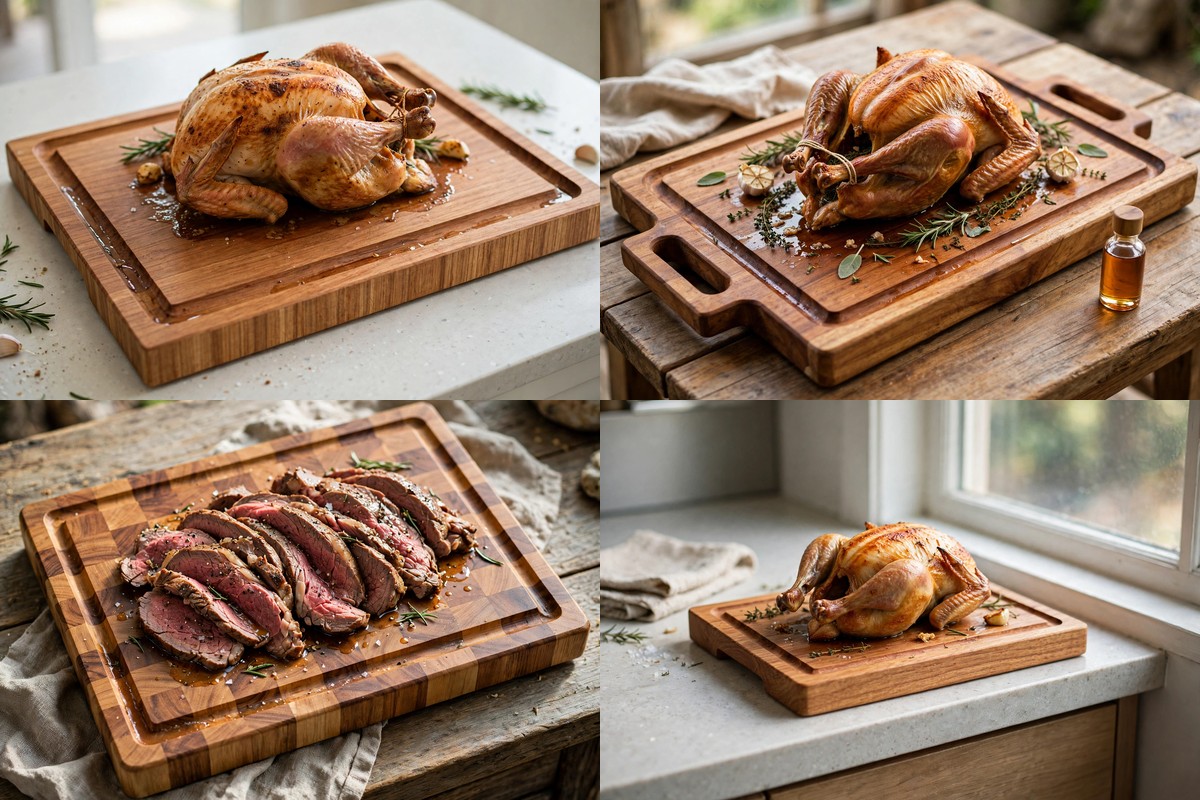
There is a small moment at the end of a big cook that nobody talks about. The roast is out of the oven, it smells wonderful, and everyone is hungry. Then you pick up your knife, and the board under the roast starts to slide, the juices run onto the counter, and the whole happy moment turns into a mess.
That is why the best carving board matters more than most people think. We read the top guides on the best carving board, from Bevel & Bond to the BestReviews turkey board guide, and then checked every single pick on Amazon before it made this list. We looked for strong ratings, a deep juice groove, enough weight to stay put, and real care for your knives. Only four boards passed our strict checks, so this list has four honest picks and no filler. If you love roast dinners, our guide to the best air cooker pairs well with this one, because a good roast starts in the cooker and ends on the board.
Each board below works in its own way. One is the classic teak pick for most kitchens. One is the big one for a whole turkey. One is warm acacia with an end grain face. One is small and easy to store. Read on, find your match, and make your next roast the calm one.
Quick Picks: The 4 Best Carving Boards at a Glance
| Board | Best For | Why It Stands Out |
|---|---|---|
| Teakhaus Large Edge-Grain Carving Board | Most kitchens | Deep groove, heavy build that stays put, reversible |
| Teakhaus XL Carving Board and Oil Set | Whole turkeys | Huge 24 by 18 inch face with oil in the box |
| Ironwood Gourmet Charleston End Grain Board | Knife lovers | End grain acacia face with a deep juice channel |
| Teakhaus Small Carving Board | Small kitchens | Same deep groove in a light, easy to store size |
1. Teakhaus Large Edge-Grain Carving Board: the best carving board for most kitchens
This is the board to buy if you only want to buy one. It measures 20 inches by 15 inches, which gives you room for a roast chicken, a pork loin, or a rack of ribs, with space left over for the slices. The teak is FSC certified, which means the wood comes from forests that are cared for. It feels solid in the hand, and it stays put on the counter while you work.
The juice groove runs all the way around the edge, and it is cut deep enough to hold the liquid that runs off a rested roast. A rested prime rib can give up half a cup of liquid, and a turkey gives up more, so a shallow groove is no help at all. This one catches the juice and keeps it off your counter. You can tip the board and pour the juice into a pan for gravy, which is a small joy on a big cook day.
Teak is a smart wood for a carving board because it has natural oils that push water away. That means it needs less oiling than maple, and it does not dry out as fast. The edge grain face is kind to your knives, so your sharp edge stays sharp longer. It is the same edge grain line that test kitchens have praised for years, and it shows in the way the board holds up.
The board is reversible, so you can flip it over and use the flat side for everyday chopping. One side has the groove for carving, and the other side is plain for vegetables and bread. Hand grips are cut into the sides, which makes it easy to lift the board even when it has a heavy roast on it. At 12 pounds it is heavy enough to stay still under a long knife, and that weight is the whole point.
Care is simple, and it takes only a few minutes. Wash it by hand with mild soap, dry it with a towel, and let it air dry standing up. A drop of board oil now and then keeps the wood rich and keeps small cracks away. Never put it in the dishwasher, because the hot water and long dry cycle can warp the wood. Treat it well and it will last for years.
This board also looks good enough to carry to the table, which matters more than people admit. A roast on a warm teak board looks like a feast, and your guests will notice. You can carve right at the table and serve straight from the board. It turns a normal Sunday roast into a small event, and that is worth a lot.
I like this board because it does the simple things right and never tries to be clever. It is big enough for most cooks, heavy enough to stay put, and easy to care for. If your kitchen has room for one good carving board, this is the one to pick. It will be there for every roast you cook, year after year.
| Pros | Cons |
|---|---|
| ✓ Deep juice groove catches drippings from a full roast | ✕ Needs hand washing and a towel dry after use |
| ✓ Heavy 12-pound build stays put while you carve | ✕ Takes a few minutes to oil now and then to keep the wood rich |
| ✓ FSC-certified teak needs less oiling than maple | |
| ✓ Reversible with a flat side for everyday chopping | |
| ✓ Hand grips make it easy to lift with a roast on it |
2. Teakhaus XL Carving Board with Oil Set: the big one for a whole turkey
Some roasts are too big for a normal board. A whole turkey needs room, and this board has it. It measures 24 inches by 18 inches, which gives you 432 square inches of work space. That is well past the 300 square inches that test kitchens suggest for a big bird, so a large turkey fits with room to spare.
The board comes with a bottle of conditioning oil in the box, which is a nice touch. The oil is a blend of beeswax, coconut oil, and orange oil, made just for teak wood. A light coat after washing seals the wood and keeps it from drying out. You do not have to shop for oil on your own, because it is right there in the box.
The juice canal runs around the edge, and the hand grips are cut deep so you can lift the board with both hands. At about 15 pounds the board is heavy, and that weight is what keeps it still when you pull a long knife toward you. A light board would skate across the counter, and that is how accidents happen. This one stays where you put it.
Teak is a good pick for a big board because it stands up to water better than most woods. The natural oils in the wood push moisture away, so the board does not soak up juice and smell. It is also kind to your knives, which matters when you are slicing a whole bird into thin, neat pieces. One thing to know is that teak holds a little silica, and test kitchens note that it can wear a blade edge a bit faster than maple. A quick hone now and then takes care of that.
This board is made to go from the kitchen to the table, and it looks the part. The warm teak grain is rich and deep, and the board is thick enough to look like a real centerpiece. Carve the turkey at the table and let everyone watch. It is the kind of board that makes a holiday meal feel like a holiday.
Storage is the one thing to plan for, because a 24-inch board needs a real spot. It fits in most large sinks for washing, and it can lean against a wall or slide into a tall cabinet. If your kitchen is small, measure your counter and your sink before you buy. A board this big is a joy to use, but only if you have a home for it.
I would pick this board if you host big meals or cook a whole turkey more than once a year. It is the largest board on this list, and it comes with the oil you need to care for it. Buy it once, oil it now and then, and it will serve every big meal you cook. Your future self will be glad you went big.
| Pros | Cons |
|---|---|
| ✓ Huge 24 by 18 inch face fits a whole turkey with room to spare | ✕ Needs a large spot for storage, so measure your counter and sink first |
| ✓ Conditioning oil comes in the box, so care starts on day one | |
| ✓ Heavy build stays still under a long carving knife | |
| ✓ Looks rich enough to carry straight to the table |
3. Ironwood Gourmet Charleston End Grain Board: warm acacia with a deep channel
If teak is not your style, acacia is a warm and lovely change. The Charleston board is made from acacia wood, which has a rich brown tone and a grain that looks different from every other board on this list. It measures 20 inches by 14 inches, which is a good size for a roast or a large chicken. The end grain face is the kindest surface you can give a sharp knife.
End grain means the wood fibers stand up like the ends of a bundle of straws. Your knife slips between the fibers instead of cutting across them, so the edge stays sharp and the board shows fewer marks. It is the same idea that butchers have used for years. If you care about your knives, end grain is worth the small extra care it asks for.
A juice channel runs around the board to catch the drippings from your roast. The channel is cut into the wood, so it holds a good amount of liquid before it fills. You can pour the juice off into a pan when you are done, and the counter stays clean. It is a simple feature, but it is the one that saves your tablecloth.
Acacia is a dense hardwood, and it feels solid under the knife. The board has some weight to it, so it does not slide around while you carve. It is not as heavy as the big teak boards, so it is easier to lift and move. That middle weight is a good fit for cooks who want a board that stays put but still lifts with one hand.
Care is the same as any good wood board, and it is not hard. Wash it by hand, dry it with a towel, and stand it up to air dry. A little board oil now and then keeps the acacia rich and keeps the color deep. Keep it out of the dishwasher, because the heat can crack the wood over time. A few minutes of care after each use is all it asks.
This board also works well as a serving board, because the acacia looks warm and rich on a table. Lay out sliced roast, bread, and cheese, and the board does the work of a platter. It is a good pick if you like tools that do more than one job. One board can carve the roast and then serve it, and that saves you washing up.
I think of this board as the friendly middle of the list. It is not the biggest and not the smallest, and it is not the priciest pick here. It is a solid wood board with a deep channel and a kind face for your knives. If you want acacia in your kitchen, this is a good place to start.
| Pros | Cons |
|---|---|
| ✓ End grain face is the kindest surface for a sharp knife edge | ✕ Needs hand washing and a towel dry after each use |
| ✓ Deep juice channel keeps drippings off your counter | ✕ A little board oil now and then keeps the color rich |
| ✓ Warm acacia looks lovely as a serving board too |
4. Teakhaus Small Carving Board: the best carving board for small kitchens
Not every kitchen has room for a giant board, and not every meal needs one. This small Teakhaus board is made for the cook who roasts a chicken, not a whole turkey. It has the same edge grain teak and the same deep juice groove as its big brothers, just in a smaller size. It fits on a small counter and in a small sink, which is a real win in a tight kitchen.
The groove runs around the edge and catches the juice from a chicken or a pork loin. A small roast still gives up a good amount of liquid, so the groove earns its keep. The board is light enough to lift with one hand, which makes it easy to carry to the table. It is the kind of board you reach for on a normal weeknight, not just on a holiday.
Teak is the same smart wood as the larger boards on this list. It has natural oils that push water away, so it needs less care than maple. The edge grain face is kind to your knives, and the wood holds up well to daily use. A small board gets used more often than a big one, so that toughness matters.
This board is also a good pick if you are new to wood boards. It is easy to wash, easy to dry, and easy to store. It slides into a cabinet or leans against the wall without taking over the kitchen. If you have never owned a carving board before, this is a gentle way to start. You get the real thing without the big size or the big weight.
It works well for more than carving, too. Use it for slicing bread, cutting fruit, or serving cheese. The flat side is plain, so it doubles as a small chopping board for everyday jobs. One small board can do a lot in a kitchen, and this one proves it. Keep it by the stove and you will reach for it every day.
Care is quick, and it takes only a minute or two. Wash it by hand, dry it, and stand it up. A drop of oil now and then keeps the wood from drying out. Because the board is small, it dries fast and stores fast. That is the whole charm of it: it asks for very little and gives back a lot.
Small does not mean weak, and this board shows why. It is a real teak carving board with a real juice groove, made for real meals in a real kitchen. If your counter is small or your sink is small, this is your board. It will make your weeknight roasts easier, and your counter cleaner, every single time.
| Pros | Cons |
|---|---|
| ✓ Small size fits tight counters and small sinks | ✕ Too small for a whole turkey, so save the big bird for a larger board |
| ✓ Same deep juice groove as the bigger Teakhaus boards | ✕ Needs a quick hand wash and towel dry after use |
| ✓ Light enough to lift and carry with one hand | |
| ✓ Doubles as an everyday chopping board for bread and fruit |
Key Takeaways
- The best carving board for most kitchens is the Teakhaus Large, with a deep groove and a heavy build that stays put.
- Go big with the Teakhaus XL and oil set when a whole turkey is on the menu.
- The Ironwood Charleston brings warm acacia and a kind end grain face for your knives.
- The Teakhaus Small is the right pick when your counter and sink are small.
- A deep juice groove and enough weight matter more than any fancy feature.
- Hand wash your wood board, dry it, and oil it now and then to keep it rich for years.
Your next roast deserves a calm ending, not a wet counter and a sliding board. Any of the four boards above will catch the juice, hold still, and look good doing it. Pick the size that fits your kitchen and the meals you cook most, give it a little care now and then, and it will pay you back at every roast for years to come. The turkey will be carved, the gravy will be saved, and the table will stay clean. That is a small win worth having.