17 Best Vegetable Garden Tools That Help You Grow More With Half the Work
Disclosure: This article contains affiliate links. If you make a purchase through these links, we may earn a small commission at no extra cost to you. See our Affiliate Disclosure

The sun is out, the beds are bare, and a fresh pack of seeds sits on your table. You want a big harvest this year, but you do not want to spend every free hour bent over the soil. Good news. The right tools do half of the work for you.
The short answer: a small set of smart tools can carry you through the whole season, from the first soil test to the last basket of tomatoes. Each tool on this list takes one hard job and makes it fast, easy, or both. None of them need a big shed or a big budget.
I made this list by looking at what real gardeners buy again and again, and at the tools with strong ratings and huge review counts. Every pick below has been checked and is sold on Amazon right now. If a tool is famous for breaking or going back in the box, it did not make the cut.
We start with the soil, because strong plants grow from good ground. Then we move to seeds, water, weeds, and at the end, the harvest. Read it like a season, and pick the tools that match the jobs you hate most.
You do not need all 17 tools on day one. Start with the first three or four, and add the rest as your garden grows. Your back and your wallet will thank you.
| Product | Best for |
|---|---|
| Luster Leaf Rapitest 1601 Soil Test Kit | Know what your soil needs |
| TABOR TOOLS J16A Adjustable Metal Rake | Level beds and clean rows |
| FCMP Outdoor IM4000 Tumbling Composter | Fast compost with no pile turning |
| VIVOSUN Seedling Heat Mat with Thermostat | Quick, even seed sprouting |
| VIVOSUN 5-Gallon Fabric Grow Bags, 5 Pack | Instant beds on any patio |
| Fiskars Ergo Garden Trowel | Planting and transplanting |
| Nisaku NJP650 Hori Hori Knife | Five jobs in one tool |
| FLORA GUARD Bulb Planter | Even holes in seconds |
| Rain Bird LNDDRIPKIT Drip Irrigation Kit | Beds that water themselves |
| Melnor Flat Soaker Hose, 50 ft | Slow, deep root soaking |
| Dramm One Touch Rain Wand, 30 Inch | Gentle rain for seedlings |
| XLUX Soil Moisture Meter | Water only when plants need it |
| VELCRO Brand ONE-WRAP Garden Ties, 50 ft | Fast ties that never cut stems |
| Grampa’s Weeder | Weeding while standing up |
| DonSail Scuffle Hoe | Weekly weed skims in minutes |
| Fiskars Power-Lever Anvil Pruner | Easy dead wood cleanup |
| Fiskars Garden Harvest Basket | Pick, carry, and wash in one trip |
1. Luster Leaf Rapitest 1601 Soil Test Kit
Spring comes, and you stand in the yard with a bag of plant food in your hand. You have no idea if your soil even needs it. Most of us just spread it and hope for the best.
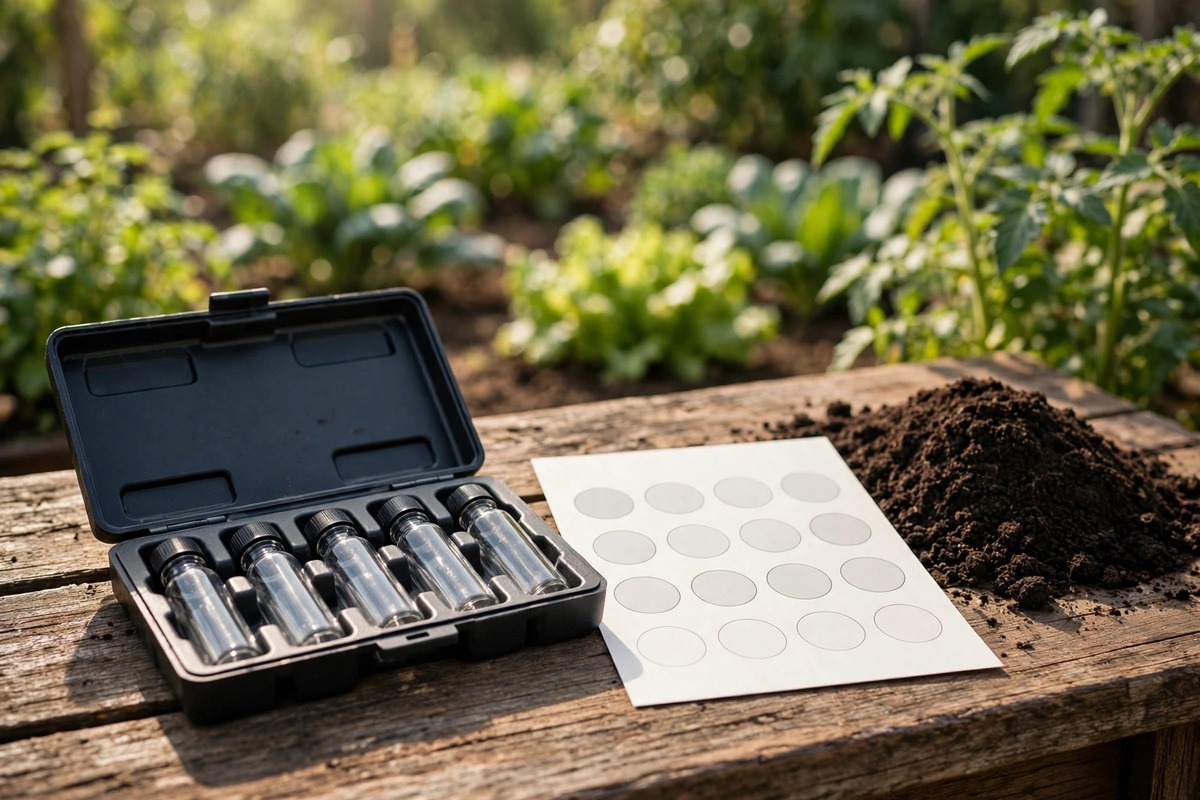
It tests four things: pH, nitrogen, phosphorus, and potassium. In plain words, that is how sour your soil is and how much of the three main plant foods it holds. This little kit ends the guessing.
You get 40 tests in the box, ten for each kind. You mix a bit of soil with water, add a capsule, and match the color to the chart. The whole thing takes just a few minutes per test.
That is the real win here. If your soil is low in one food, you add just that one and stop there. No more hauling bags of feed your beds never needed.
The kit also comes with a list that shows the pH that more than 450 plants like best. So when you plan your beds, you can group plants that like the same soil. Tomatoes in one spot, beans in the next, all set up right from the start.
It needs no batteries and there is nothing to plug in. Gardeners have used this kit for years, and it sits at the top of its class with more than ten thousand reviews. It is the best known name in home soil testing.
Use it once in spring before you plant, and once more in the middle of summer. Two short tests tell you how to feed your garden for the whole year. That is a lot of saved trips to the store.
Pros
- Tests pH plus the three main plant foods
- Gives answers in just a few minutes
- Needs no batteries at all
- Comes with a pH guide for more than 450 plants
Cons
- Matching the colors takes a careful eye
- The small capsules can be fiddly to open
2. TABOR TOOLS J16A Adjustable Metal Rake
A lumpy bed makes every job after it harder. Seeds roll into the low spots, water pools in the dips, and rows come out crooked. A flat, smooth bed fixes all of that at once.
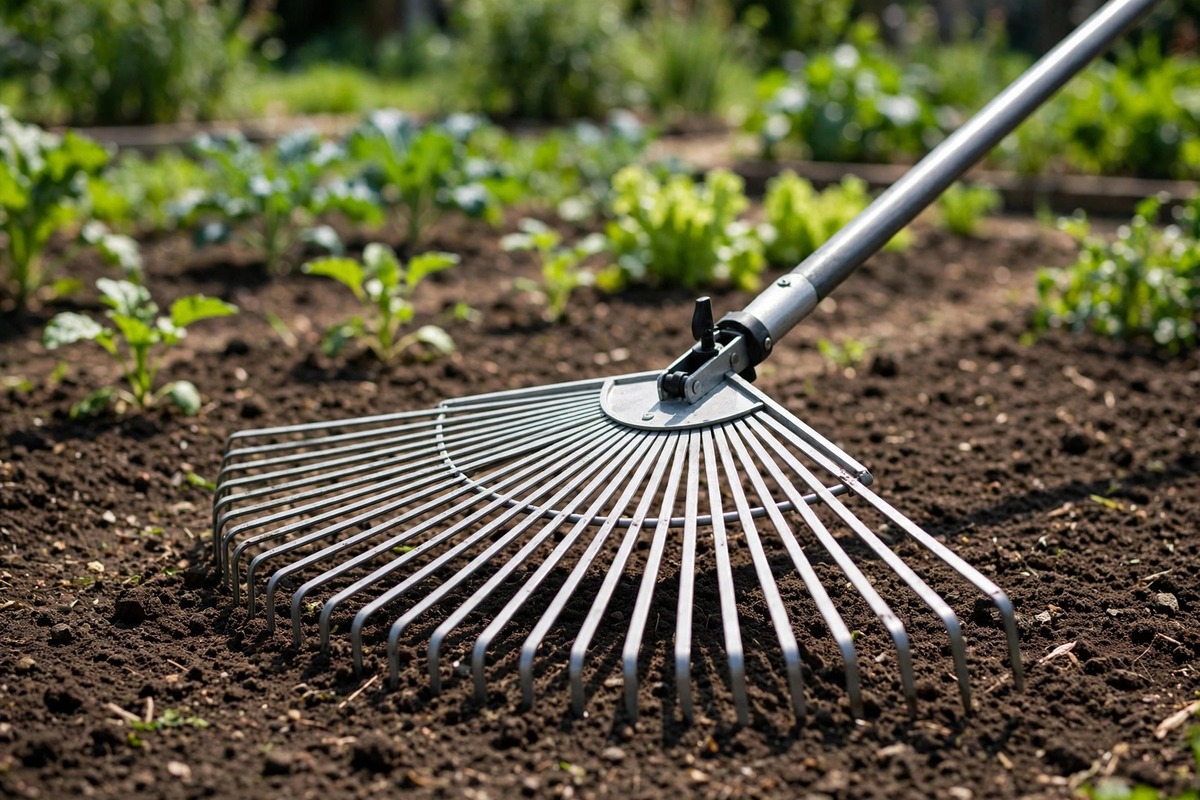
This rake has a neat trick. The head opens wide, up to 23 inches, or closes down to just 8 inches. Wide for leveling a whole bed, narrow for cleaning up between rows of young plants.
The handle is made of light aluminum and stretches out to 63 inches. That long reach means less bending and less walking on your soft beds. Your feet stay on the path, and the soil stays fluffy.
Because the head gets so narrow, it fits inside raised beds and tight spots with ease. It slides between seedlings and pulls out dead leaves and bits of mulch. Try doing that with a big fixed rake and you will pull up half the row.
It is also handy in fall, good for pulling leaves out of beds and corners. One rake does the work of two or three fixed ones. That means less clutter in the shed and fewer tools to buy.
Gardeners rate it 4.6 stars with more than 2,500 reviews. It carries an Amazon’s Choice badge in its class. People praise how light it feels on long days.
Keep the width knob snug and check it now and then during heavy use. Store it hanging up so the head stays straight. A rake like this should last you many seasons.
Pros
- Head adjusts from 8 to 23 inches wide
- Long handle cuts down on bending
- Light aluminum build is easy to carry
- Fits raised beds and tight rows
Cons
- The width knob can loosen and needs a quick re-tighten
- Made for soil and leaves, not for prying out rocks
3. FCMP Outdoor IM4000 Tumbling Composter
Banana peels, coffee grounds, and carrot tops fill the kitchen bin every single week. Most homes toss all of that in the trash. A smart gardener turns it into free food for the beds.
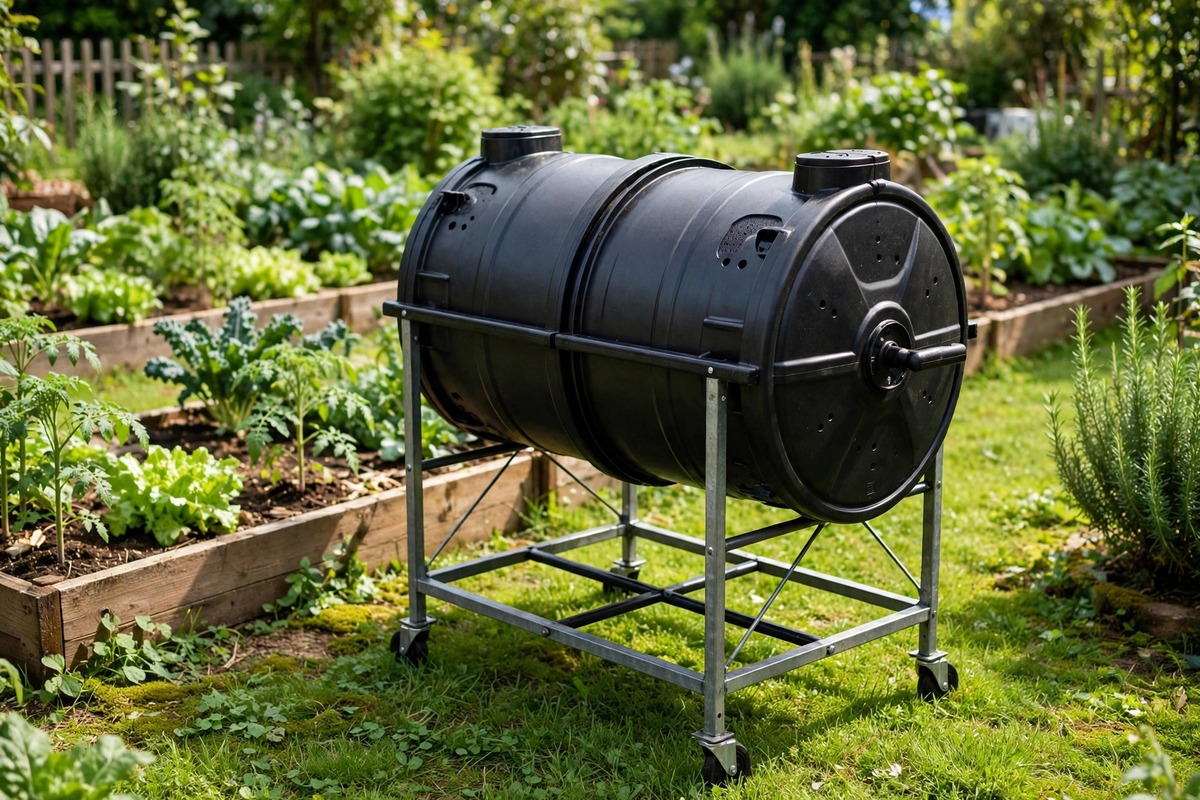
This composter is a drum on a stand, with two rooms inside. You fill one side with scraps and yard bits while the other side cooks. When the first side is done, you empty it and start again, so the flow never stops.
There is no pile to turn with a fork. You just spin the drum five or six times every two or three days. The deep fins inside break up clumps and let air in, and air is what makes compost cook fast.
In warm weather, a batch can be ready in as little as two weeks. That is fast for compost. Your beds get a steady supply of rich, dark food all season long.
The drum is made in Canada from recycled resin that stands up to sun, and the frame is strong steel. It holds 37 gallons, which suits most home gardens well. Big enough to matter, small enough for a corner of the yard.
More than eighteen thousand reviews give it 4.4 stars. Owners love skipping the bagged compost runs to the store. It also keeps scraps tucked out of sight, with no open pile in the yard.
Set it on flat ground near the beds so trips stay short. Add dry leaves when the mix looks too wet. Your soil gets better every year you use it.
Pros
- Two rooms, so one cooks while you fill the other
- A few spins replace hard fork turning
- Strong steel frame and sun safe drum
- Can make compost in as little as two weeks
Cons
- Putting it together takes time, so grab a helper
- It gets heavy to spin when both sides are full
4. VIVOSUN Seedling Heat Mat with Thermostat
Tomato and pepper seeds are slow and picky. On a cold shelf they can sit for weeks and do nothing. Warm soil wakes them up fast.
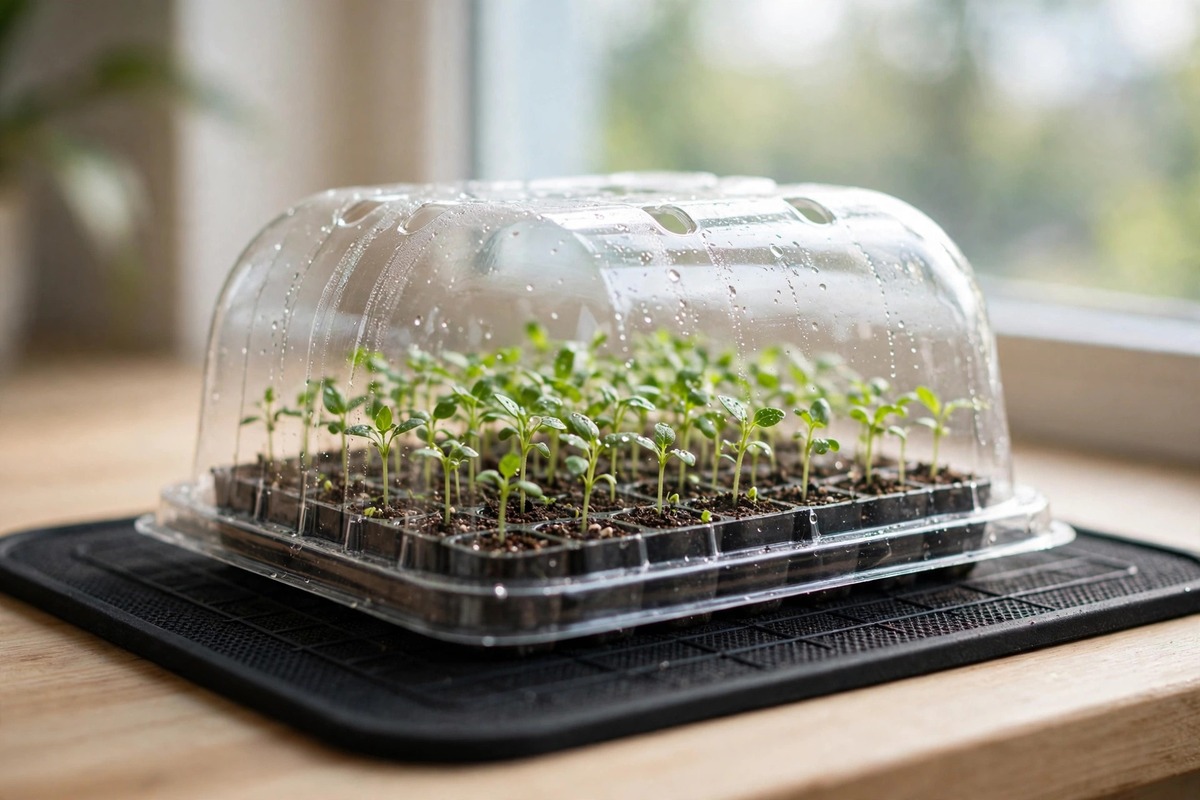
This set pairs a heat mat with a small thermostat that has a probe. The mat is 10 by 20.75 inches, the right size for a standard seed tray. You set the warmth you want, and the probe keeps the soil right there.
The mat holds the soil 10 to 20 degrees warmer than the room. That steady warmth is what seeds love most. No hot spots, no cold corners, just even heat from edge to edge.
With warm soil, peppers and tomatoes sprout days sooner and come up much more even. You stop re-sowing trays that failed. Your season starts ahead of the game instead of behind it.
The mat is waterproof, so spills and spray wipe right off. It rolls up flat when seed season ends. Next spring it comes out and goes right back to work.
It holds 4.5 stars from more than fifteen thousand reviews. Home growers call it the best tool for strong starts. Weak, leggy seedlings become much less of a problem.
Put the probe in the soil, not on top of the mat, so the reading stays true. Check the tray each day and lift the lid once sprouts show. Strong starts make strong plants.
Pros
- Speeds up sprouting by days
- Thermostat holds the heat you set
- Even warmth with no hot spots
- Waterproof and easy to wipe clean
Cons
- The probe needs care to sit in the right spot
- One mat fits one tray, so big seed plans need two
5. VIVOSUN 5-Gallon Fabric Grow Bags, 5 Pack
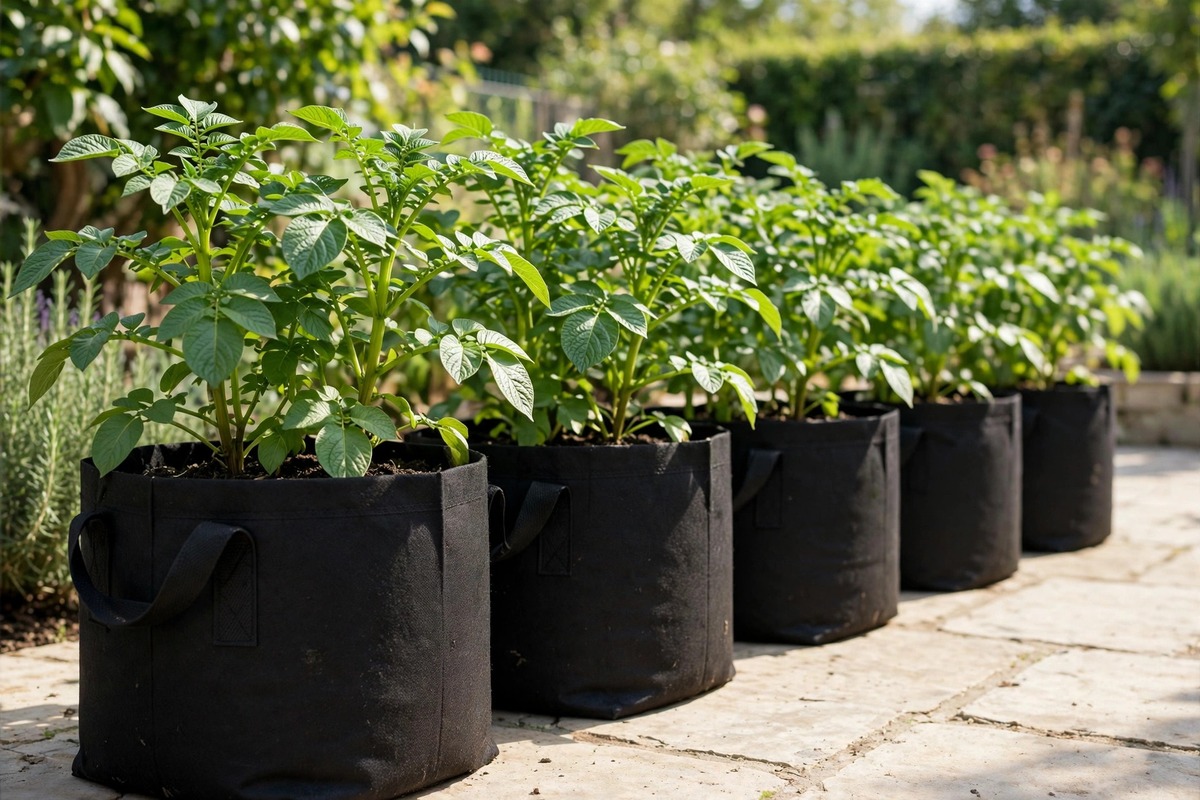
No room for a raised bed? No problem at all. These thick fabric bags turn a sunny patio, a driveway edge, or a balcony into a garden in about ten minutes.
Each bag holds five gallons of soil mix. The fabric is thick, strong, and free of BPA. Sturdy stitched handles on the sides let you move a full bag without a fight.
The fabric does something clever with roots. When a root tip hits the air at the edge, it stops and branches out instead. Plants grow thick, full root balls instead of roots that spin in circles.
Water drains out through the cloth, so roots do not sit in swampy soil. That means less root rot and fewer sad, yellow plants. On hot days the fabric also lets extra heat escape.
They shine with potatoes, tomatoes, peppers, and herbs. At the end of the season you dump the soil, fold the bags flat, and store them in a drawer. No big pots eating up your shed all winter.
This set holds 4.7 stars from more than twenty seven thousand reviews. Growers keep coming back for more bags each year. That kind of repeat love says a lot.
Water bags a bit more often than plastic pots, since the cloth dries faster. Set them where they will live before you fill them. A full wet bag is heavier than it looks.
Pros
- Roots grow thick and healthy with air pruning
- Great drainage helps stop root rot
- Strong handles for moving full bags
- Fold flat for easy winter storage
Cons
- Bags run a touch smaller than the size on the label
- Cloth dries out faster, so watering comes more often
6. Fiskars Ergo Garden Trowel
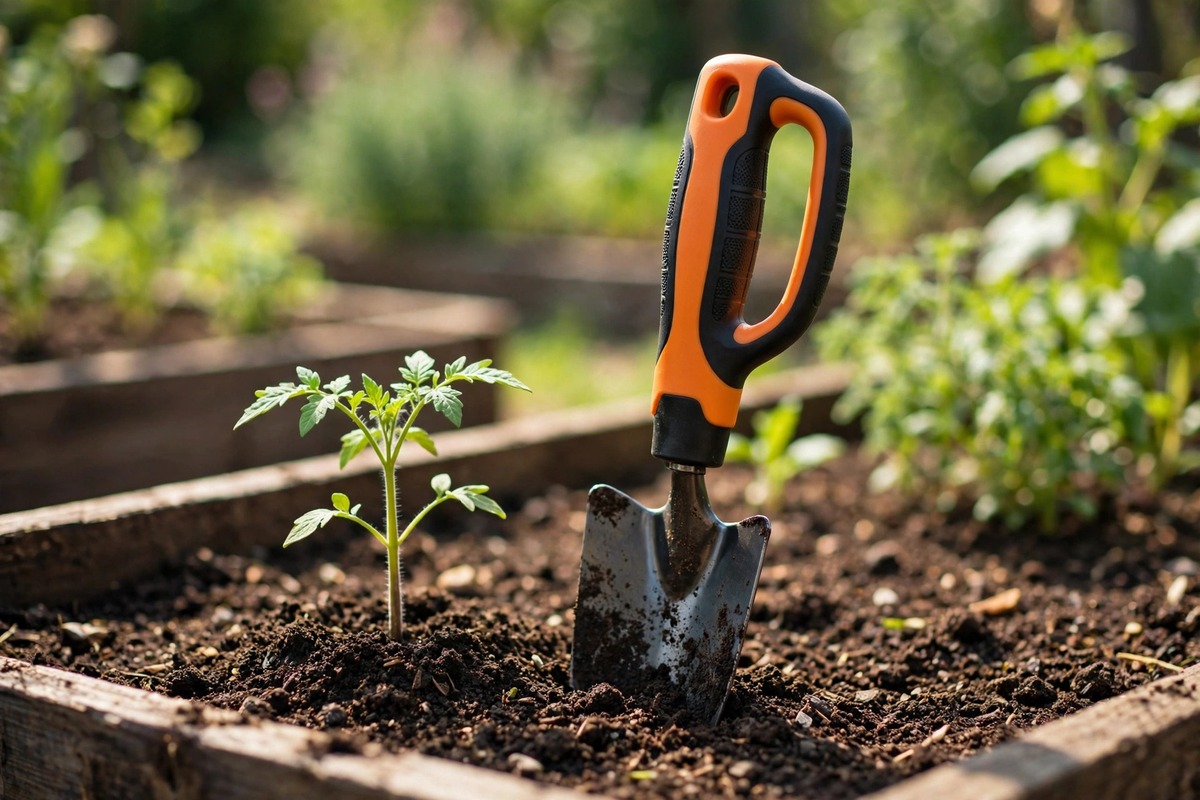
Every garden day starts with a trowel in your hand. You dig holes, pop out seedlings, and tuck plants into their new homes. If one tool must never let you down, it is this one.
The head is one solid piece of cast aluminum. Cheap trowels bend at the neck the first time they hit hard soil. This one does not bend, snap, or rust.
The polished head slides into the soil with less push from you. The soft grip handle fits the hand well and eases the strain. Long transplanting sessions stop hurting your palm.
It is the right size for seedlings, herbs, and flowers. You can dig a neat hole, lift a plant with its roots, and set it in one smooth flow. Fast hands make planting day fly by.
Fiskars backs it with a lifetime warranty. There is a hole in the handle for hanging it on a hook. Small touch, but your tools stay tidy and easy to find.
It holds 4.7 stars from about fourteen thousand reviews. Season after season, it lands on best trowel lists. Gardeners call it the one they buy once and keep.
Rinse it after use and hang it dry. Keep it for beds, bags, and pots where it shines most. For breaking brand new ground, grab a bigger spade instead.
Pros
- One piece cast head that will not bend
- Soft grip that is kind to hands
- Slides through soil and shrugs off rust
- Backed by a lifetime warranty
Cons
- You get one trowel only, with no extras in the box
- Very large hands may wish the grip was longer
7. Nisaku NJP650 Hori Hori Knife
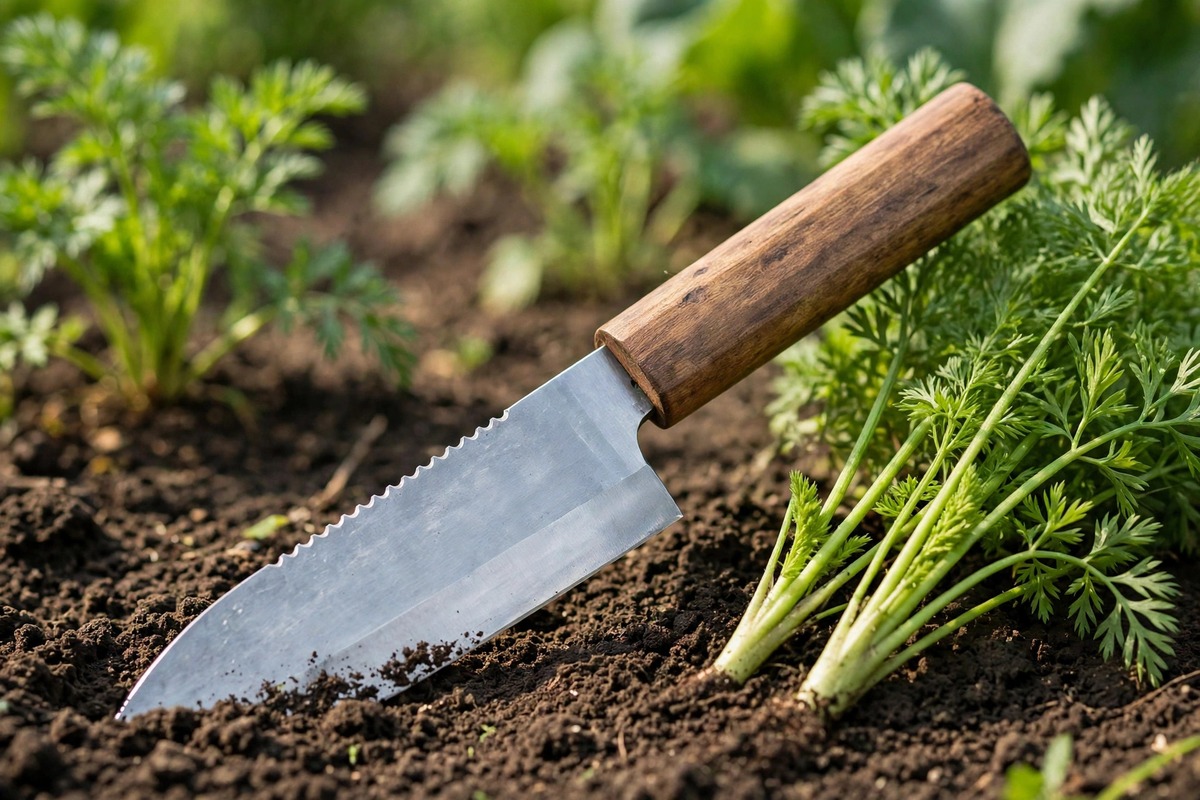
Some tools do one job well. This Japanese garden knife does five, and it does them all with ease. That is why so many gardeners call it the tool they reach for first.
The blade is stainless steel, made in Japan, with two edges. One side is straight for clean cuts, and the other side has teeth for roots and twine. The face of the blade curves like a small trowel for scooping soil.
Marks along the blade show depth in inches and millimeters. You plant bulbs and seeds at the exact depth they need, every time. No more guessing and no more plants set too deep or too shallow.
Use it to weed, dig, divide plants, cut roots, and harvest carrots and other root crops. Five tools stay in the shed while this one rides on your belt. Fewer trips back and forth means more done before lunch.
I like a tool that earns its keep, and this one earns it fast. It comes with a sheath that keeps the blade safe and clean. The wood handle feels warm and solid in the hand.
It holds 4.8 stars from about nine thousand reviews, the highest rated hand tool on this list. Most of those reviews are five stars. People praise how strong it feels after years of use.
Keep a firm grip when your gloves are muddy, since the smooth wood can feel slick. Wipe the blade dry after wet work. Treat it well and it may outlast every other tool you own.
Pros
- Five tools in one handy knife
- Depth marks for spot on planting
- Strong Japanese stainless steel
- Sheath included for safe carry
Cons
- Smooth wood handle can feel slick with muddy gloves
- The blade is sharp, so it must live in its sheath
8. FLORA GUARD Bulb Planter
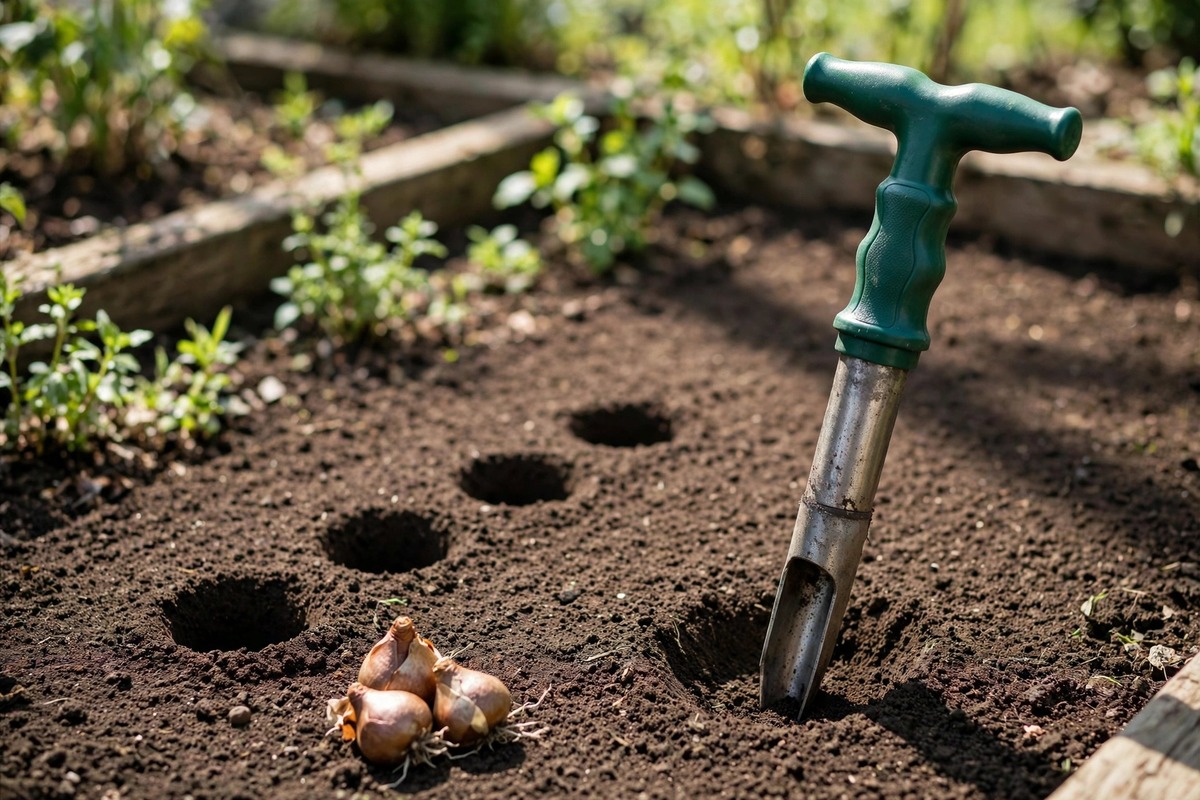
Planting a row of seed potatoes one hole at a time can eat your whole morning. Your knees ache, your back complains, and each hole ends up a new depth. This small tool fixes the whole job.
You push it into the soil, and the toothed base bites in clean. Then you squeeze the spring handle, and the plug of soil pops right out. What is left is a neat, even hole, ready for the bulb or seed potato.
Marks on the side show the depth, so every hole lands the same. Even depth means plants come up together and grow at the same pace. Rows look tidy and harvests come in more even too.
It is made for loose, worked soil, like a bed you have dug or a bag of fresh mix. In that kind of ground it flies. A whole row of onion sets or fall bulbs goes in before a trowel user does five.
The steel is chrome plated and built stiff, so it resists bending in soft ground. The spring does the hard part of the job for you. Your hand just guides it from spot to spot.
It has been a go-to pick in its class for years, with thousands of reviews behind it. Fall bulb fans swear by it. Spring potato rows go in just as fast.
Save it for prepared beds and skip the rocky, rock hard ground. Wipe it clean after use so the spring stays snappy. Used the right way, it turns a slow chore into a quick win.
Pros
- Makes even holes in seconds
- Spring handle pops the soil plug out for you
- Depth marks keep every plant at the same level
- Toothed base bites clean into worked soil
Cons
- Best in soft, prepared beds, not hard or rocky ground
- Holes are one width, so giant bulbs may need a trowel too
9. Rain Bird LNDDRIPKIT Drip Irrigation Kit
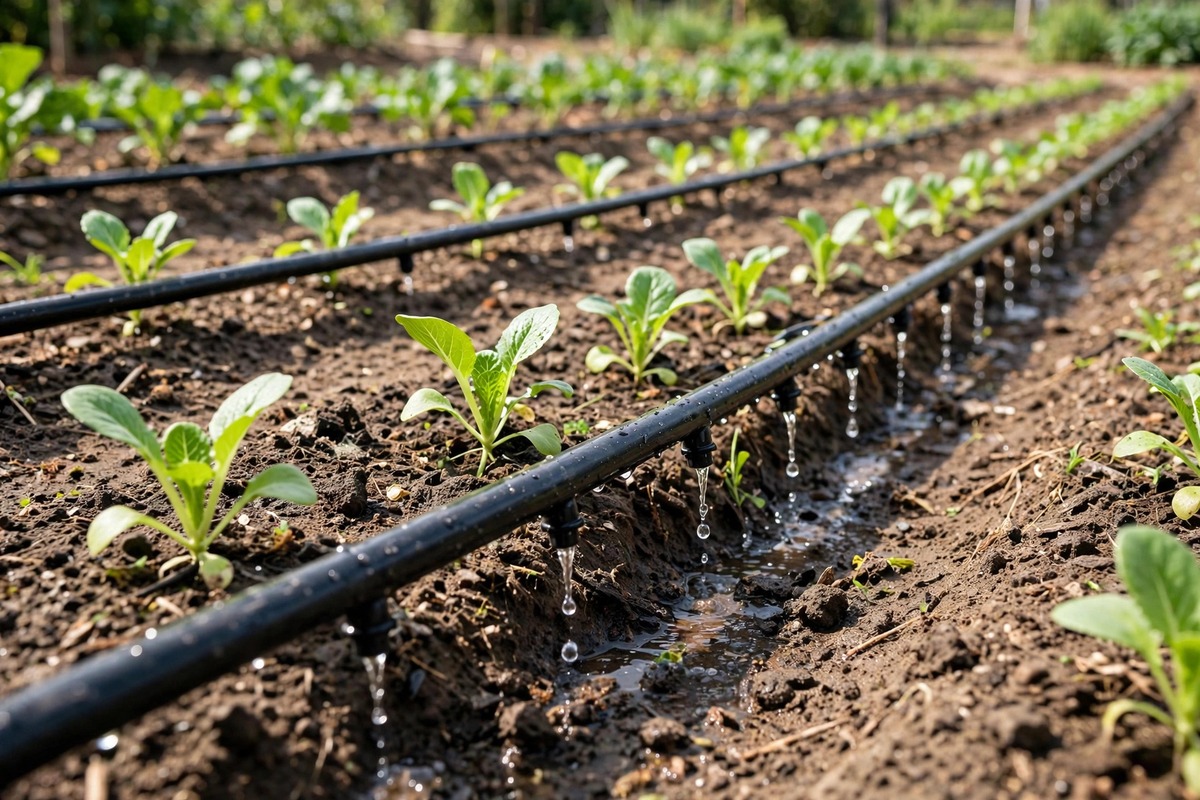
Hand watering a big bed can eat an hour of your day. And most of that water lands on leaves and paths, not on roots. A drip kit sends each drop right where the plant drinks.
This box holds 108 pieces, so it is a full kit, not a starter tease. You get main tubing, small tubing, drippers, bubblers, and tiny sprays. A regulator, a backflow guard, and a filter come in the box too.
The drippers give a slow, steady flow, one or two gallons per hour at each plant. They keep their pace even on slopes, so plants at the end of the line drink as well as the first ones. Roots get deep water with almost no waste.
Set it up once, and the bed waters itself on your hose timer. In one hands-on test, this kit watered 26 plants with no leaks, and the setup took about fifteen minutes. That is your evenings back, all summer long.
Dry leaves mean less disease on tomatoes and peppers. Wet leaves invite spots and mildew, but drip keeps the tops dry. Your plants stay cleaner and fruit keeps coming.
Gardeners rate it about 4.5 stars, with thousands of reviews. The parts fit standard Rain Bird pieces, so the system can grow with your garden. Add a line when you add a bed.
Lay out every part on the ground before you start, so nothing small goes missing. Seat the washers well at the tap to stop drips. Then sit back and let the kit do the watering.
Pros
- Full 108 piece kit in one box
- Waters roots with almost no waste
- Even flow from the first plant to the last
- Grows with your garden using standard parts
Cons
- Small parts are easy to misplace if you skip the lay out step
- The tap joint needs its washer seated well to stay drip free
10. Melnor Flat Soaker Hose, 50 ft
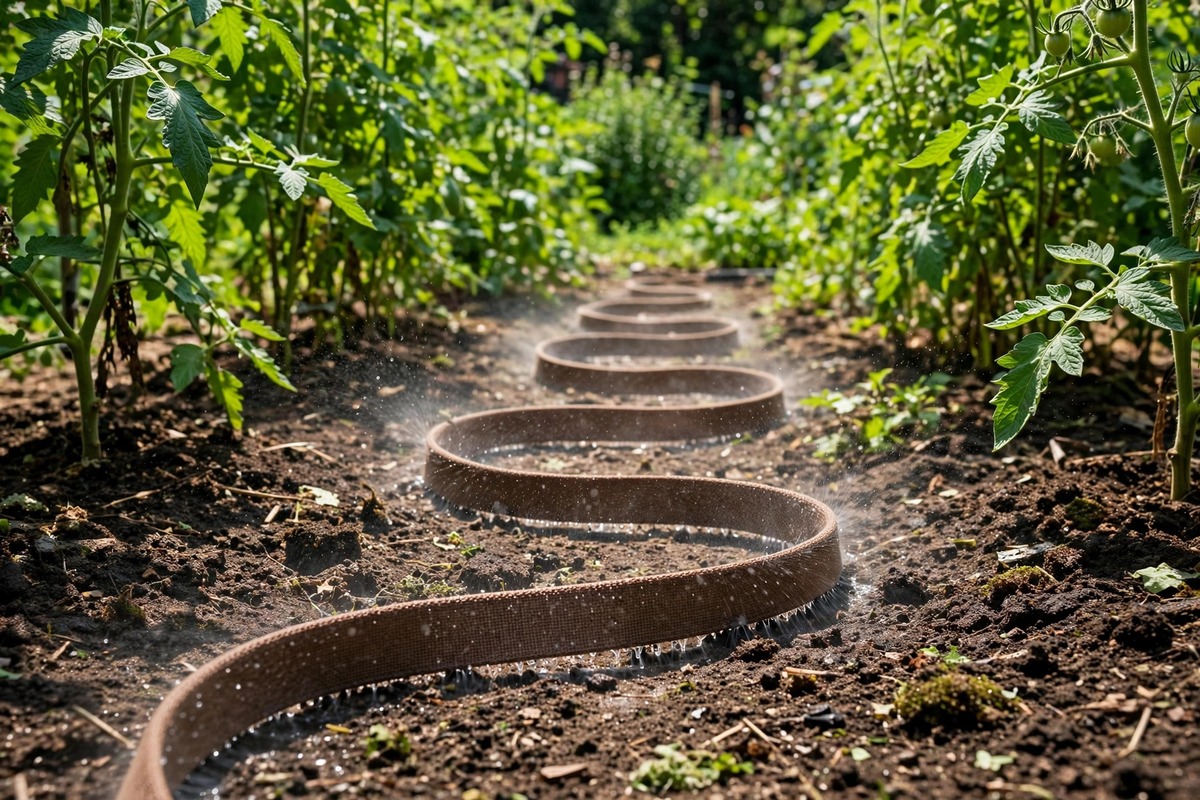
Because roots drink, not leaves. A soaker hose lays that rule right into your beds. It weeps water slowly along its whole length, straight into the soil.
This one is flat, not round, and it runs a full 50 feet. You snake it through your rows once at the start of the season. Then each watering is just a turn of the tap.
The slow soak goes deep, where roots live. Deep water grows deep roots, and deep roots shrug off hot days. At the same time, the tops of your plants stay dry and clean.
You can bury it under mulch to hide it and slow drying even more. The end caps resist rust, and spare washers come in the pack. Melnor backs it with a two year warranty.
When the season ends, it flattens down to the size of a shoebox. No fat coils eating your shed space. It hangs on one small hook, neat and out of the way.
Thousands of gardeners run these hoses through their beds each year. It is a long running favorite for rows of beans, corn, and tomatoes. Simple gear, used right, just works.
Keep long runs flat and the water pressure gentle for the most even flow. Check the end caps and fittings for drips before each use, and snug them if you spot one. Bring it in during the hottest weeks so the sun does not age it.
Pros
- Slow, deep soak right at the roots
- Flattens to shoebox size for storage
- Can hide under mulch all season
- Rust free caps and a two year warranty
Cons
- End caps and fittings need a drip check before use
- The far end waters less on very low pressure, so keep runs level
11. Dramm One Touch Rain Wand, 30 Inch
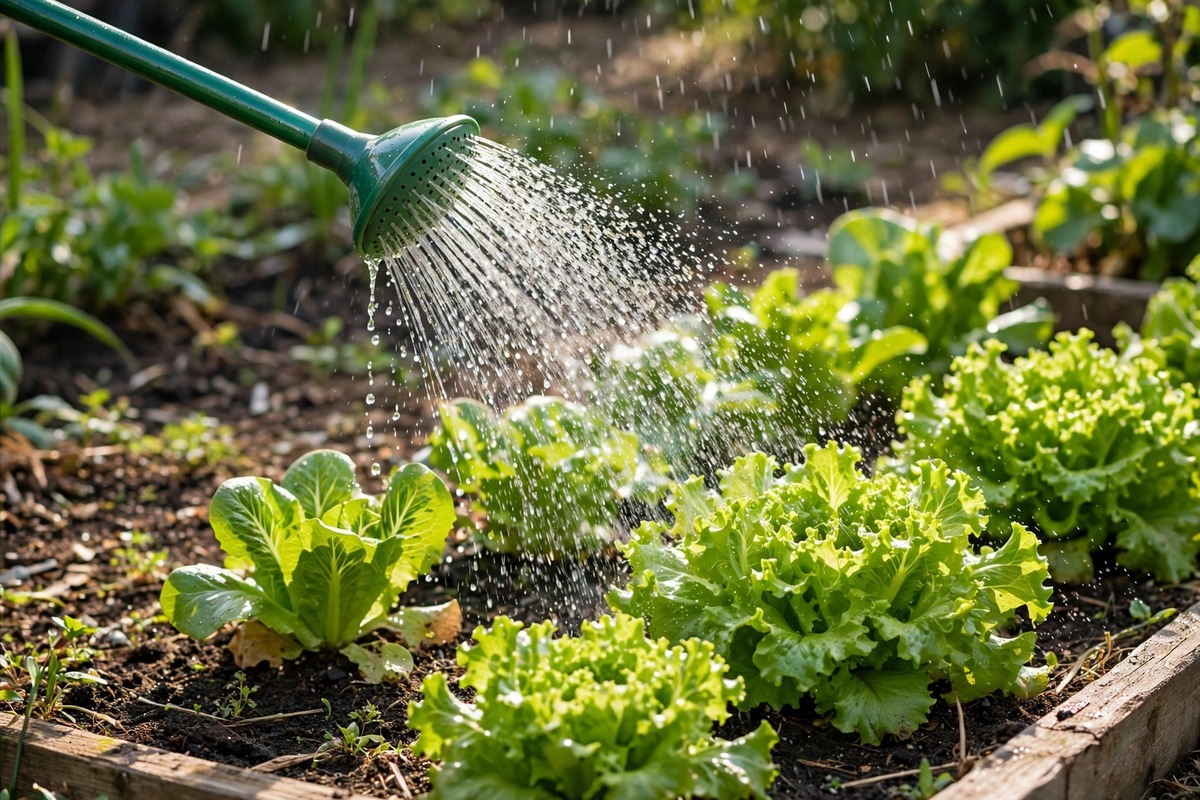
Young seedlings are soft and weak at the start. A hard blast from a hose knocks them flat and washes the soil off their roots. What they need is rain, not a storm.
This wand makes a soft, rain-like shower that plants love. The head spreads water in a wide, gentle fall. Seedlings, transplants, and pots get a deep drink with no soil splash.
A thumb lever runs the flow, so there is no trigger to squeeze and hold. Slide it open, slide it shut, or set it in between. Tired hands feel the difference in one watering round.
The shaft is strong aluminum and a full 30 inches long. You reach the back of beds and the middle of big pots without stepping in. Hanging baskets get watered without a step stool in most yards.
The shower head on this wand can be replaced, and that is rare. On most wands, a worn head means buying a whole new wand. Here you swap the head and keep going for years.
Gardeners rate it about 4.6 stars, with thousands of reviews. The grip is padded and shaped to fit the hand. Dramm backs the wand with a lifetime warranty.
Drain it before winter so ice does not harm the head. Keep the spare head in mind years from now when the first one wears. This is a buy it once kind of tool.
Pros
- Soft rain shower that never blasts seedlings
- Thumb lever means no sore trigger hand
- Shower head can be replaced when worn
- Lifetime warranty behind it
Cons
- The head is plastic, though it can be swapped out
- Tall hanging baskets may still need a small step
12. XLUX Soil Moisture Meter
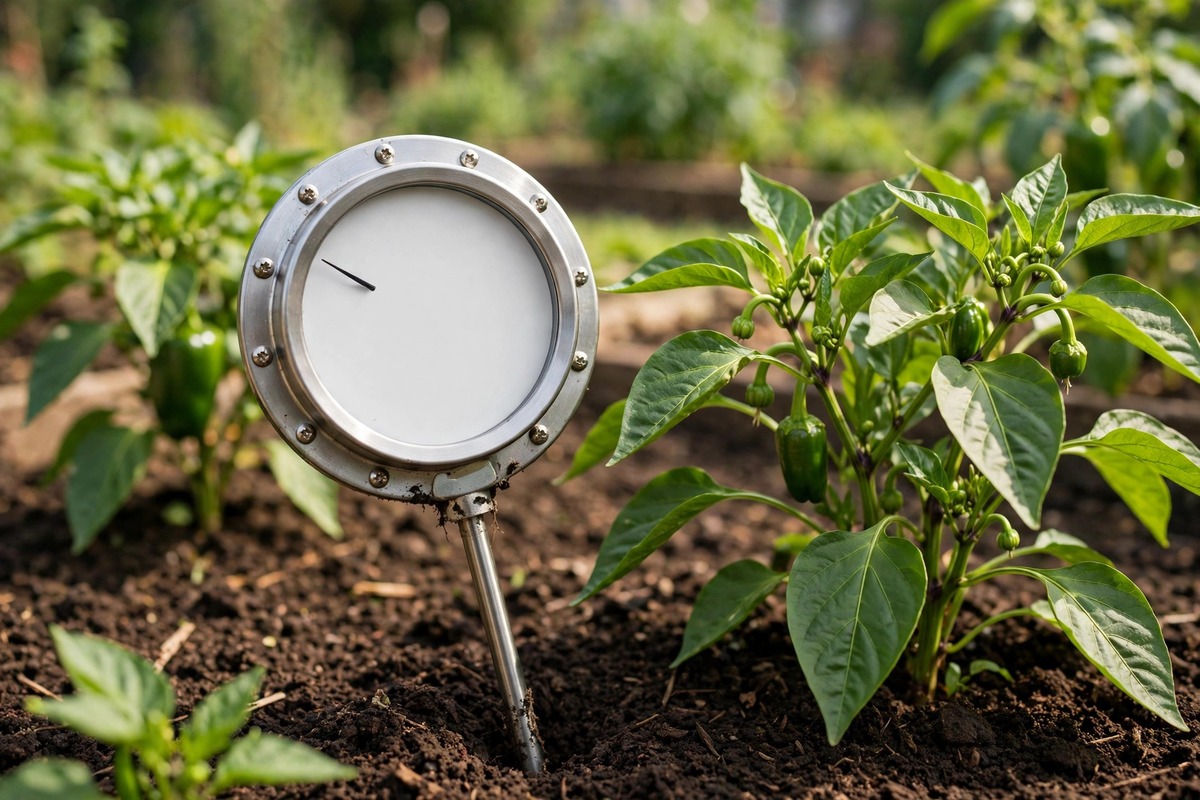
Wet or dry? Most of us poke a finger in the soil and guess. The top can feel dry while the roots sit in mud, or the other way around.
This meter ends the guessing in about two seconds. You push the single slim probe down to root depth. A big dial shows the reading on a scale of one to ten, with colors that are easy to read.
One probe is the smart choice here. It slips between roots with far less harm than twin probe meters. Your plants keep their roots, and you still get a true reading.
There are no batteries, ever. Nothing to charge, nothing to die at the wrong time. It works the same in a raised bed, a grow bag, or a clay pot.
It holds 4.4 stars from more than seventy five thousand reviews. That is a huge crowd of happy users for such a small tool. It sits at the top of its class year after year.
Check each bed before you water, and skip the ones that are still damp. You save water, and your plants stop getting drinks they never asked for. Beds stay on the dry side of too much, which roots love.
Wipe the probe clean after each use, and never leave it stuck in the soil. In very sandy mixes the reading can run low, so use it as a guide. Small habit, big payoff.
Pros
- Root level readings in seconds
- No batteries to buy or charge
- Slim single probe is gentle on roots
- Big color dial that anyone can read
Cons
- The probe wears over time if left sitting in soil
- Readings run low in very sandy, loose mixes
13. VELCRO Brand ONE-WRAP Garden Ties, 50 ft
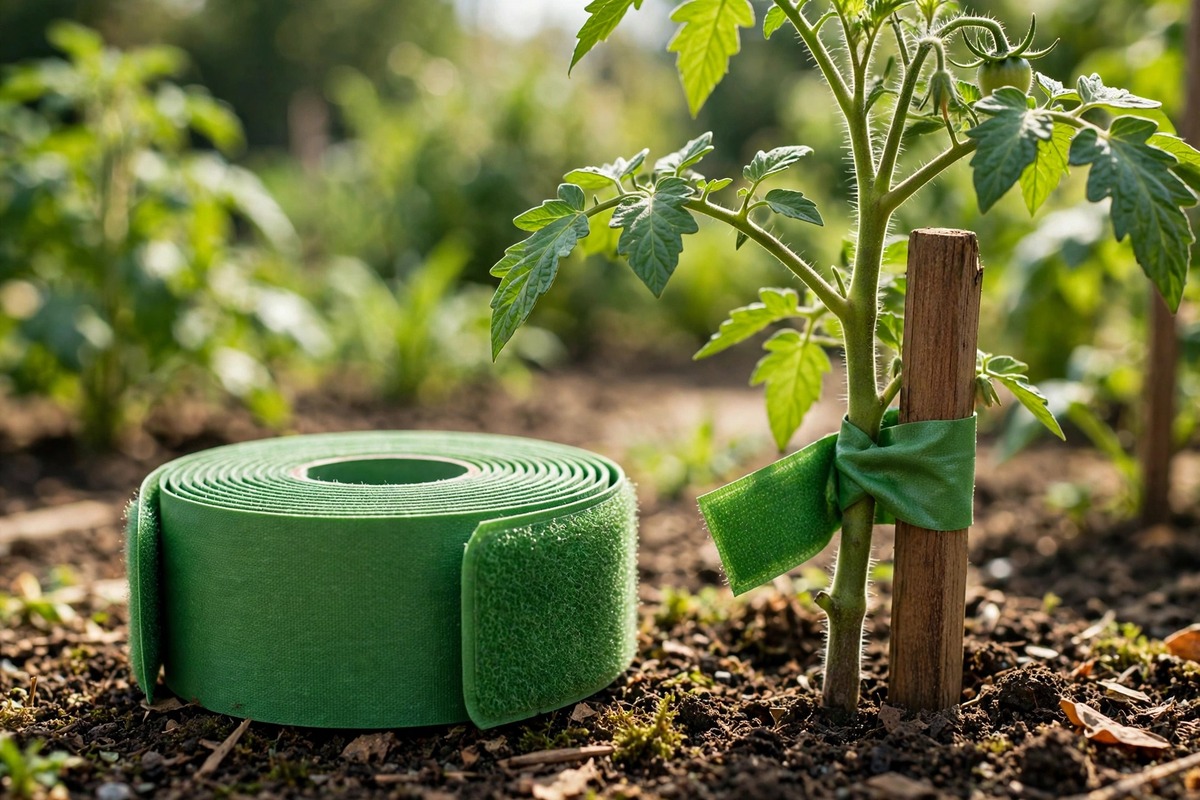
Tomato plants grow fast, and then one windy day they flop right over. Peppers lean, cucumbers wander, and fruit sits in the dirt. A roll of these ties fixes the mess in minutes.
The roll is 50 feet long and half an inch wide. You cut off just the length you need with plain scissors. No knots, no wire, and no waste at the end of the job.
The soft side of the strap faces the stem. It holds firm but never cuts or strangles a growing plant. As the stem gets thicker, you loosen the wrap in seconds and use it again.
The grip holds up in rain and storms. Stems stay tied to their stakes and cages when the wind picks up. Upright plants get more sun and air, and that means more fruit.
The ties are made with 65 percent recycled plastic. One roll lasts a long time, since each piece can be used again and again. Season after season, the same wraps keep working.
They hold 4.7 stars from more than twenty seven thousand reviews. Gardeners keep a roll in the shed, the truck, and the junk drawer. Once you use them, plain wire feels like a pain.
Wrap the stake first, then loop the stem loose enough to grow. Check heavy plants each week as fruit fills out. A two second fix now saves a broken stem later.
Pros
- Cut to any length you need
- Soft on stems and never cuts in
- Loosen and reuse them season after season
- Strong grip that holds through storms
Cons
- Costs a bit more per foot than plain twist wire
- Cut pieces are small and easy to lose in the grass
14. Grampa’s Weeder
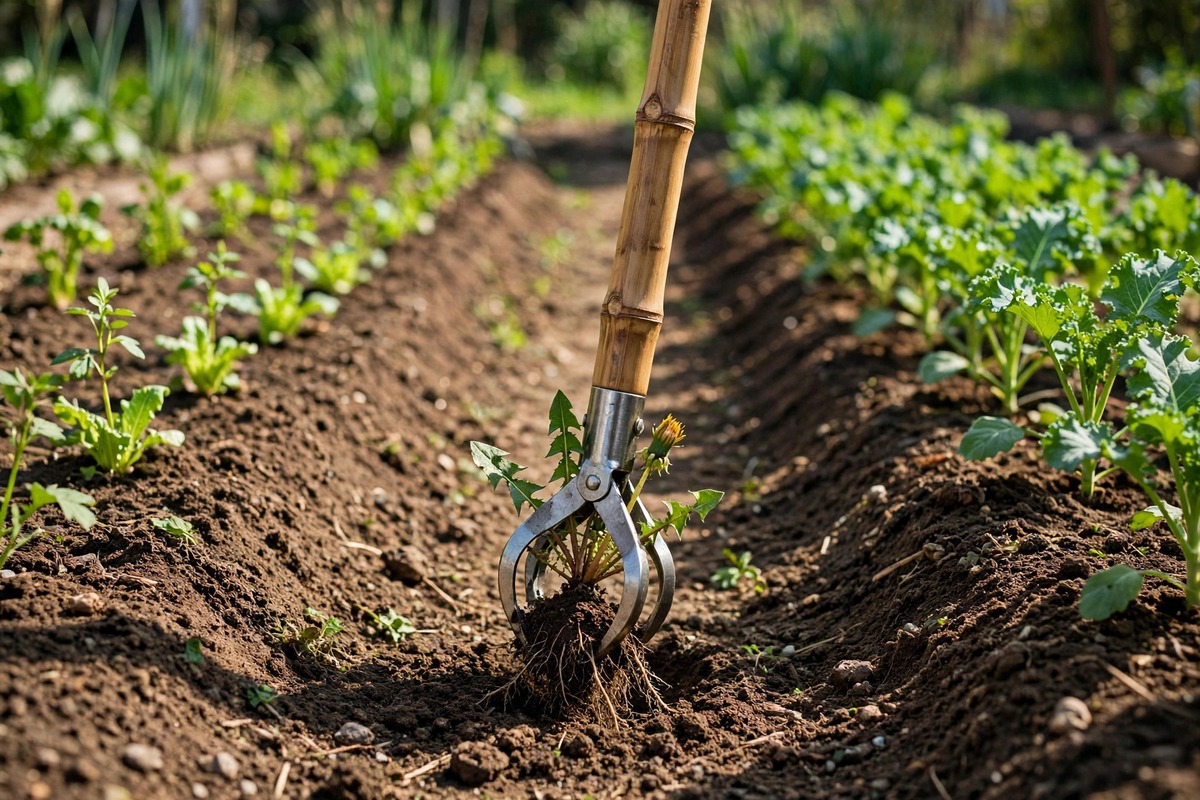
Weeds with long roots laugh at hand pulling. The top snaps off, the root stays, and the weed is back next week. This old tool pulls the whole thing out, root and all.
The design goes back to 1913, and it has barely changed since. A real bamboo handle runs 45 inches long. At the end sits a four claw steel head with a foot lever.
You center the claws over the weed, step on the lever, and tilt the handle. The claws grip the root and the whole plant pops out of the ground. It feels oddly fun once you get the rhythm.
Best of all, you do it standing up. No kneeling, no bending, no sore back at the end of the row. A whole bed of dandelions can be cleared from your feet.
There are no plastic parts to crack in the sun. The tool is steel, bamboo, and a promise, since it comes with a lifetime guarantee. It is built the way tools used to be built.
It holds 4.5 stars from more than sixty eight thousand ratings. More than seven thousand people bought one in a single recent month. Numbers like that do not happen by luck.
Use it after rain or a good watering, when the soil is soft. In bone dry, hard ground, deep roots can snap off. A quick soak of the bed first makes every pull clean.
Pros
- Pulls weeds root and all while you stand
- Foot lever does the hard pulling for you
- No plastic parts to crack or fade
- Backed by a lifetime guarantee
Cons
- Deep roots can snap in bone dry, hard soil
- Works best on weeds with one main root, not grass mats
15. DonSail Scuffle Hoe
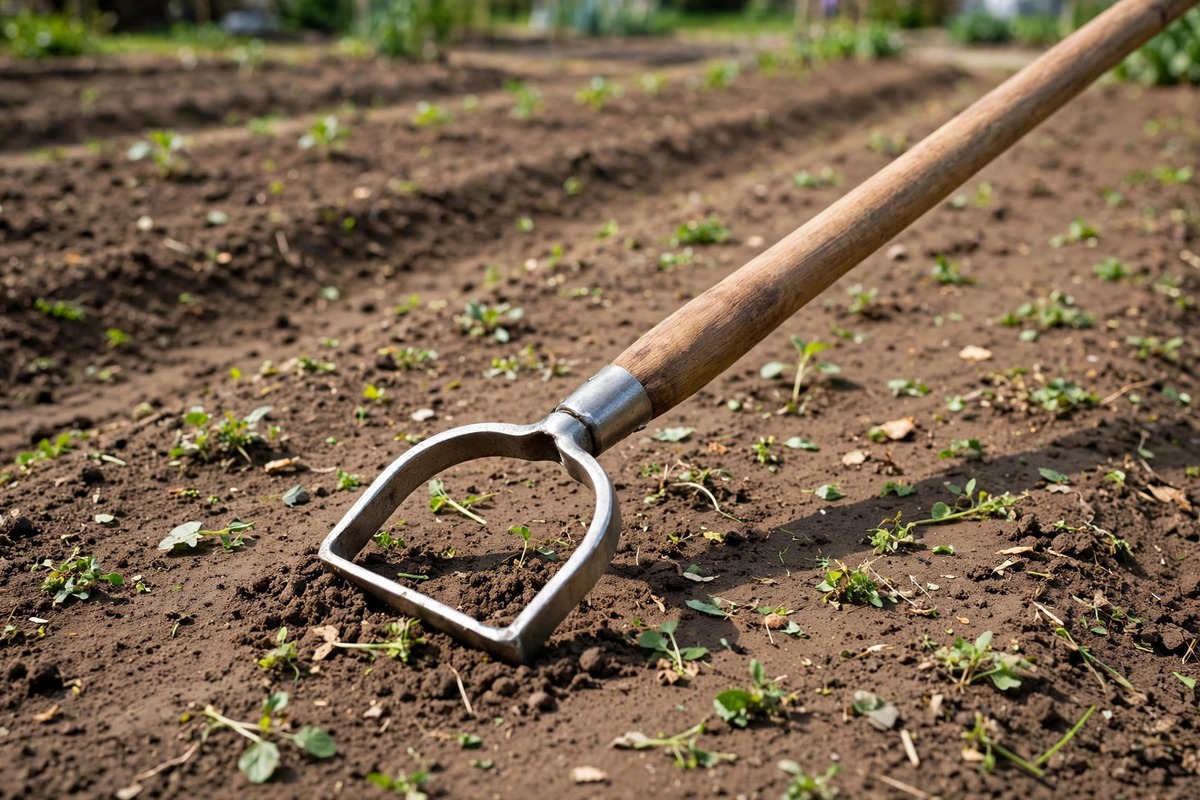
Tiny weeds look harmless today. Give them one week and they own the bed, stealing water and food from your crops. The trick is to skim them off while they are still small.
This hoe has a loop of steel that glides just under the surface. It cuts weeds on the push and again on the pull. Back and forth, back and forth, and the row is clean.
Because it skims so shallow, it does not churn up your soil. Roots and mulch stay right where they belong. You also bring fewer new weed seeds to the top, so less sprouts later.
The handle adjusts to 30, 43, or 60 inches. Short for raised beds, long for open rows, and right for your height. It goes together in about a minute with no tools at all.
The tube is thick, strong steel made for real farm style work. It is the top seller in its class of action hoes. Gardeners rate it about 4.5 stars.
Ten minutes of skimming clears a whole bed of young weeds. Do a quick pass each week and weeds never get a foothold. Your crops grow without a fight for food and light.
Check the joints after heavy sessions and snug them if they loosen. Save the hoe for weeding, not for digging hard ground. Used for its own job, it is hard to beat.
Pros
- Cuts weeds on both the push and the pull
- Handle adjusts for beds, rows, and your height
- Sets up in about a minute with no tools
- Skims shallow so mulch and roots stay put
Cons
- Screw joints can loosen and need a re-tighten
- It is a weeding hoe, not a tool for digging hard ground
16. Fiskars Power-Lever Anvil Pruner
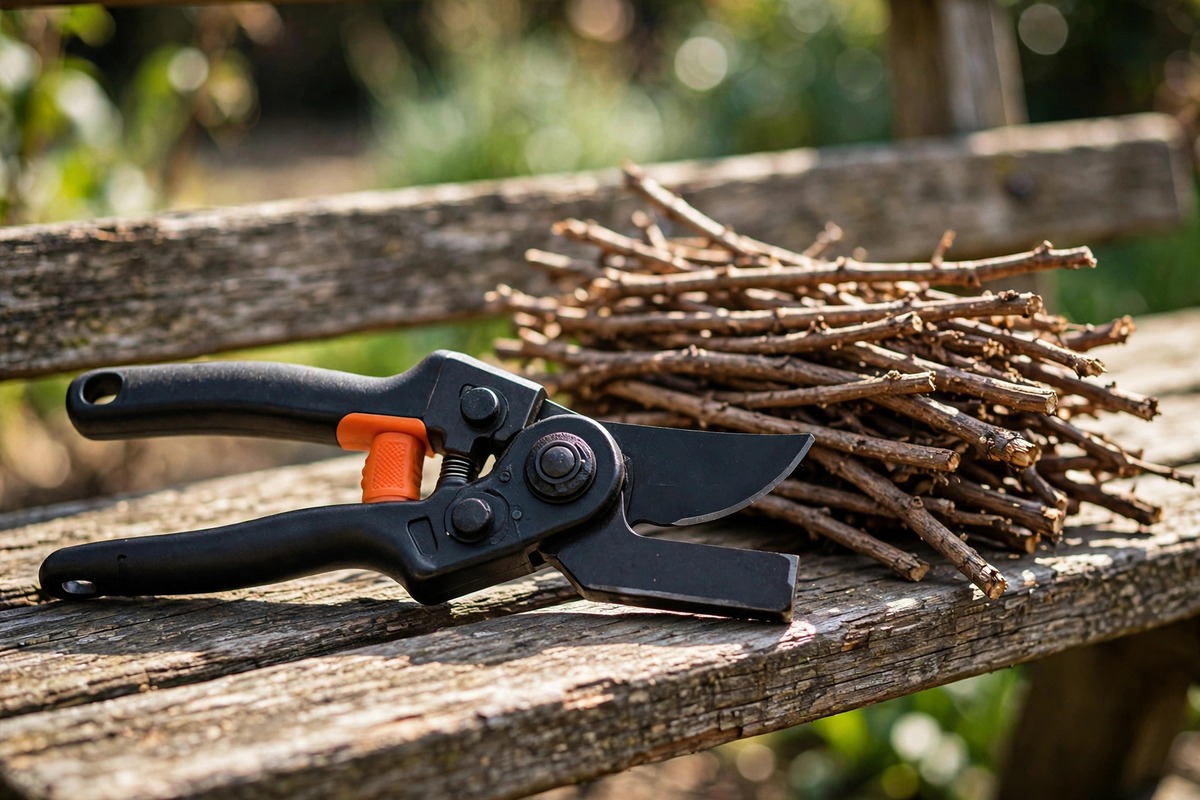
At the end of the season, dead stems and dry vines pile up fast. Tomato vines, spent bean stalks, and dry flower stems all need to go. This is the cleanup tool for that job.
Let us be clear about one thing first. An anvil pruner is for dead, dry wood only. It can crush soft live stems, so for green live cuts, a bypass pruner is the kinder tool.
The Power-Lever design gives you about twice the cutting power of a plain pruner. Dry stems up to 5/8 of an inch cut with one easy squeeze. Cuts that used to take two hands and a grunt take one hand now.
The blade is fully hardened steel that stays sharp. A low friction coat helps it resist rust and gummy sap. A quick wipe and it is ready for the next pile.
Fast cleanup is not just about looks. Dead vines left in the bed can carry disease into next season. Clear them out fast, and your beds start the spring clean.
It holds about 4.6 stars from more than ten thousand reviews. Fiskars backs it with a lifetime warranty. For a tool that works this hard, that promise matters.
Keep it in the cleanup kit, next to your bypass pruner for live cuts. The right tool for each kind of stem keeps plants healthy. And it keeps your hands from aching at the end of the day.
Pros
- Twice the cutting power with less squeeze
- Powers through dry stems up to 5/8 inch
- Blade coat fights rust and sticky sap
- Lifetime warranty from Fiskars
Cons
- Made for dead wood only, not live green stems
- Thick limbs past its cut size need loppers instead
17. Fiskars Garden Harvest Basket
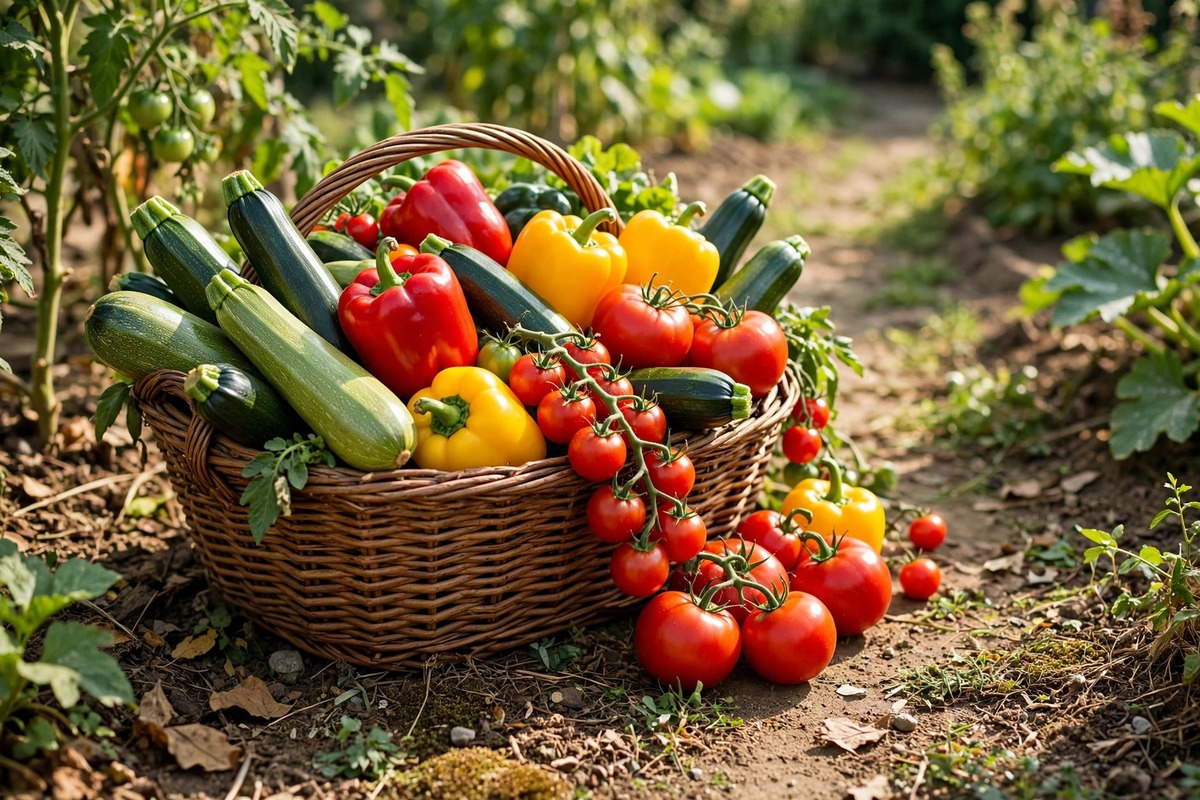
Harvest day should feel like a win, not a juggling act. Arms full of tomatoes, a few rolling off, and greens trailing dirt behind you. This basket ends the circus in one smart piece of gear.
One side of the basket works like a colander, with drain holes in the base. The other side is solid for soaking or for carrying clean produce. The middle part keeps your tools apart from your food.
You pick your tomatoes, beans, and greens, then rinse them right in the basket. Dirt and bugs wash off outside, not in your sink. One trip from bed to kitchen does the whole job.
The handles fold and lock together for one hand carry when the load is light. For heavy loads, molded grips on both sides let you lift with two hands. At just 2.5 pounds, the basket itself adds almost no weight.
It also moonlights as a tool caddy on planting days. Trowel, ties, and seeds ride in the tool side. One carrier for the whole garden round.
Gardeners rate it about 4.7 stars. It has become a gift that gardeners give each other a lot. Once you wash a harvest in it, plain buckets feel clumsy.
Rinse it and let it dry in the sun after harvest days. Store it on a shelf where it stays clean for food. Your future self, arms free and smiling, says thanks.
Pros
- Wash and carry the harvest in one basket
- Colander side drains dirt and water away
- Middle part keeps tools away from food
- Light at just 2.5 pounds
Cons
- A very full load is a two hand job, so skip the one handle lift
- It is wide, so it takes a full spot on the shelf
Key Takeaways
- Test your soil before you feed it, and you will buy less and grow more.
- Warm soil and even heat make seeds sprout days faster.
- Water belongs at the roots, so drip lines, soaker hoses, and a simple meter beat daily guessing.
- Weed a little and often: a weekly skim with a hoe and a stand up puller keeps beds clean with no sore back.
- End the season with clean beds, since cleared dead vines mean less disease next year.
- A small set of strong tools beats a shed full of cheap ones that bend and break.
Conclusion
Your garden does not need a shed full of gear. It needs a short list of tools that each do one job very well. That is the whole heart of this list.
Start where your season starts. Test the soil, warm the seeds, and set up water that runs itself. The middle of the season gets easy when the start is done right.
Then keep the small habits going. Skim the weeds each week, check the soil before you water, and tie up plants as they climb. Small jobs done on time never grow into big jobs.
I hope this list helps you grow more food with far less sweat this year. Pick the tools that match your beds, your crops, and your back. Your harvest will tell the story by fall.
Happy growing, friend. May your rows be straight, your roots be deep, and your basket be full.