15 Gardening Tools Every Beginner Needs (And the Ones You Can Skip)
Disclosure: This article contains affiliate links. If you make a purchase through these links, we may earn a small commission at no extra cost to you. See our Affiliate Disclosure

Have you ever stood in front of a shop wall full of shiny garden tools and felt your brain go a bit quiet? There are so many shapes, so many handles, so many bright boxes that promise a perfect garden. A new grower can spend a lot of money in that one visit and still miss the few tools that do most of the real work.
The short answer: you need far less than the shops want you to buy. Fifteen good tools cover almost every job a first garden will throw at you, from the first seed to the first harvest. Everything else can wait a season, and some of it can wait forever.
This list goes in the order most beginners actually meet each job. You dig and plant first, then you cut and trim, then you water, and then you rest your knees and smile at what grew. At the end there is also an honest section on tools you can skip for now, because saving money is part of good gardening too.
Every pick here earned its place the same way. It has strong reviews from a big crowd of buyers, a low pattern of returns and defect complaints, and a design that forgives small mistakes. New hands are rough on tools, so each one below can take a bit of clumsy use and keep going.
I built this list for the person who wants to plant this weekend, not for someone collecting gear for a hobby that has not started yet. If a tool only helps once a year, it did not make the cut. If a tool helps every single week, it is probably on the page below.
Here is the whole list at a glance, so you can see the plan before we walk through it one tool at a time. The table also shows, in a few words, what each pick does best.
| Product | Best for |
|---|---|
| Grenebo 9-Piece Garden Tool Set with Tote | Starting from zero with one smart box |
| Fiskars Bypass Pruning Shears | Clean cuts on live stems and small branches |
| Fiskars Micro-Tip Pruning Snips | Herbs, deadheading, and tiny tidy cuts |
| Fiskars 28 Inch Bypass Loppers | Thicker branches your hand pruners cannot handle |
| Nisaku NJP650 Hori Hori Knife | Digging, planting, weeding, and cutting in one tool |
| Tierra Garden DeWit Forged Hand Trowel | A buy-once trowel that will not bend |
| Pine Tree Tools Bamboo Gardening Gloves | Light, cool gloves you can feel through |
| Grampa’s Weeder | Pulling weeds while standing up straight |
| Flexzilla Hose 5/8 Inch x 75 Ft SwivelGrip | A long hose that does not kink or fight you |
| Bloem Aqua Rite Watering Can 1.1 Gal | Gentle watering for pots and young plants |
| XLUX Soil Moisture Meter | Knowing when to water, with no guessing |
| Chapin SureSpray 2-Gallon Sprayer | Easy spraying for beds, paths, and pots |
| SONGMICS Garden Kneeler and Seat | Saving your knees and your back |
| WORKPRO Garden Tool Tote Bag | Keeping every small tool in one place |
| GooingTop LED Grow Light | Starting seeds indoors before spring |
1. Grenebo 9-Piece Garden Tool Set with Tote
Starting with nothing is a strange feeling, because every little job seems to need a tool you do not own yet. You want to plant one small tomato start and suddenly you need a trowel, then a fork, then something to trim with. A good starter set ends that silly loop in one box.
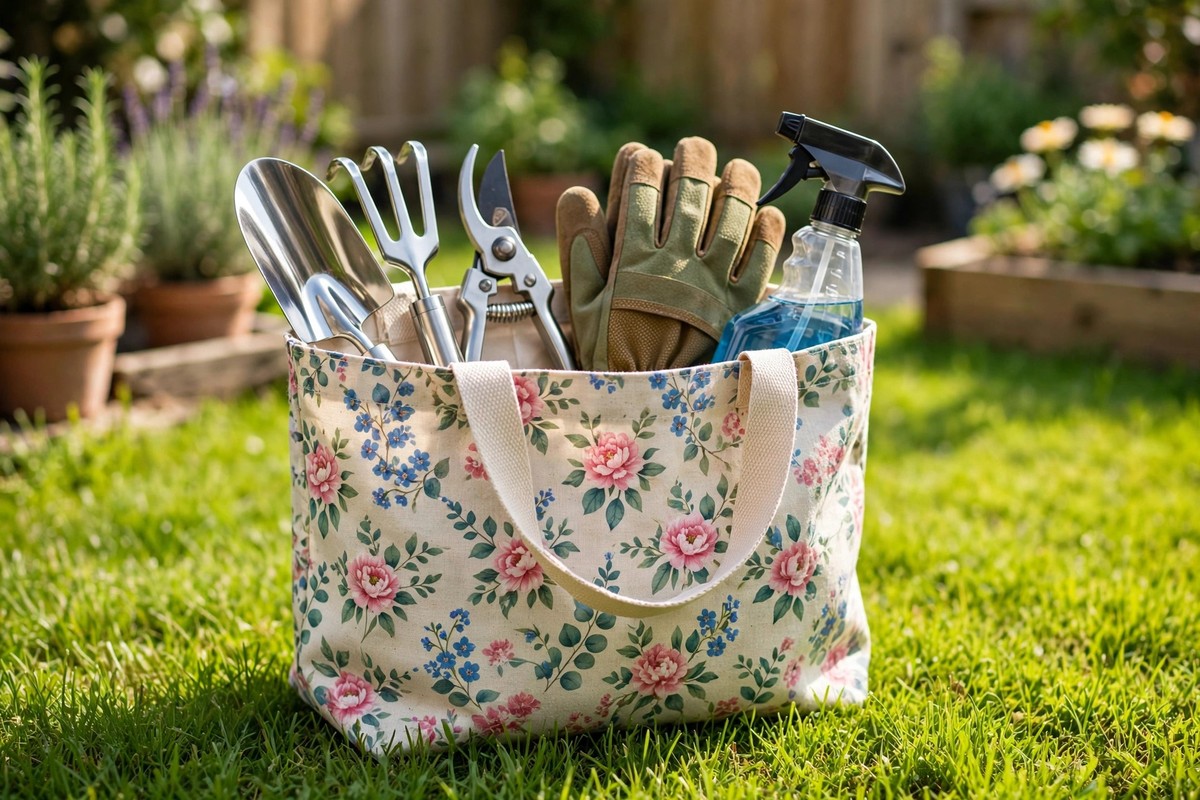
This Grenebo set packs nine pieces into a floral tote bag that is easy to carry around the yard. The tools have stainless steel heads and smooth wooden handles, so they feel solid in the hand instead of light and tinny. A pair of gloves and a spray bottle come in the box too, which covers the small extras beginners always forget to buy.
The mix inside is the part that matters most. You get the daily drivers for digging, planting, weeding, and light pruning, all in one place. That means your first Saturday in the garden is spent gardening, not driving back to the shop for one more thing.
Wooden handles are a kind gift to new hands. They do not get burning hot in the sun, they do not feel cold on a fresh morning, and they give a warm grip that does not slip much. The steel heads wipe clean with an old cloth, which keeps rust away with almost no effort.
Picture a small balcony or a first raised bed on a sunny morning. The tote sits by your feet, the gloves are on, and every tool you reach for is already there. That calm start is worth a lot when everything about gardening still feels new.
Buyers rate this set 4.8 stars across more than 4,200 reviews, which is a strong sign for a starter kit. Cheap sets earn angry reviews fast, because thin tools bend in real soil. This one keeps its good name by using real stainless heads instead of stamped tin.
A set like this also makes a sweet gift for someone who just moved into a home with a yard. It looks pretty, it feels complete, and it skips the guesswork of buying nine tools one by one. Just keep the wooden handles dry in storage and the set will serve for many seasons.
Pros
- Nine useful pieces in one box, so a beginner can start the same day
- Stainless steel heads with warm, comfy wooden handles
- Gloves and a spray bottle are included at no extra hunt
- Floral tote keeps tools together and looks lovely as a gift
Cons
- Wooden handles need dry storage so they stay smooth
- Heavy-duty jobs still call for bigger single tools later
2. Fiskars Bypass Pruning Shears
Pruners are the tool your hand will reach for more than any other, because plants always need a snip here and a trim there. A dead stem on the rose bush, a long shoot on the tomato, a herb sprig for the kitchen. Small cuts add up to most of the work in a young garden.
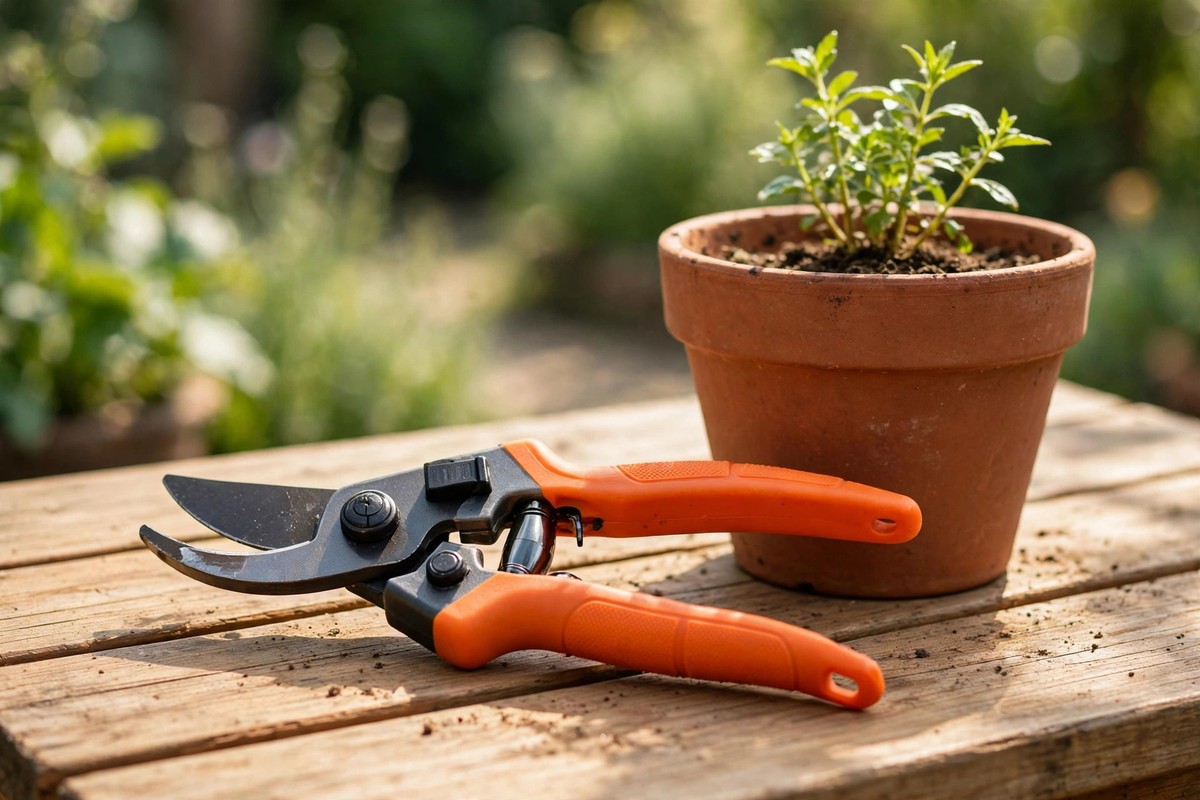
These Fiskars shears use a bypass cut, which means two curved blades pass each other like scissors. That style slices live stems clean, and clean cuts heal fast and keep the plant safe. Crushing cuts, by contrast, tear the stem and can invite disease, which is why every serious guide tells beginners to start with bypass.
The blade is precision-ground steel with a low-friction coat, so it slides through stems with less push from your hand. A self-cleaning groove in the blade pushes sap away as you cut, which keeps the action smooth on sticky plants. The cut size goes up to about 5/8 of an inch, enough for most young shrubs and vines.
All-steel build gives the shears a sure, steady feel. They are not the lightest pruners in the world, but that bit of weight reads as strength when you squeeze. The shape suits most hand sizes, and the grip stays put even when your gloves are dusty.
Ratings tell a happy story here. These shears hold 4.6 stars from more than 51,000 buyers, which is a huge crowd to keep happy. Fiskars also backs them with a lifetime warranty, a rare promise at this level.
Care takes almost nothing. Wipe the blade after sticky cuts, add a drop of oil now and then, and store the shears dry. Sap left on the blade is the one small habit that makes any pruner feel dull over time.
When a branch feels too thick for these, do not force the cut. Forcing twists the blades and can wreck a good tool, and it is also the sign that loppers, pick number four on this list, should take over. Knowing that one limit keeps both the tool and the plant safe.
Pros
- Clean bypass cuts that heal fast on live stems
- Coated steel blade resists rust and gums up less
- Loved by a huge crowd of buyers with 4.6 stars
- Lifetime warranty from a trusted garden brand
Cons
- Sap can build up on the blade if you skip wiping it
- Not made for thick branches over about 5/8 of an inch
3. Fiskars Micro-Tip Pruning Snips
Big pruners feel clumsy when the job is small, because cutting one tiny stem in a tight bunch of herbs needs a fine touch. That is where little snips shine. They are the nail scissors of the garden world, small, quick, and oddly fun to use.
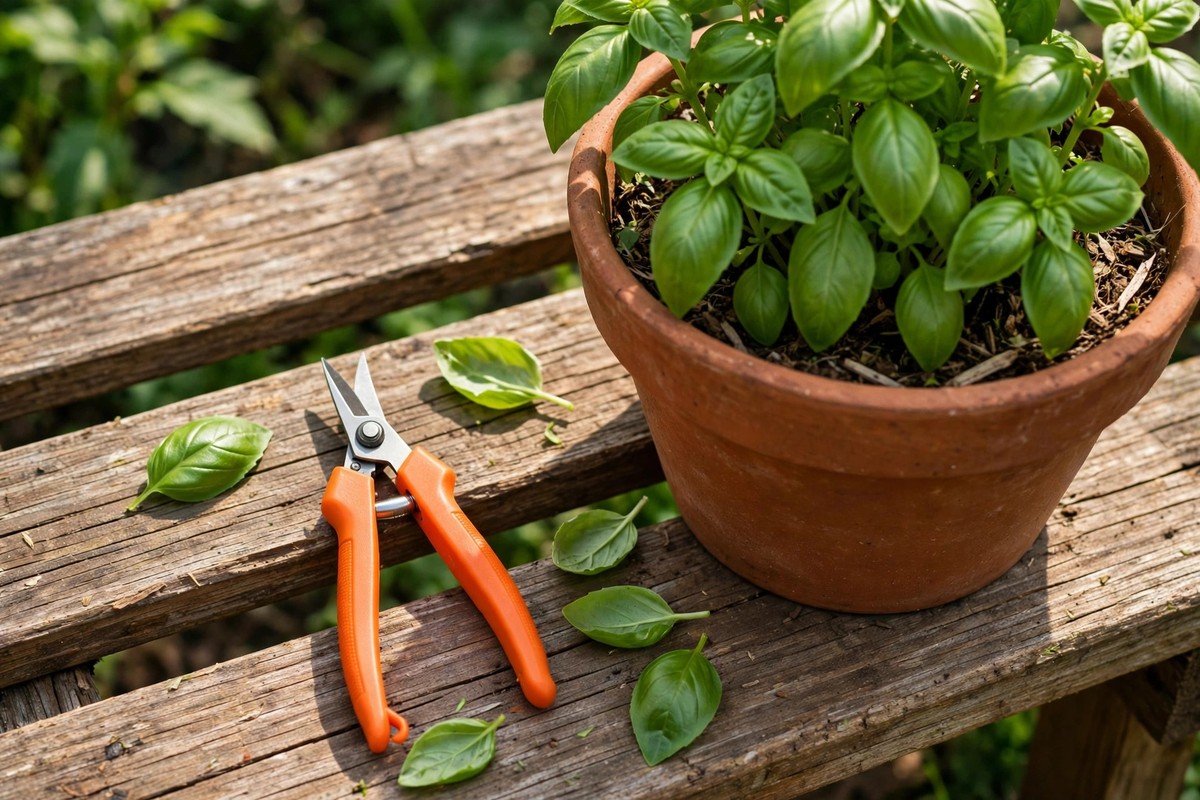
The micro-tip blades are slim right to the very point, so you can reach into a plant and snip one stem without nicking its neighbors. Deadheading flowers becomes a calm five-minute job instead of a fiddly chore. Fresh herbs for dinner also cut clean, with no torn leaves to turn brown.
The blades are fully hardened stainless steel with a non-stick coat. A soft spring opens them back up after each cut, which does a quiet favor for your hand over a long session. That spring design even earned a commendation from the Arthritis Foundation for ease of use.
The SoftGrip handle adds to that easy feel. It cushions your fingers and keeps the snips from twisting while you work. A blade cover comes in the box, so the sharp tips stay safe in your tote or drawer.
People rate these snips 4.7 stars, and they show up in bag after bag of happy home growers. They pair with the bigger shears above like a small knife pairs with a big one in a kitchen. Each size does the cuts it was born for.
Keep them for soft green growth only. Woody stems are too much for the fine tips, and forcing them can chip the edge. Used on herbs, flowers, and soft shoots, the snips stay sharp and quick for a long time.
One small warning from owner reviews: the handles can pinch some hands a little at first. Most people never feel it, and a pair of light gloves solves it at once. It is a tiny flaw in a tool that most beginners end up loving.
Pros
- Fine tips reach single stems without harming nearby growth
- Gentle spring action cuts hand tiredness on long jobs
- Sharp stainless blades with a non-stick coat
- Blade cover included for safe storage in a tote
Cons
- Handles may pinch some hands a little
- Fine tips are not made for woody stems
4. Fiskars 28 Inch Bypass Loppers
Sooner or later a branch laughs at your hand pruners, because it is just too thick to squeeze through. That moment usually comes with an old shrub, a fruit tree, or a rose cane that grew wild all summer. Loppers are the calm answer to that moment.
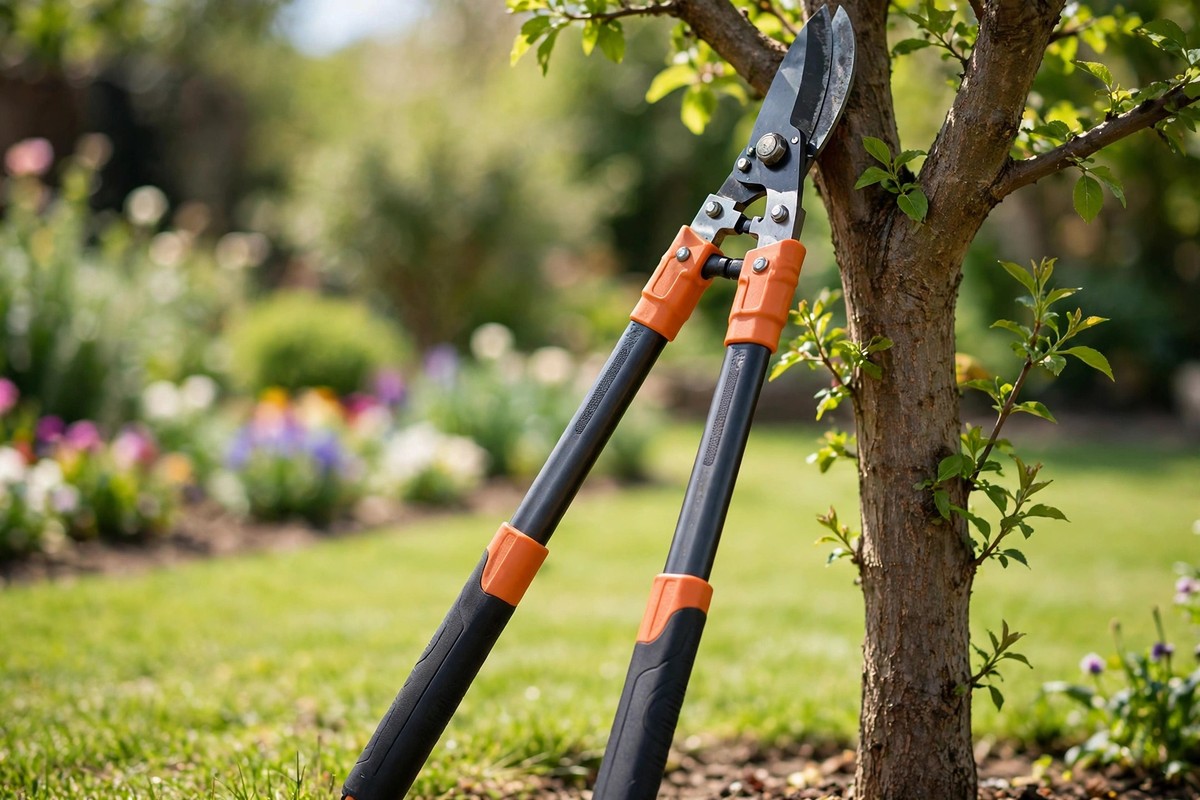
The long 28 inch handles are the whole trick. Length gives leverage, and leverage turns a hard squeeze into an easy press. These loppers cut branches up to about 1.5 inches thick, which covers nearly every branch a beginner should be cutting in year one.
The bypass blades carry the same low-friction coat as the smaller Fiskars tools on this list. The coat helps the blade glide through green wood and fights rust between uses. Cuts stay clean, so the tree or shrub heals well after a tidy-up.
Reach is the second gift of those long handles. You can trim the back of a shrub or the low branch of a small tree while your feet stay flat on the ground. No ladder, no wobble, no stretch that ends with a sore shoulder.
Buyers give these loppers about 4.8 stars across more than 13,000 reviews, and the blade keeps earning praise for staying sharp. The non-slip grips help too, because lopper work often happens with both hands pulling in a slow, strong squeeze. A lifetime warranty stands behind the tool as well.
Two hands are busy the whole time you use them, so plan your cuts before you start. Cut a few branches, step back, look at the shape, then cut again. That slow rhythm gives better results than a fast burst of cutting.
Like all bypass blades, these like a wipe and a drop of oil now and then. Green sap left to dry will make any blade drag. With that tiny bit of care, this is a tool that can serve a garden for many years.
Pros
- Long handles give easy power for branches up to 1.5 inches
- Good reach means less ladder work for beginners
- Coated blade cuts clean and resists rust
- Strong ratings and a lifetime warranty
Cons
- Needs both hands, so it is slower for small tidy jobs
- Blade still needs wiping and oiling like any pruner
5. Nisaku NJP650 Hori Hori Knife
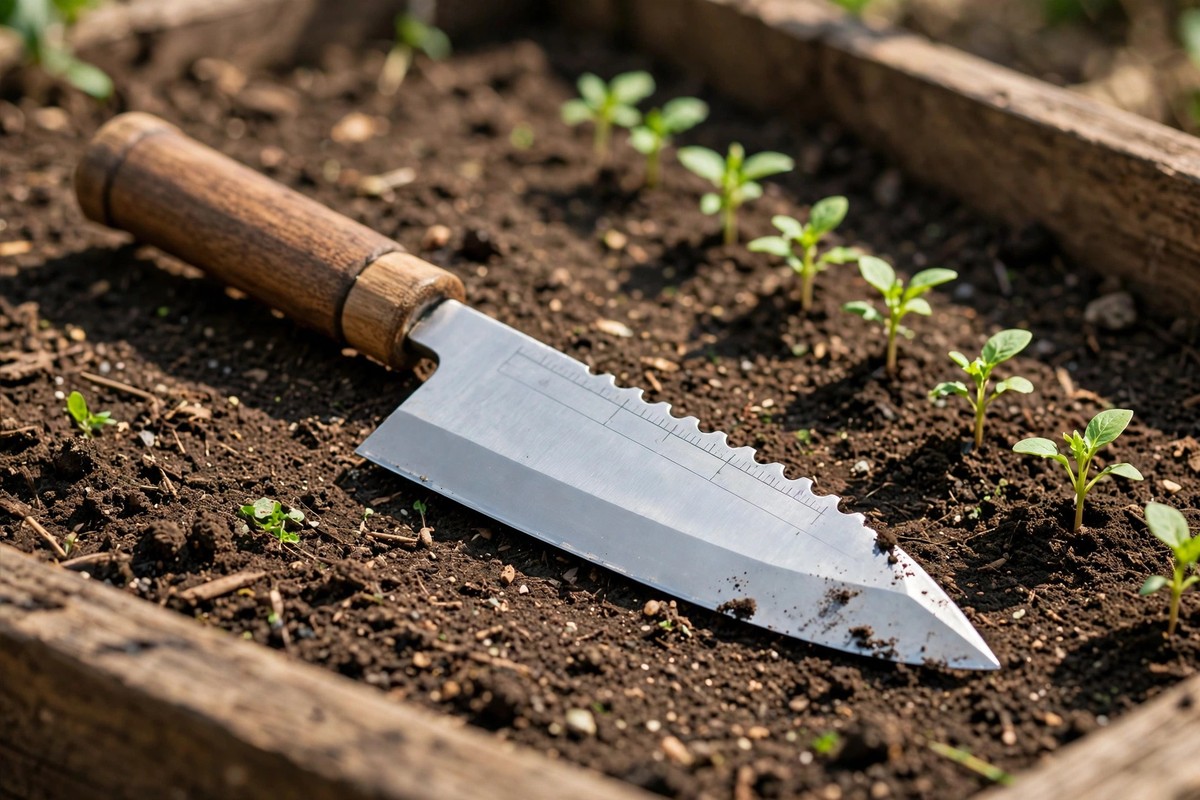
Some tools do one job very well, and some tools quietly do five jobs while you are not looking. The hori hori is the second kind. Gardeners in Japan have used this soil knife for a very long time, and once you hold one, the reason is clear in about ten seconds.
The blade is 7.25 inches of Japanese stainless steel. One edge is straight and one edge has teeth, so the same tool digs a hole, slices a root, saws through a tough weed crown, and cuts twine or a plant tie. It plants bulbs, pops out dandelions, and opens a bag of soil with ease.
Marks along the blade show depth in inches and in metric units. That small detail is gold when you plant seeds or bulbs, because depth is the thing new growers guess wrong most often. Push the blade in, read the mark, drop the seed, and the job is done right.
The wooden handle feels warm and simple, and a plain sheath with a belt loop comes with the knife. Ratings sit at 4.8 stars from around 9,100 reviews, and top tool guides keep naming it the best classic hori hori you can buy. Nisaku backs it with a 2-year warranty.
I keep coming back to one simple idea with this knife: it replaces a whole handful of small tools. New gardeners often buy a trowel, a weeder, a small saw, and a knife in their first month. This one tool does most of that work from a single sheath on your belt.
There is one honest rule to learn with it. The blade is a partial-tang design, which means it is strong for digging and cutting but not made for prying rocks out of the soil. Use a fork or a bar for rocks, and the knife will stay straight and true.
The blade also has no hand guard, so a steady grip matters when the soil is wet. Work a bit slower in mud and it never becomes a problem. For dry and normal soil, this little knife may become the tool you carry every single day.
Pros
- One tool digs, plants, weeds, saws, and cuts
- Depth marks on the blade make planting easy to get right
- Japanese stainless blade with a sheath included
- 4.8 stars from thousands of happy owners
Cons
- Not made for prying rocks, which can bend the blade
- No hand guard, so wet soil calls for a careful grip
6. Tierra Garden DeWit Forged Hand Trowel
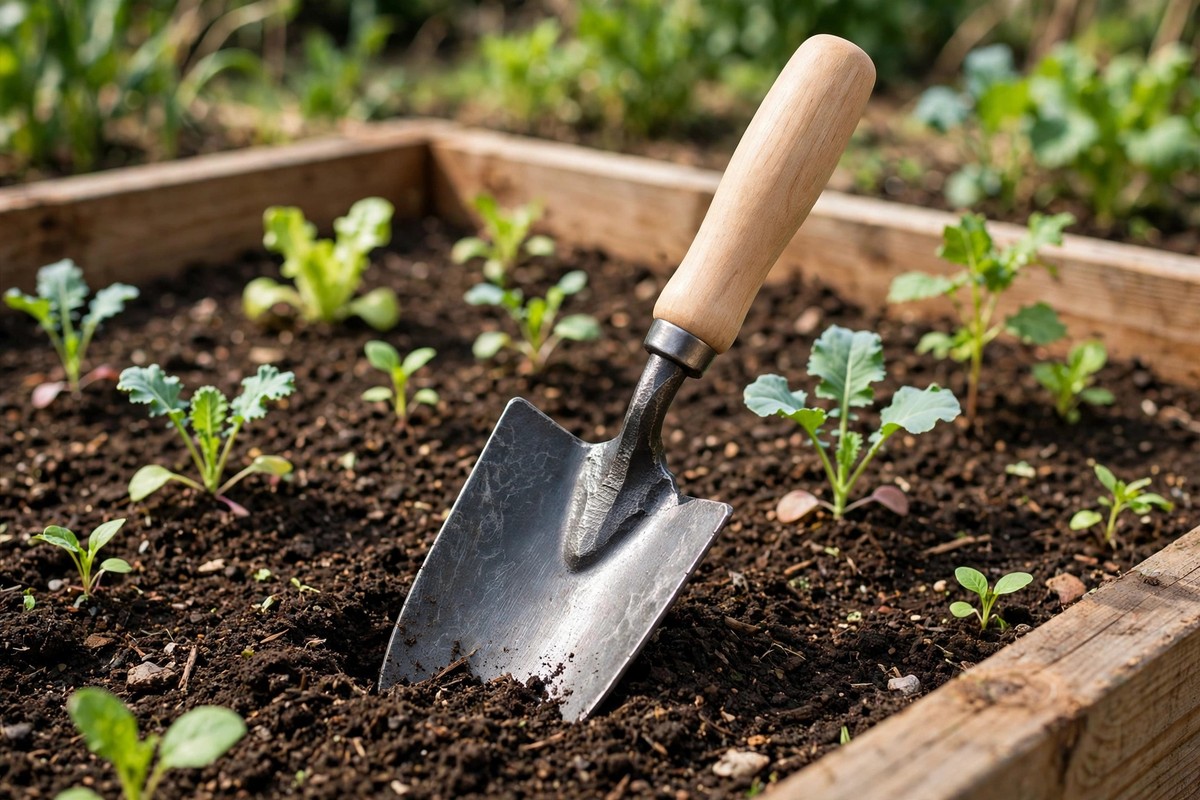
Every beginner bends a cheap trowel at some point, because thin stamped metal folds the first time it meets hard soil or a hidden stone. It is almost a rite of passage, and it is a silly one. A forged trowel ends that story before it starts.
The DeWit trowel is made from one solid piece of forged boron steel. There is no weak neck to fold, no thin blade to curl at the tip. You can push it into packed soil, lever out a stubborn plant, and trust it to come back straight.
Boron steel is the same family of steel used in strong farm tools. It holds an edge, shrugs off stones, and does not rust fast when you wipe it clean. The blade shape suits the daily work of digging holes, moving soil, and tucking seedlings into beds.
The handle is ash wood, shaped to fill the palm in a smooth, round way. Ash is light for its strength, which is why it shows up in good tool handles again and again. Long planting sessions feel kinder on the wrist with a handle shaped like this.
Owners rate it 4.8 stars, and DeWit adds a lifetime guarantee on top. That promise tells you how the maker feels about the steel. Tools with weak builds never come with promises like that.
Yes, one forged trowel asks more of your wallet than the thin ones in bargain bins, and that is fair to say out loud. The math still favors it, because one tool that lasts for decades beats five flimsy ones that bend by June. Beginners save money by buying the strong version once.
Give the wood handle a little love and it will stay smooth for years. Store it dry, and rub in a touch of oil once in a while if the wood looks thirsty. That is the whole care plan for a tool your grandkids could still be using.
Pros
- Forged from one piece of boron steel, so it will not bend
- Smooth ash handle that is kind to the wrist
- Lifetime guarantee from the maker
- Handles hard soil and stones without fear
Cons
- Heavier than the thin aluminum trowels in cheap sets
- Wood handle likes dry storage and an oil rub now and then
7. Pine Tree Tools Bamboo Gardening Gloves
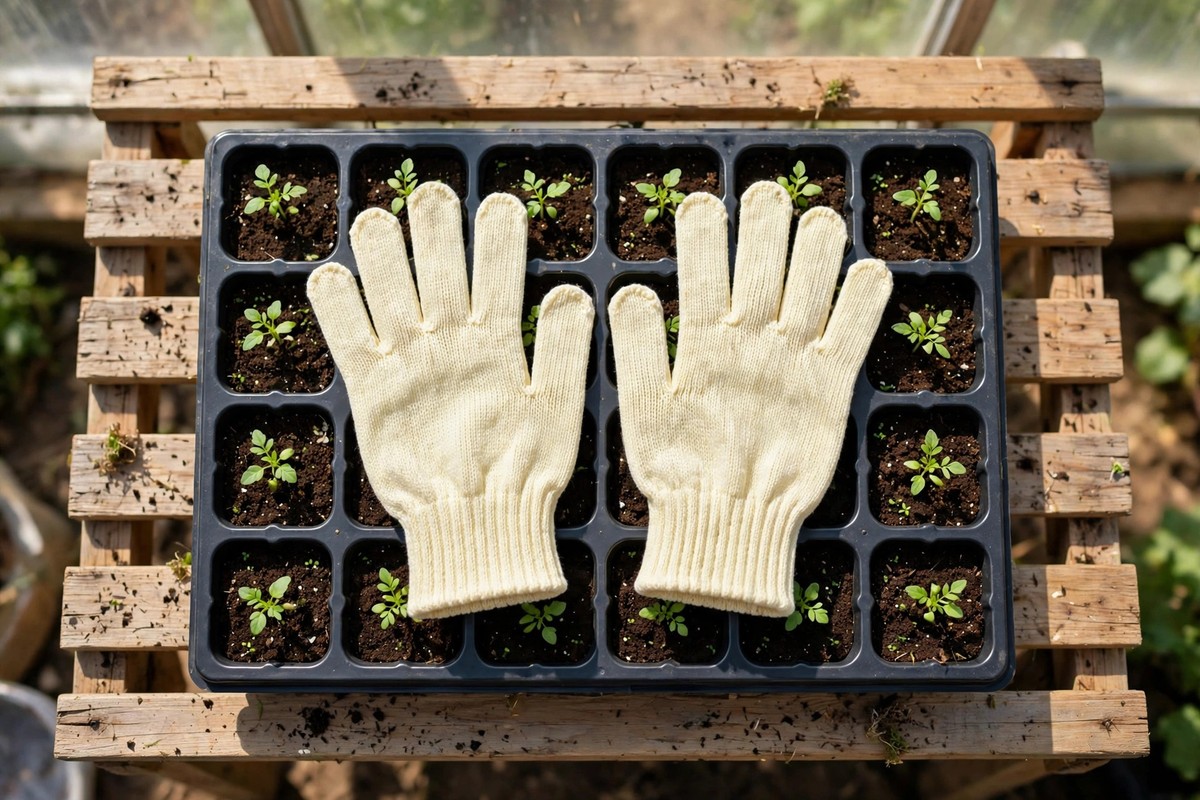
Bare hands in soil feel nice for about four minutes, because then a sharp stone, a dry root, or a rough stem reminds you why gloves exist. Thick rubber gloves solve that but bring a new problem, since you can barely feel what your fingers are doing. These bamboo gloves sit in the sweet spot between the two.
The knit is made from bamboo fiber, which breathes well and keeps hands cooler than most work gloves. On a warm day that air flow is the difference between wearing gloves the whole session and tossing them off after ten minutes. Cooler hands stay in their gloves, and gloved hands stay safe.
The fit is close, almost like a second skin. That snug knit lets you pick up tiny seeds, pinch a small weed at its base, and tie a soft plant tie without fumbling. Many thick gloves turn those small jobs into a comedy of dropped seeds.
The fingertips work on phone screens, which sounds like a small thing until your phone buzzes in your pocket mid-job. You can check a plant name or snap a photo of your first sprout without peeling a glove off with your teeth. Beginners look things up a lot, so this detail earns its keep fast.
Bamboo fiber is also soft against the skin, with none of the scratchy feel of cheap knit gloves. The gloves stretch to fit, wash clean, and dry quick on a line or a fence. A pair in the tote means they are always there when a quick job calls.
Honest limits matter with gloves this light. They are not thorn-proof, so rose work still calls for thicker gauntlets down the road. They are also not waterproof, and wet soil will soak through the knit in time.
For daily planting, weeding, potting, and seed work, though, these are the gloves most beginners end up wearing by choice. Protection you can feel through is protection you will actually use. That is the whole point of a good first pair.
Pros
- Breathable bamboo knit keeps hands cool on warm days
- Second-skin fit lets you handle tiny seeds with ease
- Touchscreen fingertips for quick phone checks
- Soft, stretchy, and easy to wash and dry
Cons
- Not thorn-proof, so roses still need thicker gloves
- Not waterproof in wet soil
8. Grampa’s Weeder
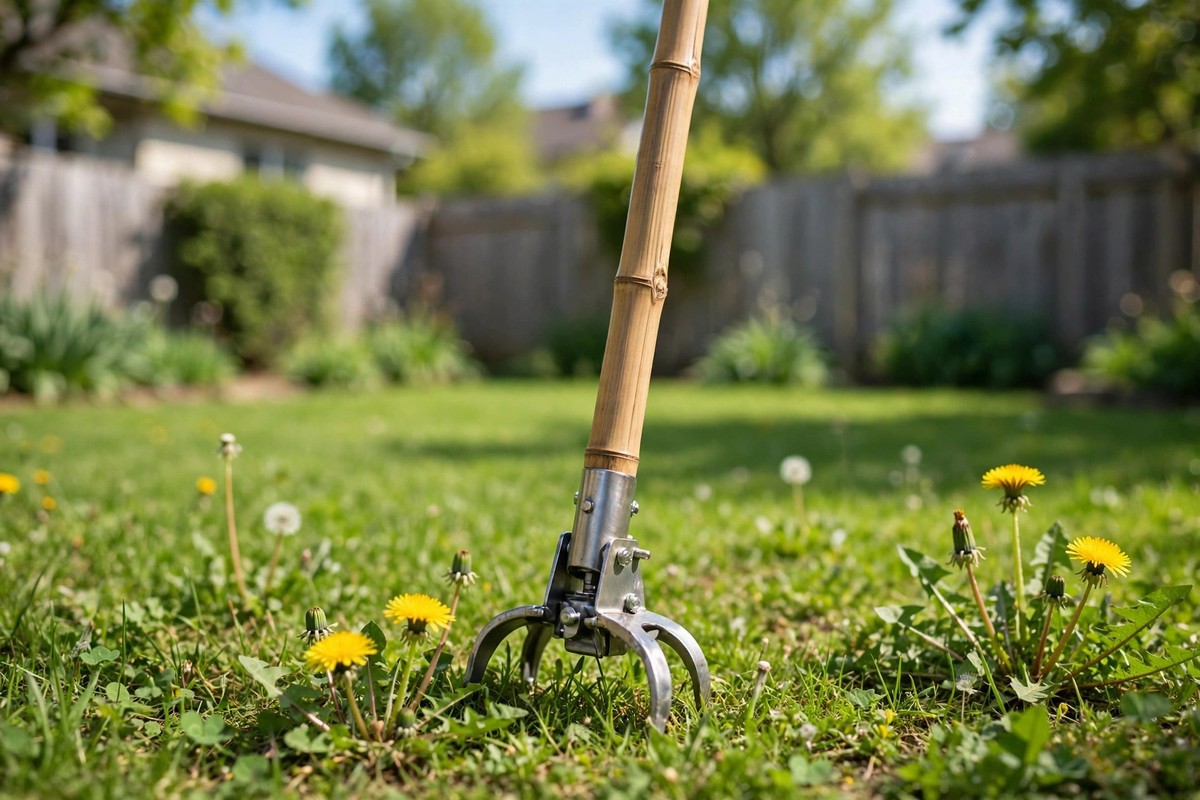
Weeding on your knees gets old fast, because the ground is hard, the weeds are many, and your back files a formal complaint by noon. This old-school tool fixes that in the simplest way. You pull the weeds while standing up straight.
Grampa’s Weeder has a 45 inch bamboo handle with a four-claw steel head at the end. You center the claws over a weed, press the head into the soil with your foot, and lean the handle back. The foot lever pops the weed out, roots and all, in one smooth move.
The design has barely changed since 1913, which is a strong hint that it works. There are no springs to snap, no plastic jaws to crack, and no spray to mix. It is just steel, bamboo, and a smart bit of leverage.
No sprays also means no worry about drift onto your vegetables or flowers. You can weed the lawn, clear a bed edge, and clean up around young plants with the same tool. Dandelions and other tap-root weeds come out whole, which slows their return.
The numbers behind this tool are hard to argue with. It holds 4.5 stars from more than 68,000 ratings, and thousands of people buy it every month. The maker also adds a lifetime guarantee, even on a design this old and simple.
Technique takes two or three weeds to learn. The claws must sit right over the center of the weed, or the head can grip soil instead of roots. Once that small habit clicks, most people find the rhythm oddly fun.
Very hard or rocky soil can fight the claws, and tiny flat weeds are hard to center. For normal lawns and beds, though, this is the weeder that saves knees and backs all season. It is often the first tool beginners show their neighbors.
Pros
- Pulls weeds while you stand, saving knees and back
- Simple steel and bamboo build with nothing to break
- No sprays needed, so it is safe around food plants
- Lifetime guarantee and a huge crowd of happy owners
Cons
- Struggles in very hard or rocky soil
- Tiny shallow weeds are hard to center under the claws
9. Flexzilla Hose 5/8 Inch x 75 Ft SwivelGrip
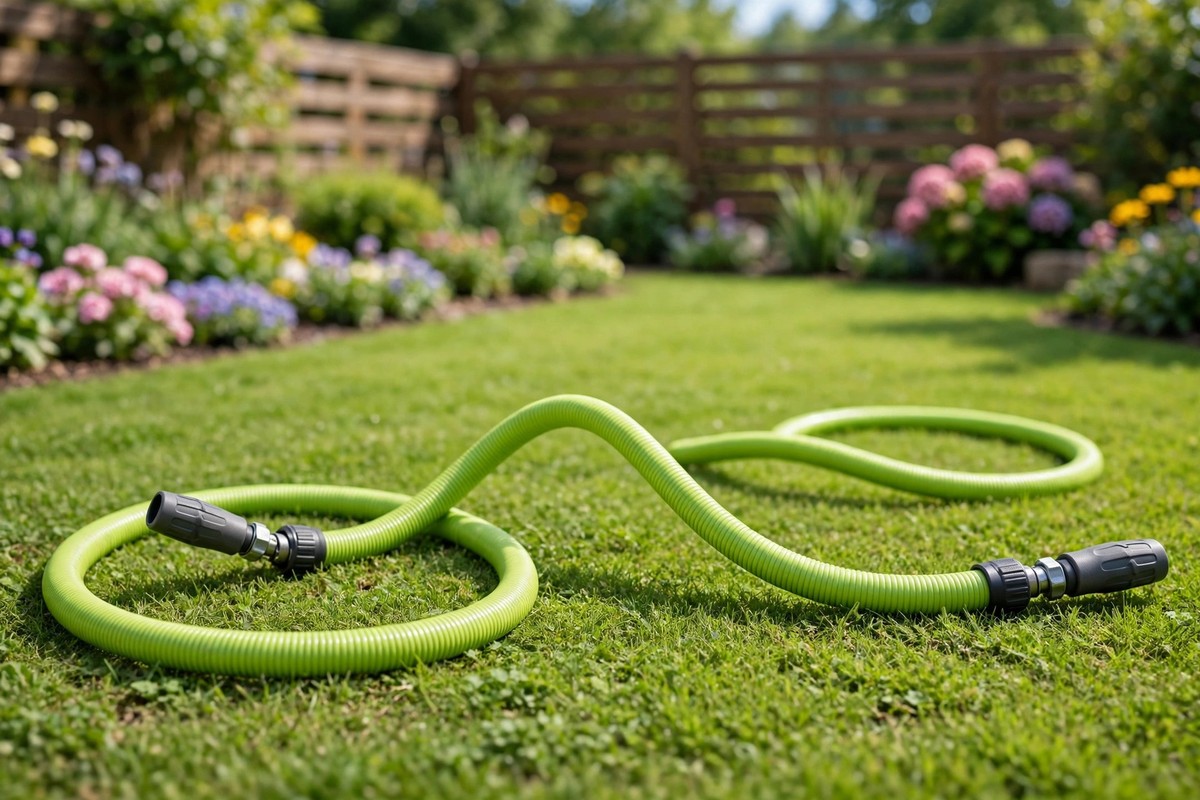
A cheap hose can ruin a calm evening, because it kinks at every turn, twists at the tap, and drags like a stubborn rope. Watering should be the relaxing part of the day. This Flexzilla hose is famous for making it feel that way again.
The secret sits at the ends. SwivelGrip connections rotate as you move, so the hose does not twist itself into knots at the faucet. You walk the beds, the grip turns with you, and the water keeps flowing.
The hose body is a hybrid polymer that is made to not kink. It has zero memory, which means it lays flat and coils up neat instead of keeping every bend from last week. It also stays flexible in cold weather, when stiff hoses feel like iron pipes.
Length matters for a first garden too. At 75 feet, this hose reaches most yards from one tap, so you are not moving a can back and forth all evening. The cover resists scrapes from paths and stones, and the aluminum fittings are crush-resistant with leak-free seals inside.
It is lighter than an old rubber hose of the same size, which your arms will notice on day one. Ratings sit around 4.3 stars from more than 18,000 reviews, and hose guides keep naming Flexzilla the best all-round pick for home gardens. That mix of ease and strength is rare in this category.
Two honest notes before you buy. The hose does not come with a nozzle, so add a simple spray nozzle if you do not own one. And the bright green cover can dull or stain a bit over the seasons, which is a looks thing, not a work thing.
Store it dry and out of harsh sun when you can, like any hose. Wet storage can invite mildew on the cover over time. With that small care, this is the hose most beginners wish they had bought first.
Pros
- SwivelGrip ends stop twisting and tangles at the tap
- Hybrid body does not kink and coils flat with zero memory
- 75 feet reaches most yards from a single tap
- Lighter than rubber hoses and flexible in cold weather
Cons
- No nozzle included in the box
- Bright cover can stain or dull over time
10. Bloem Aqua Rite Watering Can 1.1 Gal
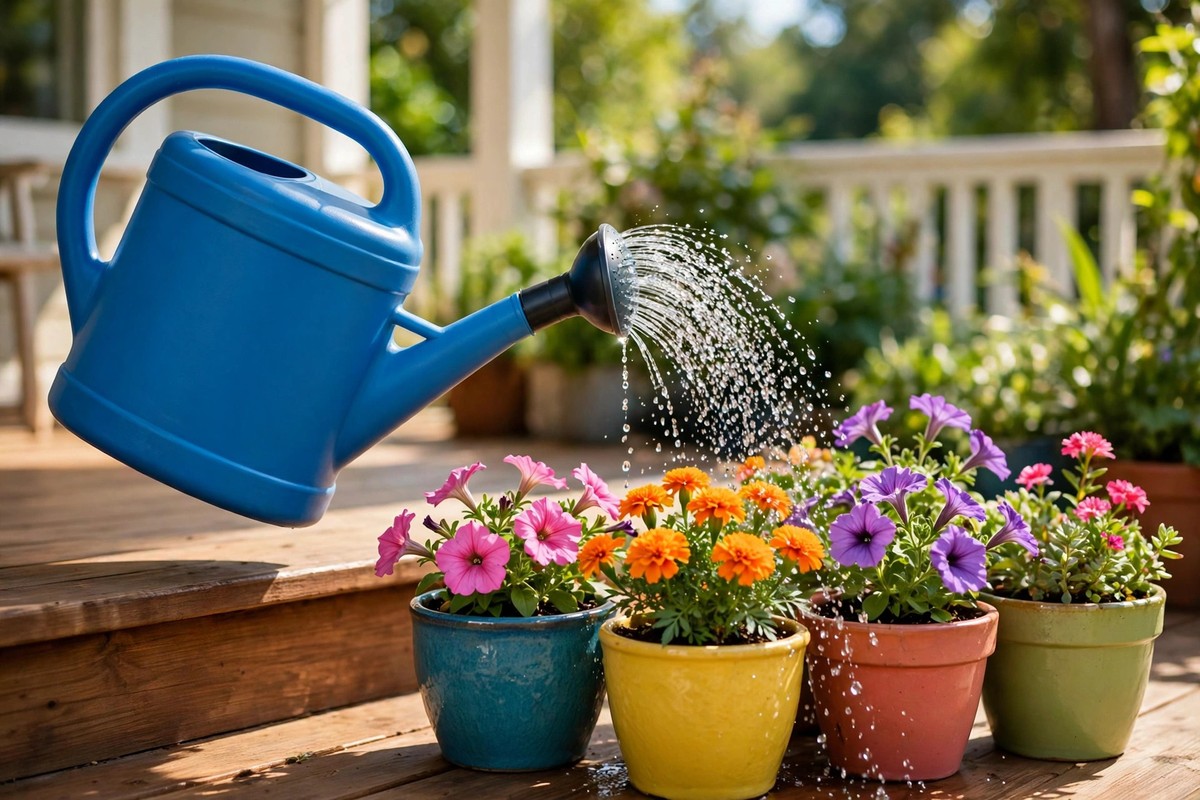
A hose is great for beds, but pots and young seedlings like a gentler hand, because a hard blast of water can knock small plants flat and wash soil right out of the pot. A good watering can is the soft voice in your watering routine. This Bloem can is a simple, well-made version of it.
It holds 1.1 gallons, a full 144 ounces. That size is a kind middle ground: big enough to water a row of pots in one trip, light enough to carry with one hand when full. Fewer trips to the tap means watering stays a pleasure, not a workout.
The long spout is the design detail your plants will thank you for. It reaches under leaves and into hanging baskets without tipping the whole can over your shoes. Water lands at the base of the plant, right where the roots want it.
The body is one single piece of UV-stabilized resin. One piece means no seams, and no seams means no slow leaks down the side after a season of use. The UV part matters too, because the can can live outside by the tap without the plastic going brittle in the sun.
Owners rate it about 4.4 stars across nearly 4,000 reviews, and its simple build keeps complaints rare. There is very little that can go wrong with a one-piece can, which is exactly the point. This is a tool you buy once and then forget about, in the best way.
The classic blue color is easy to spot in the grass, which sounds silly until you have left a green tool in a green garden. It also looks cheerful on a porch or by a kitchen door. Small joys count when a hobby is new.
The trade-off is the light plastic build, which does not have the heirloom feel of a metal can. Metal cans cost more, dent, and can rust at the seams, so many beginners are happier here. For daily pots, seedlings, and indoor plants, this can does the job with zero fuss.
Pros
- 1.1 gallon size cuts down trips to the tap
- Long spout waters at the base of plants with ease
- One-piece body means no seams to leak
- UV-stabilized, so it can live outside by the tap
Cons
- Light plastic feel, not a heavy metal heirloom
- Big gardens will still need the hose for deep watering
11. XLUX Soil Moisture Meter
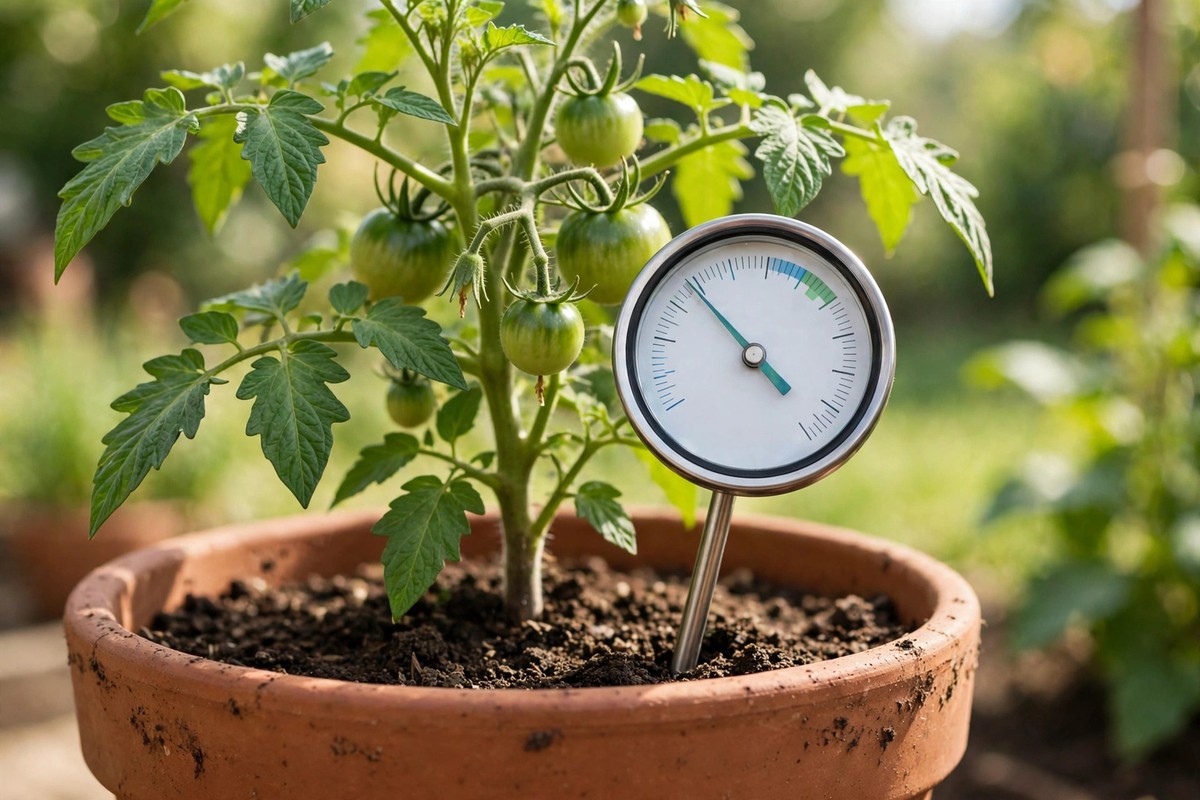
New growers kill more plants with love than with neglect, because the most common beginner mistake is watering too much. Wet soil starves roots of air, and the plant looks thirsty while it is actually drowning. This tiny meter takes the guessing out of that problem.
The XLUX is a simple probe with a big, clear dial on top. Push the slim probe into the soil near the roots, wait a few seconds, and the needle tells you the moisture level. The dial uses colors: red means dry, green means moist, and blue means wet.
There are no batteries to buy and nothing to charge. The probe works by reading the soil itself, so the meter is ready every time you pick it up. That grab-and-go feel is why people actually use it instead of leaving it in a drawer.
The single slim probe is kinder to roots than the fat twin-probe meters sold everywhere. It slips into pots and beds with little fuss, and it works indoors and out. Houseplants, herbs, raised beds, and garden rows all get the same clear answer.
The crowd behind this pick is enormous: 4.4 stars from more than 75,000 reviews, and it sits at the top of its category. Garden guides pick it again and again as the meter to start with. For a tool that prevents the number one rookie error, that trust is well earned.
A few care habits keep it reading true. Pull the probe out after each check instead of leaving it stuck in the soil, and wipe it clean before you put it away. Never push it hard into dry, packed ground, because the tip can bend.
Over years of use the probe slowly wears, and most owners get a few good seasons from one meter. At this level that is a fair life for a tool that saves plant after plant. Think of it as training wheels for your watering instincts, which get sharper every week you use it.
Pros
- No batteries ever, ready the second you pick it up
- Big color dial is easy to read at a glance
- Slim single probe is gentle on roots
- Stops overwatering, the top beginner mistake
Cons
- Probe wears over the years and will need replacing one day
- Must be pulled out and wiped after each use
12. Chapin SureSpray 2-Gallon Sprayer
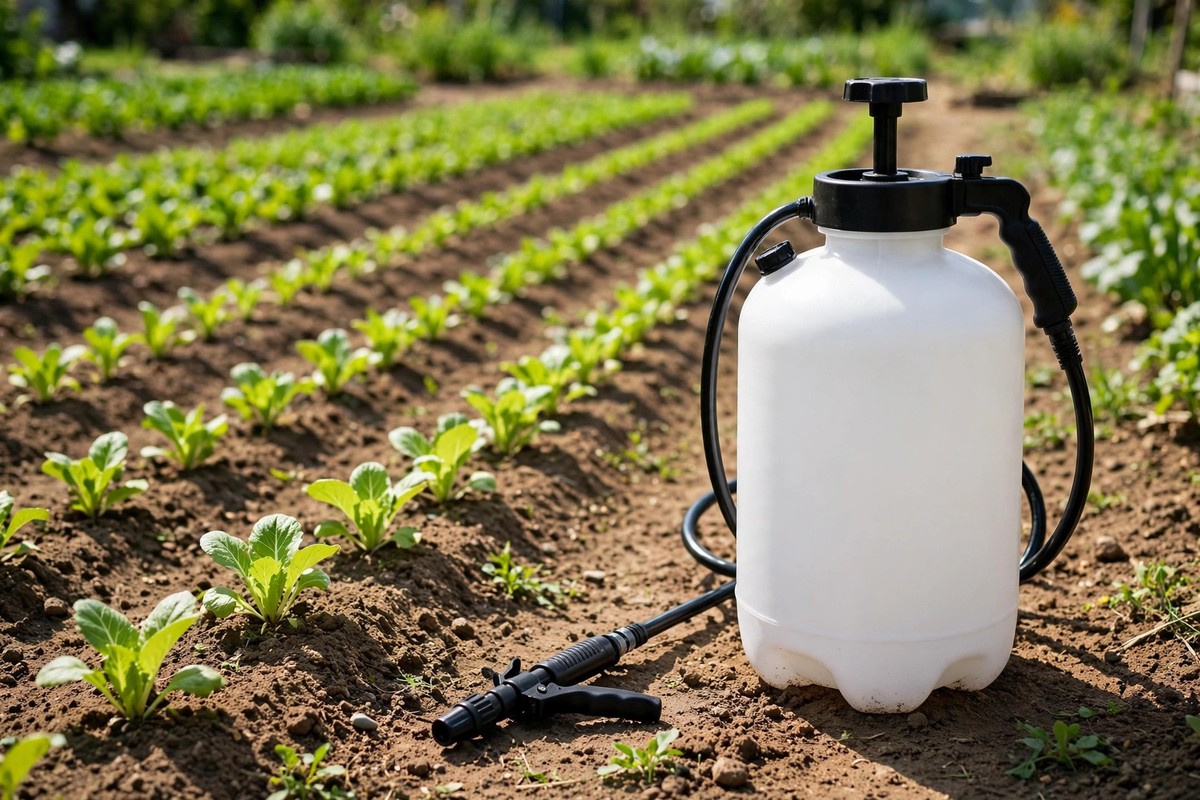
At some point a beginner needs to spray something over a wide area, because hand-squirting a whole bed with a tiny bottle takes forever. Liquid feed for hungry plants, a gentle wash for dusty leaves, or plain water for a dry path all go faster with a pump sprayer. This Chapin is the simple, proven kind.
The tank holds 2 gallons and has a wide funnel top. That wide mouth makes filling easy and spill-free, even from a bucket or a hose. The tank is see-through, so a quick glance tells you how much is left inside.
The nozzle adjusts with a twist. Turn it one way for a fine cone spray that coats leaves, and the other way for a stronger stream that reaches farther. A 34 inch hose gives your arm room to work around pots and along rows without dragging the tank behind you.
The pump handle is shaped to be easy on the hand, and a few pumps build enough pressure for a good stretch of spraying. Chapin makes these sprayers in the USA and covers this one with a 1-year limited warranty. The brand has been at this job for a long time, and it shows in the plain, sturdy build.
Ratings sit around 4.4 stars, with a very large number of reviews across this sprayer family. People use them for years on farms, lawns, and home beds alike. For a first sprayer, boring and reliable beats fancy every time.
Two small habits protect the sprayer. Do not over-pump, because this basic line has no pressure-release valve to save you from too much pressure. And rinse the tank and seals after use, which keeps the rubber parts soft and sealing well.
Beginners sometimes wonder if a sprayer is a year-one tool at all. If you feed plants with liquid food or grow more than a few pots, the answer comes fast the first evening you finish in ten minutes. It earns its shelf space quickly.
Pros
- Wide funnel top makes filling clean and easy
- Adjustable nozzle goes from fine spray to strong stream
- See-through 2-gallon tank shows the level at a glance
- Made in the USA with a 1-year warranty
Cons
- No pressure-release valve, so do not over-pump
- Seals last longer if you rinse after each use
13. SONGMICS Garden Kneeler and Seat
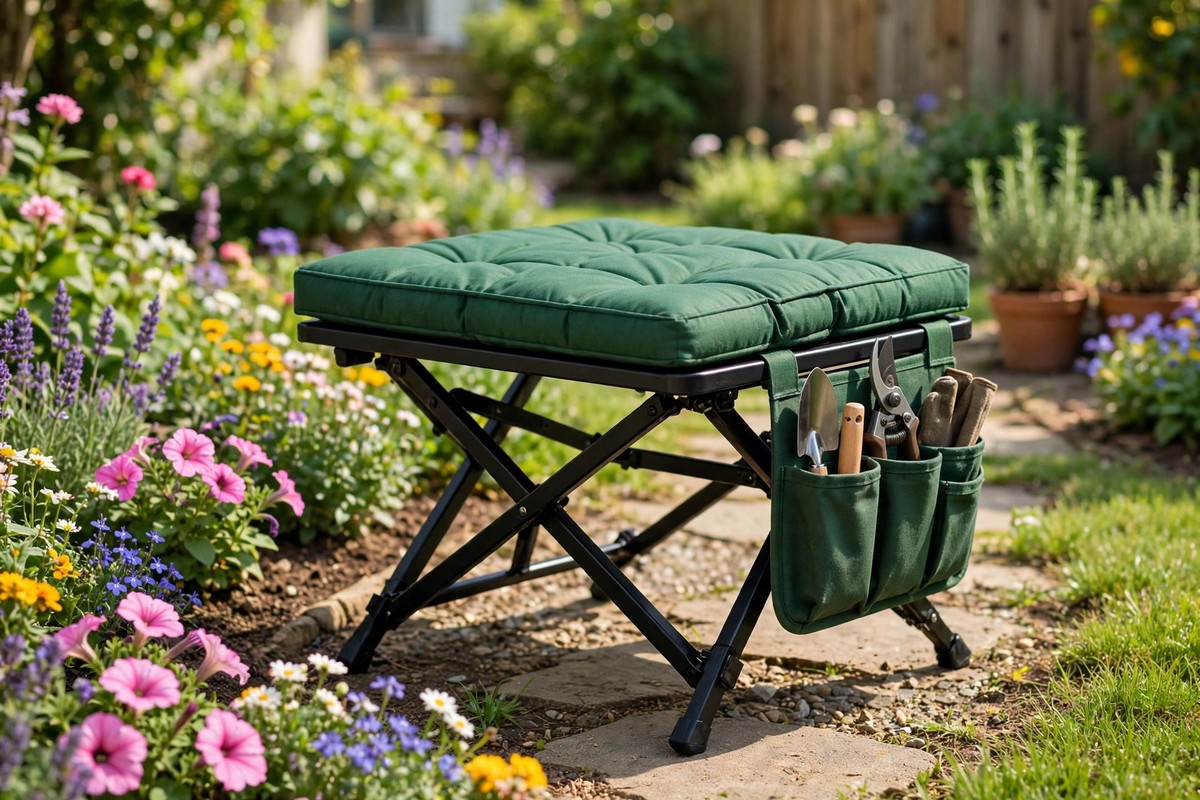
Gardens are low, and people are tall, so a lot of gardening happens on your knees whether you plan it or not. An hour of planting on bare ground leaves knees sore and backs stiff. This two-in-one kneeler is the small comfort that keeps people in the garden longer.
Flip it one way and it is a kneeler with a wide, thick pad of soft EVA foam. Flip it the other way and it becomes a low seat for jobs at plant height, like trimming a hedge base or picking beans. One tool quietly does both jobs, which is why it shows up in so many sheds.
The side bars deserve a special mention. When your knees are on the pad, you can grip the bars and push yourself back up with your arms. That one move takes the strain off your lower back and knees, and it is the reason older growers love these seats so much.
The steel frame folds flat when the day is done. It hangs on a hook or slides behind a door without eating storage space. Two tool bags clip to the sides, so your trowel and snips ride along instead of hiding in the grass.
Owners rate it about 4.6 stars from nearly 6,000 reviews, and garden guides call this brand a steady crowd-pleaser year after year. The pad is wider than many rivals, which spreads your weight and feels kinder over a long session. Small details like that are why it keeps its good name.
The folding parts can feel stiff the first few times you open it. That eases with use, and most owners forget about it within a week. It is also one more item to carry to the bed, though the tool bags mean it often replaces a separate trip.
Comfort tools never look exciting in a list, but they change how gardening feels by the second hour. A beginner who feels good keeps going, and a beginner who aches quits early. This is the quiet pick that protects the fun itself.
Pros
- Two-in-one design works as a kneeler and a seat
- Thick wide pad is kind to knees on long jobs
- Side bars help you stand back up with less strain
- Folds flat and carries two tool bags on the sides
Cons
- Folding frame can feel stiff at first
- One more item to carry out to the beds
14. WORKPRO Garden Tool Tote Bag
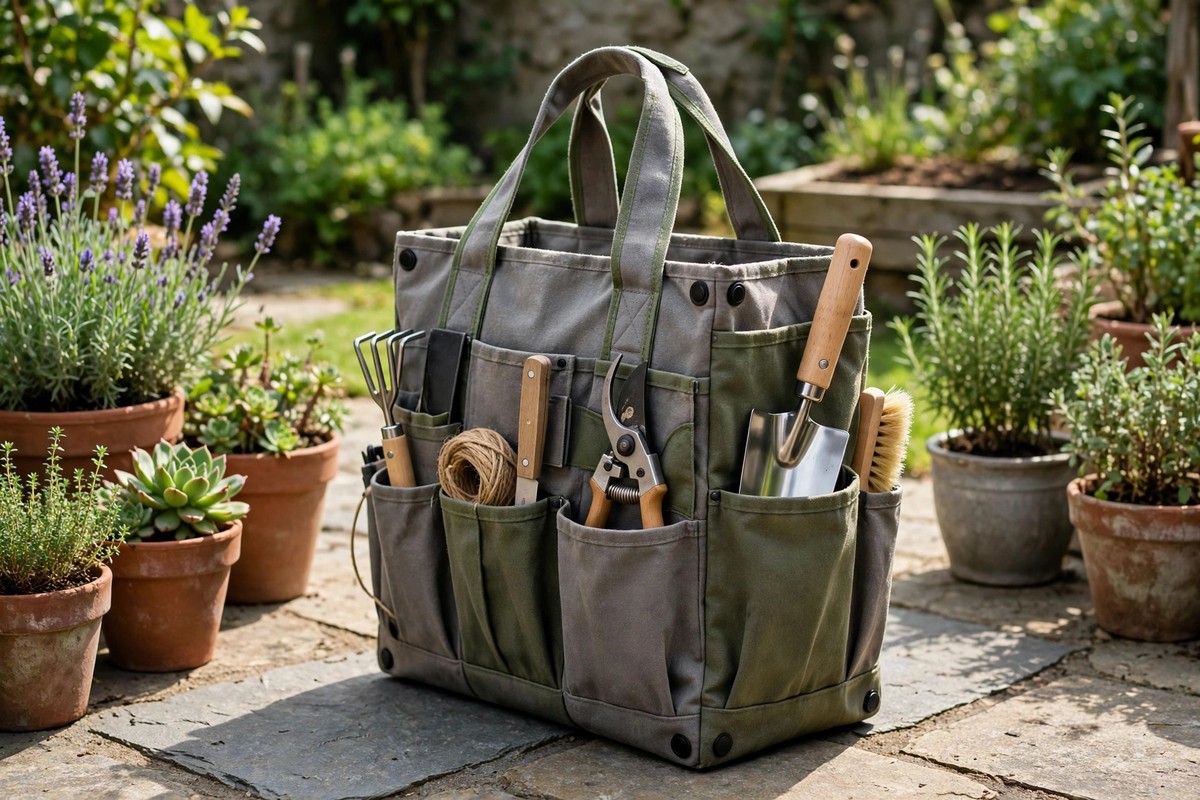
Tools have a magic trick they love to play: they vanish. The trowel was right here, the snips were just in your hand, and somehow both are now hiding in the grass. A tote bag with real pockets ends the vanishing act for good.
This WORKPRO bag has 10 pockets spread around the outside and inside. Hand tools slide into the pockets standing up, so you can see every handle at a glance. No more digging through a deep bucket while the one tool you need hides at the bottom.
The bag stands upright on its own when you set it down. That sounds small, but a bag that flops over spills your tools into the dirt every time. A bag that stands like a little soldier keeps the whole kit clean and ready as you move along a row.
A shoulder strap frees up both hands for carrying pots, a watering can, or a tray of seedlings. The fabric is tough work-bag material that shrugs off dirt and damp grass. It also wipes clean fast, which matters after a muddy morning.
The Grenebo set on this list comes with its own pretty tote, so why list a second bag? Because most beginners mix and match tools over time, and a sturdy everyday tote outlasts the free bag in many starter sets. It also gives gifts, finds, and later upgrades a proper home.
Be clear about what you are buying: this is the bag only, and the tools are sold apart. Some buyers miss that point, so read it twice here. A good bag with no tools is still just a bag, until your kit moves in.
Small tools can hide in the deeper pockets if you stuff them carelessly. A simple habit fixes it: one tool per pocket, handles up. Set that rule on day one and the tote will feel like a tiny, well-run workshop.
Pros
- 10 pockets keep every hand tool visible and sorted
- Stands upright on its own, so tools do not spill
- Shoulder strap keeps both hands free
- Tough fabric that wipes clean after muddy work
Cons
- Bag only, tools are not included
- Small tools can hide in deep pockets if stuffed in loose
15. GooingTop LED Grow Light
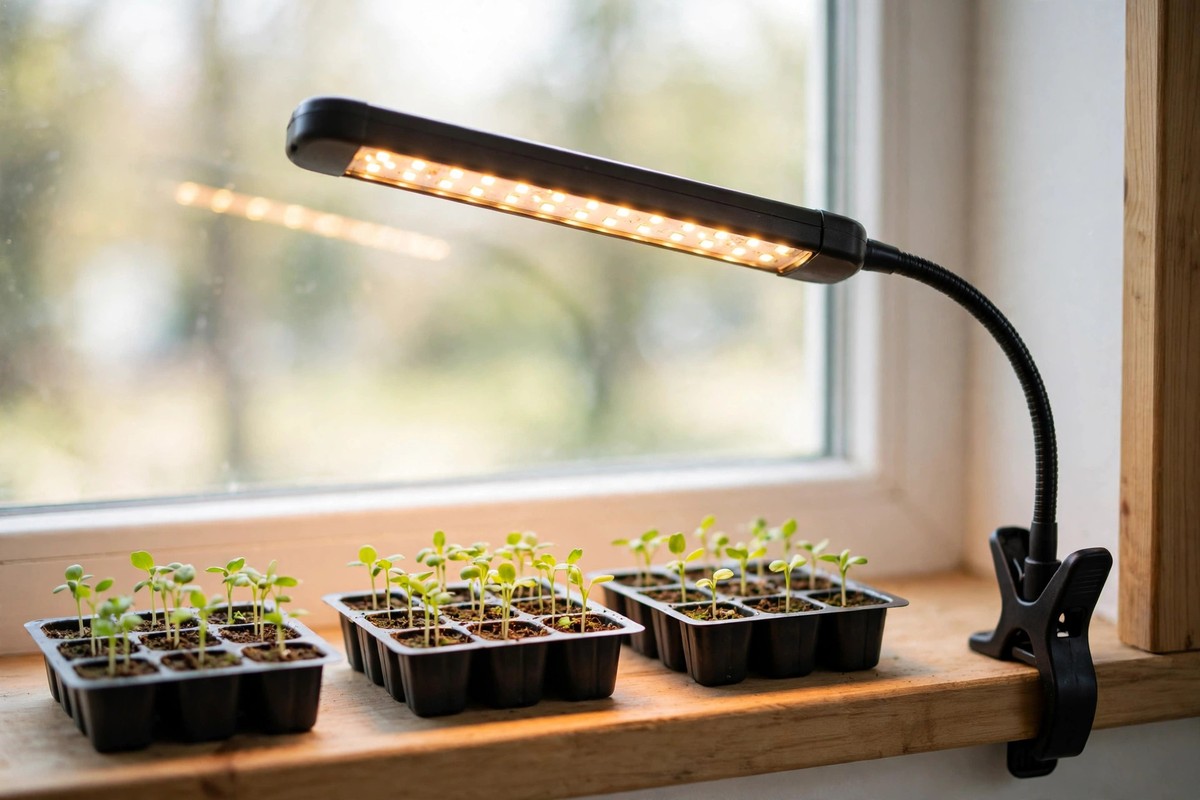
Spring fever hits beginners early, because seed packets start calling your name while the ground outside is still cold. Starting seeds indoors is the cure, but a dim window gives weak, leggy seedlings that flop over. A small grow light fixes that from day one.
This GooingTop light gives a bright 6000K full-spectrum glow, close to natural daylight. Seedlings grow short, strong, and green under it instead of stretching pale toward a window. Herbs on a kitchen shelf and small pots of greens also love the extra light in dull months.
The flexible gooseneck bends any way you point it, and the clamp grips a shelf edge, a desk, or the rim of a seed tray stand. No drilling, no hooks, no stand to buy. You clip it on, aim it at the tray, and the setup is done in a minute.
A built-in timer handles the daily routine for you. Set it once and the light turns on and off by itself, which saves seedlings from your busy days and forgetful evenings. Steady light hours are a quiet secret behind strong starts.
Owners rate it 4.5 stars from more than 21,000 reviews, which is a big, happy crowd for such a small tool. People use it for seed trays, herbs, and houseplants that live far from bright windows. It is one of those picks that keeps finding new jobs around the home.
The light runs on a cord, so it needs a power outlet within reach of your setup. Plan the shelf spot with that in mind. Each light also covers a small area, so one unit suits one tray or a few pots, not a whole table of seedlings.
For a first season, one tray of strong seedlings is exactly the right size win. Tomatoes, peppers, and herbs started under this light go outside sturdy and ready. It is a happy way to begin the garden before the garden can begin.
Pros
- Full-spectrum 6000K light grows strong, sturdy seedlings
- Clamp and flexible neck set up in a minute, no tools needed
- Built-in timer keeps light hours steady every day
- 4.5 stars from a very large crowd of owners
Cons
- Cord-powered, so it needs an outlet nearby
- One light covers a small tray, not a whole table
Tools You Can Skip for Now
A good beginner list is only half about what to buy, because the money you do not waste matters just as much. Shops love new growers, since new growers cannot yet tell a real tool from a pretty toy. The items below are not all bad, but every one of them can wait, and a few should wait forever.
Skip the ultra-cheap all-in-one kits with thin stamped-metal tools. They look like a bargain in the photo, with ten shiny pieces in a neat bag, but the trowels bend in real soil and the pruners crush more than they cut. Many buyers end up replacing half the kit within a few months, which makes the cheap kit the costly one in the end. If you buy a set, buy one with solid stainless heads and real handles, like the starter set at the top of this list.
Skip anvil pruners while your plants are alive and growing. An anvil pruner presses a blade down onto a flat pad, and that press crushes the stem instead of slicing it. Crushed stems heal slow and can let disease into the plant. Bypass pruners, which cut like scissors, are the right first buy, and anvil types only earn a place later for cutting dead wood.
Skip decorative spades and plastic rakes. A painted spade with a pretty pattern is made to be looked at, not to dig stony ground, and it often costs as much as a real digging tool. Plastic rake tines snap the first time they meet a hidden rock or a thick root. Plain, sturdy tools with boring looks will outwork both of them for years.
Skip the specialty tools in year one, like a broadfork, a standalone cultivator, or a drawer full of extra soil knives. These tools solve problems that a first garden does not really have yet. A hori hori knife and your basic digging tools cover the same ground for a new bed, and the money saved buys a lot of seeds and soil. Add specialty tools in year two, when a real problem asks for them by name.
Skip expandable hoses, the stretchy kind that shrinks when the water stops. They feel like magic in the demo and like a leak waiting to happen in real life. Many owners watch them burst at a seam or spring pinhole leaks within a season or two. A normal, well-made hose like the Flexzilla on this list costs you less over time and never asks for drama.
Skip the cheap 3-in-1 soil testers that promise pH, light, and moisture from one wobbly probe. The pH readings on those are so rough that they can send you fixing soil that was never broken. A simple moisture meter does the one job beginners truly need, and a proper soil test from a local lab does the rest once a year. That pair beats a toy tester every time.
One last skip, offered with love: hold off on the pruning saw and the pole pruner for now. The loppers on this list handle every branch a beginner should be cutting in the first season. When your shrubs and trees grow up a bit, those tools will earn their shelf space, and you will know exactly which ones to buy.
Key Takeaways
If your head is full after fifteen tools, this short list is the part to keep. Pin these points in your mind and the first season gets much simpler.
- Start with cut, dig, water, and comfort. Those four jobs cover almost all of year one.
- Buy bypass pruners first, never anvil pruners, for clean cuts on live plants.
- One strong tool beats three flimsy ones, so choose forged and stainless where you can.
- A moisture meter stops overwatering, the most common beginner mistake of all.
- Comfort gear like a kneeler is not a luxury. It keeps you in the garden longer.
- Skip cheap stamped kits, expandable hoses, and toy soil testers, and keep that money for plants.
None of these points asks you to buy everything at once. Many beginners start with five or six picks and add the rest as the season teaches them. The skip list matters as much as the buy list, so keep both close.
Your garden will also grow your judgment over time. Tools that feel basic in month one can feel perfect by month six, once your hands learn the work. That slow, steady learning is the real harvest of a first year.
Conclusion
Fifteen tools. That is the whole starter kit, and it is smaller than most shops want you to believe. With these in your tote, you can dig, plant, cut, weed, water, spray, and even start seeds before the season opens.
Begin with the jobs in front of you. A bed to dig means the trowel, the hori hori, and the gloves come first. A shaggy shrub means the pruners and loppers earn their place this week instead.
Strong basics also protect your love for the hobby. Tools that bend, kink, crush, and leak make gardening feel like a fight. Tools that simply work make it feel like the calm, muddy joy it is meant to be.
Grow into the rest slowly. Year two will bring its own list, written by your own garden and your own two hands. By then you will spot a good tool across a shop, and the pretty toys will not fool you at all.
I hope this list saves you money, sore knees, and at least one bent trowel. Plant something this weekend, keep the watering gentle, and enjoy watching the first green shoots do their quiet magic. Happy gardening, from your very first bed onward.