Positive Parenting Solutions for Siblings Who Fight (Real Things That Work at Home)

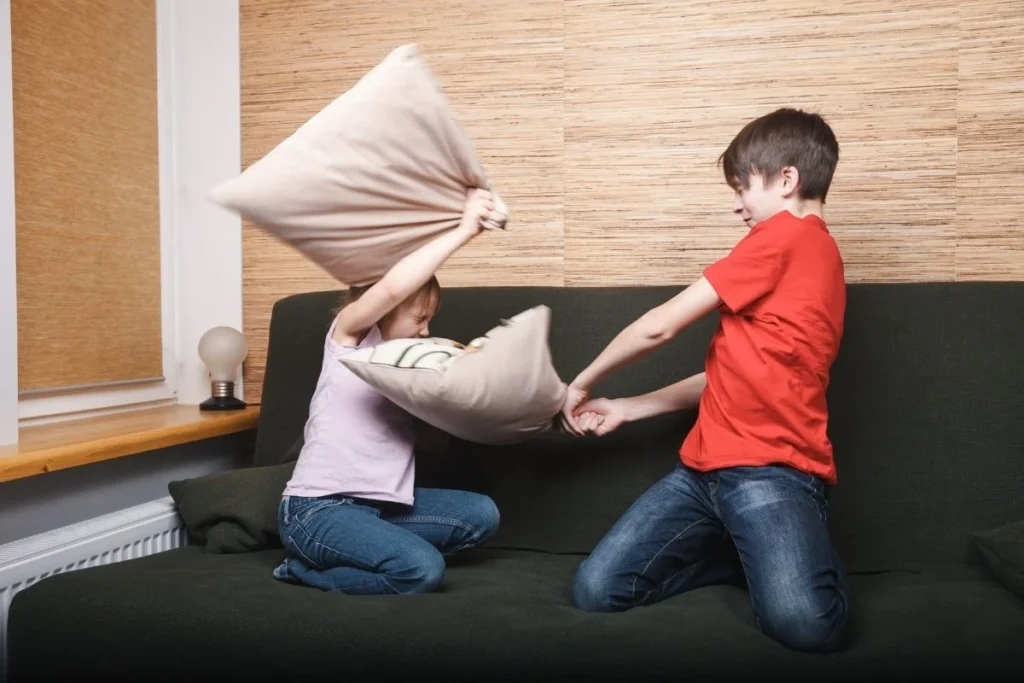
Parents know too well that in-house, something starts small, like a quiet push or a sharp word, and then in less than a minute, the whole house feels like it is on fire. Two kids, one house, and a fight that seems to have no real start and no clear end. Many parents stand there, tired, not sure if they should step in or just wait.
This is not about bad kids. This is not about bad parenting, either. Sibling fights are one of the most normal, most studied, and most misread parts of family life. Research from the University of Michigan shows that brothers and sisters fight up to 8 times per hour in early childhood. Eight times. Per hour. So the question is not why do they fight, but what we do when they do.
Why Siblings Fight So Much (And It Is Not What Most Parents Think)
Most parents think sibling fights are about toys, space, or who got the bigger piece. And yes, those are the sparks. But the fire underneath is almost always something else.
Kids fight with their brothers and sisters because home is the one place they feel safe enough to fall apart. That sounds strange but it is true. A child who holds it together at school, who smiles and shares and follows the rules all day long, comes home and unravels. And the sibling is right there. Available. Familiar. Safe to be messy with.
Dr. Laurie Kramer, who has spent decades studying sibling bonds, says that siblings spend more time with each other than with any other person in their lives, including parents. That much closeness means that much friction. It is not a flaw. It is a feature of being that close.
What actually drives the fights:
- Feeling left out when one child gets more time or praise
- Tiredness and hunger, which lower patience in every child
- Lack of control over their own space, stuff, or schedule
- Jealousy that is too hard to name out loud
- Testing limits to see if parents will stay fair
When parents understand this, the fight stops looking like a war and starts looking like a need. A messy, loud, exhausting need. But a need.
What Years of Sibling Fights Do to Kids Over Time
Here is a truth that does not get said enough. Long, repeated sibling conflict without resolution does leave a mark. Not forever, not always, but enough to matter.
A study published in the Journal of Abnormal Child Psychology found that kids who grow up in homes with high sibling conflict and low parental warmth show more signs of anxiety and low self-worth in their teen years. That is not meant to scare anyone. It is meant to show that how parents handle these fights is real parenting work. It counts.
On the other side, siblings who learn to fight and then repair, who grow up seeing that conflict can be resolved without someone losing, develop stronger emotional skills. They are better at handling hard moments in friendships, work, and marriage later on. The fight is not the damage. The damage comes when no one ever helps them find their way back to each other.
What repeated unresolved conflict teaches a child:
- The loudest one wins
- Fairness is not real
- Big feelings are too much to handle
- Home is not a safe place
What resolved conflict teaches a child:
- Anger is okay but how you act on it matters
- Repair is always possible
- Being heard is more important than being right
- Trust is built through hard moments, not just easy ones
The good news is that change does not take years. Small, steady, calm responses from parents shift the pattern faster than most people expect.
The First Thing to Do When a Fight Breaks Out
One move that matters more than all others. Stay calm.
Not fake calm. Not the kind where the jaw is tight and the voice is too controlled. Real calm. The kind that says, without words, that this moment is manageable.
Kids read the body before they hear the words. When a parent walks into a fight already tense or already picking sides, the kids feel it. The fight gets bigger. But when a parent walks in slow, voice low, body still, something in the room shifts. It does not fix it. But it opens the door.
Try this next time:
- Stop, breathe, lower the voice before entering the room
- Do not demand silence right away – let the noise drop on its own as you enter
- Use fewer words, not more
- Get down to their eye level if they are young
- Say something simple like “Okay. Let’s see what’s going on.”
This approach is rooted in what child development experts call co-regulation. Children cannot calm themselves when they are flooded with emotion. They need a calm nervous system near them to borrow from. The parent is that calm system. This is the most powerful tool any parent has, and it costs nothing.
Positive Parenting Solutions That Actually Stop the Fight
Do Not Play Judge
One of the biggest mistakes well-meaning parents make is trying to figure out who started it. This seems fair. It is not. By the time a parent arrives, there is almost never a true “starter.” There is a long chain of small moments that led here, and both children usually played a role.
When parents play judge, they pick a winner and a loser. The loser learns to feel wronged. The winner learns that volume and drama work. Neither lesson helps.
Instead, try this: “Both of you are upset. Let’s figure out what happened before we figure out what to do next.”
This sentence does a few things at once. It validates both children. It removes the rush to blame. And it shifts the room from defense to reflection. That shift is everything.
Give Each Child a Chance to Speak Without Being Cut Off
Most fights feel unbearable to kids because they feel unheard. The other sibling keeps talking. The parent seems to agree with the other side. The words get bigger and louder because no one is really listening.
Simple solution: each child speaks while the other stays quiet. The parent listens to both without responding until both have finished. Then the parent repeats back what each child said, not who was right, but what each one felt.
“So you felt like she took your space without asking. And you felt like he was ignoring you first. Let me see if that’s right.”
This is not therapy. This is basic acknowledgment. Kids who feel heard calm down faster than kids who feel argued with. Every single time.
Teach the Skill, Not Just the Rule
Telling kids to “be nice” or “stop fighting” is like telling someone who cannot swim to just get in the water. It does not work because the skill is not there yet.
What kids need is to learn how to say what they need without grabbing, hitting, or yelling. That is a skill. It takes time and practice, and parents are the first teachers.
Some small phrases to teach at home:
- “I don’t like that. Stop.”
- “I need a minute.”
- “Can we share this?”
- “That hurt my feelings.”
Even toddlers can learn these with enough practice. The key is that parents model these phrases too. Not just during a fight, but in everyday moments. When kids see adults use calm, clear words to handle frustration, they start to believe those words can actually work.
Use the “Cool Down Before the Fix” Rule
Trying to solve a conflict while both children are still hot is like trying to write during an earthquake. The ground needs to settle first.
Many families have found success with a simple cool-down space. Not a punishment corner. Not a time-out chair that feels like shame. Just a place in the house, a beanbag, a reading nook, a quiet spot by a window, where a child can go to settle before the conversation happens.
The rule is simple: cool down first, talk second. Parents can say, “I can see you’re both really upset right now. Let’s all take five minutes, then we’ll talk it out.”
This teaches children one of the most valuable emotional skills there is: that they do not have to act on every feeling the second it arrives. That pause between feeling and action is where self-control lives.
Fair Does Not Mean Equal
This is a hard one for a lot of parents to sit with. Many grew up in homes where fairness meant everyone got the exact same thing. Same slice, same time, same rule. But that kind of fairness often misses the point.
Each child is different. What feels fair to a five-year-old is not the same as what feels fair to a nine-year-old. When parents try to keep things exactly equal, they end up making choices that do not fit any child well.
Real fairness means each child gets what they need. Not the same thing, but the right thing for them. A younger child might need more physical help. An older child might need more independence. Both needs are valid. Both deserve to be met.
When this is explained clearly to kids, something interesting happens. They often accept it. Children have a strong sense of justice, but they also understand need. The parent just has to be honest: “Your sister needs more help with this right now. That is different from you. It doesn’t mean less for you.”
Age-by-Age Guide to Sibling Conflict
Toddlers and Preschoolers (Ages 2 to 5)
At this age, children are still learning that other people have feelings. They are not selfish by choice. They are simply not yet wired to think beyond their own world. Sibling conflict here is usually about objects, space, and attention.
What helps most:
- Supervise closely but do not micromanage every disagreement
- Name feelings out loud for them: “You are angry. She took the toy.”
- Redirect before the fight grows
- Use play to teach sharing, not lecturing
Early School Age (Ages 6 to 9)
Children this age are starting to develop a strong sense of fairness. They notice everything. Who got more screen time, who sat closer to the parent, whose birthday cake was bigger. Perceived unfairness at this age is a real trigger.
What helps most:
- Involve them in solutions: “What would feel fair to both of you?”
- Acknowledge effort, not just results, so no child feels invisible
- Set clear family rules that apply to everyone
- Talk about feelings in calm moments, not just during fights
Tweens and Early Teens (Ages 10 to 14)
This age is where sibling conflict can start to feel more personal. Older kids may say things that are sharper. They may go quiet instead of fighting. They may fight for identity space in the home.
What helps most:
- Give them privacy and space, especially from younger siblings
- Avoid comparing them to each other in any way
- Let them solve small conflicts on their own before stepping in
- Have one-on-one conversations so each child feels seen separately from the sibling
What to Do When Sibling Fights Turn Physical
Physical fighting between siblings is more common than many parents admit. Pushing, hitting, and grabbing happen in a lot of homes. But there is a line between rough play and real harm, and parents need to know where it is.
Step in immediately when:
- One child is clearly in physical pain
- One child is much bigger or stronger than the other
- The fight has turned into chasing or cornering
- Either child is crying and trying to get away
When stepping in, do not touch in anger. Get between them calmly. Move one child to a separate room if needed. Do not ask who started it in that moment. First, check if anyone is hurt. Physical safety first. Conversation after.
Once everyone is calm, the conversation still needs to happen. Physical conflict that is never discussed just repeats. Talk about what happened, what each child was feeling, and what could be done next time before hands come out.
One important truth: if one child is regularly the aggressor, that pattern needs more than a calm conversation. It may be time to speak with a child counselor or pediatric therapist. Repeated physical aggression is often a sign that the child is carrying something they cannot put into words.
How to Build a Strong Sibling Bond (So the Fights Become Less and Less)
Most parents focus all their energy on stopping the fight. But the real work happens in between the fights. The bond that grows during calm, ordinary, fun moments is what gives siblings something to come back to after conflict.
Create Shared Memories, Not Just Rules
Kids who fight a lot often lack enough positive shared experiences. The memories they share are mostly of conflict. Families that build shared rituals, regular movie nights, cooking together, weekend walks, games after dinner, give siblings a history of joy to draw from.
These do not need to be big. Small and steady matters more than one big trip. A ten-minute board game before bed does more for the sibling bond than a holiday that is full of stress.
Let Them Help Each Other
One of the quickest ways to build affection between siblings is to let them be useful to each other. Older children who help a younger sibling learn something, tie shoes, read a word, build a block tower, develop a quiet sense of pride and connection. Younger children who feel cared for by an older sibling begin to trust them.
Parents can create small moments for this without forcing it. “Can you help your brother find his shoes?” or “Show her how you did that puzzle.” These small asks build a relationship, slowly and genuinely.
Protect Their Individual Identity Inside the Family
One hidden cause of sibling rivalry is the feeling that the family does not see each child as a full, separate person. When kids feel blended together, constantly compared, always grouped, they fight for individual space and recognition.
Make sure each child has something in the family that is theirs. A role, a talent, a responsibility, a nickname, something that says “you are your own person here.” When a child feels secure in their own identity, they feel less threatened by the sibling.
Common Mistakes Parents Make During Sibling Fights
Every parent has done these. The point is not guilt. The point is awareness.
Telling them to “just get along” without teaching them how. This sets a rule without a path. It creates more shame, not more peace.
Taking sides too fast. Even when one child is clearly wrong, rushing to punishment without hearing both sides teaches the wrong child that being louder or quicker wins.
Ignoring every fight. Some fights should be allowed to resolve on their own. But ignoring all fights means kids learn that no one will help them when they are overwhelmed.
Comparing siblings to each other. “Why can’t you be more like your brother?” is one of the most damaging things to say. It builds resentment, not motivation.
Punishing both when only one acted out. This feels fair to the parent but feels deeply unfair to the child who did nothing wrong. That child learns to distrust the parent’s judgment.
Rewarding the louder child. When parents respond faster or more urgently to the child who yells or cries harder, the other child notices. The quiet child often becomes either more withdrawn or, eventually, louder.
One-on-One Time Is Not a Luxury, It Is a Solution
Every sibling fight is partly a bid for the parent’s attention. That is not manipulation. That is attachment. Children need to feel that their parent sees them as an individual, not just as part of a group.
When parents spend regular one-on-one time with each child, even fifteen to twenty minutes a few times a week, sibling fights go down. This is backed by research. A study from Brigham Young University found that children who have quality individual time with parents show significantly less sibling aggression.
The time does not need to be planned or special. A walk to the shop together, reading side by side, sitting while the child draws, these count. What matters is that the child feels: right now, this parent is only with me.
Key Takeaways
- Siblings fight most when they feel unseen, unheard, or unfairly treated
- The parent’s calm is the most effective tool in any sibling conflict
- Trying to find who started it usually makes the fight last longer
- Teaching conflict skills is more useful than teaching rules alone
- One-on-one time with each child reduces sibling rivalry in measurable ways
- Shared positive memories build the bond that softens future conflict
Before You Go
No family gets this perfectly right. There will be days when patience runs out, when someone says the wrong thing, when the fight goes on too long and everyone ends up in their rooms and no one really won. Those days are part of it too.
But the goal is not to stop all sibling conflict. The goal is to raise children who know how to come back from it. Who know that conflict does not mean the end of love. Who know that two people can disagree, hurt each other, and still choose to repair.
That is not a skill most adults learn easily. But siblings, raised in homes where they are guided with patience and fairness and calm, they get to practice it every single day.
The fights are the facing. What parents do next is the change.