Jelly Roll Net Worth: How Rich Is He Really in 2026?

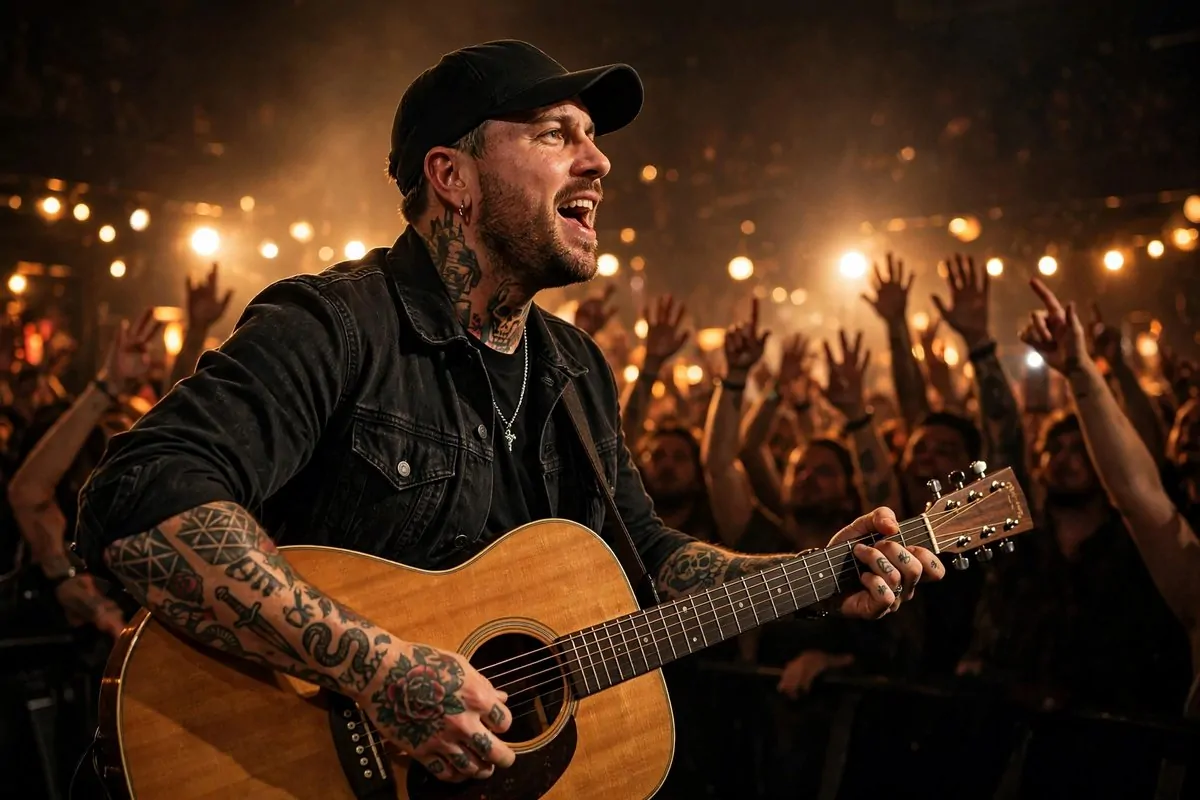
Picture this. A man stands on a big stage while thousands of people sing his words back to him. He has tattoos on his face and tears in his eyes. Only a few years ago, he was sitting in a jail cell with no real future.
That man is Jelly Roll. His real name is Jason DeFord, and he was born on December 4, 1984, in Antioch, Tennessee. He grew up in a rough home with little money and a lot of trouble around him. By the age of 16, he was already in deep trouble with the law.
Music became his way out. He started as a rapper in the early 2000s and sold mix CDs out of his car trunk. For nearly ten years, he drove himself to small shows across the South and built his fans one by one, with no big label and no rich backer behind him.
Then in 2021 he turned toward country music, and everything changed. His album Whitsitt Chapel arrived in June 2023, and the song Need a Favor shot to number one. In 2023 he won the CMA New Artist of the Year award. Grammy nominations followed, and he was later inducted into the Grand Ole Opry.
Now the big question people ask is simple. How rich is he really? I looked at what the top net worth sites report, and their answers do not match at all. The real picture takes a little work to find.
The short answer: Most top sites put Jelly Roll’s net worth between 16 and 20 million dollars in 2026, with Celebrity Net Worth at the top of that range and other trackers closer to 16 million. No one outside his team knows the exact number, because he has never shared a public money statement. What we do know is that he earns an estimated 3 million dollars a year, mostly from touring and streaming, and his wealth has grown fast since his country breakout in 2023.
Key Takeaways
- Jelly Roll is the stage name of Jason DeFord, born December 4, 1984, in Antioch, Tennessee.
- He went from jail time as a teen to rap mixtapes to country stardom after his 2023 album Whitsitt Chapel.
- Most trackers estimate his 2026 net worth between 16 and 20 million dollars, and the exact number is not public.
- Touring is his biggest income source, followed by streaming royalties, record sales, and merch.
- He won CMA New Artist of the Year in 2023 and earned Grammy nominations plus a Grand Ole Opry induction.
- In December 2025 he received a pardon from Tennessee Governor Bill Lee for his old convictions.
- His path shows that steady honest work over many years beats waiting for one lucky break.
- Net worth figures online are estimates, so always check the year and the source behind the number.
Who Jelly Roll Is
Jason Bradley DeFord was born on December 4, 1984, in Antioch, a working-class town near Nashville, Tennessee. His home life was rough, and money was always tight. He fell in with the wrong crowd early, and by 16 he faced serious legal trouble.
He spent much of his teens and twenties in and out of jail. His daughter Bailee was born while he was locked up, and that moment changed how he saw his life. He has said many times that becoming a father pushed him to want more than the streets.
While locked up, he fell in love with hip hop. He started to write lyrics and learned how to tell his story in rhyme. Music gave his pain a shape and gave him a reason to keep going. It was the first time he saw a door out of his old life.
After his release, he chose the stage name Jelly Roll and hit the streets of Nashville with homemade mixtapes. He sold CDs from his car trunk and played any small venue that would take him. His songs talked about struggle, loss, and hope in plain words. Working people heard their own lives in his voice.
He teamed up with other Southern rappers like Lil Wyte and Struggle Jennings and released project after project through the 2010s. Songs like Pop Another Pill spread online and grew his name in the underground scene. He never signed to a big label in those years. He built his crowd show by show, town by town.
Through it all, he stayed close to his family. He married Bunnie DeFord, known to fans as Bunnie XO, who hosts a popular podcast. They also share a son named Noah. His family often joins him on the road, and he talks about them in almost every interview.
Today he is easy to spot, with his tattooed face and big warm smile. He looks like a man who has lived ten lives, because in some ways he has. Fans love him because he never hides where he came from. He wears his past on his skin and in his songs.
In December 2025, Tennessee Governor Bill Lee granted him a pardon for his old robbery and drug convictions. The pardon does not erase the past, but it forgives it and lifts many blocks from his path. It will make world tours and faith-based travel much easier for him. The governor called his story remarkable and redemptive.
Where the Money Comes From
For most of his career, live shows paid the bills. Jelly Roll spent years driving to small clubs across the South and kept most of the door money. He sold his own merch at every table after the show. That grind taught him how to turn a crowd into cash.
Today touring is still his biggest earner by far. He now headlines arenas, and some trackers put his booking fee near one and a half million dollars per show. An arena tour with dozens of dates can bring in tens of millions in ticket sales, and even after costs and his team take their cut, the singer keeps a large share.
Streaming is his second big money stream. Songs like Save Me, Need a Favor, and Son of a Sinner have been played hundreds of millions of times. Each play pays only a tiny sum, but hundreds of millions of plays add up fast. He also earns from radio play and songwriting rights on his own hits.
Record sales and album deals add another layer. His country debut Ballads of the Broken arrived in 2021, and Whitsitt Chapel followed in June 2023. Whitsitt Chapel hit number two on the country albums chart and topped the rock and independent charts. His 2024 album Beautifully Broken kept the run going with hits like I Am Not Okay.
Merch is the quiet earner many fans forget. T-shirts, hoodies, and hats with his name sell out at almost every show. Tour merch can add millions to a big tour total. Because his fans feel close to him, they buy more than fans of a distant star might.
Guest spots and collabs bring in extra pay too. He has worked with artists from Lainey Wilson to Shaboozey and even Bon Jovi. A hit duet like Save Me with Lainey Wilson pays him twice, once for his part and again in streams for years. These collabs also win him new fans who then buy tickets.
He also earns from TV and media work. He has appeared on award shows and big TV stages, and his wife’s popular podcast keeps the family name in front of millions. Media spots do not pay like a tour, but they raise his price for the next tour. Fame feeds the machine.
Add it all up, and one tracker, Men’s Journal, estimates he now earns around 3 million dollars a year. That figure is an estimate, not a pay stub. But it fits what we see: full arenas, chart hits, and sold-out merch tables.
| Income source | How it pays him |
|---|---|
| Touring | Arena tickets and show fees, his largest earner |
| Streaming | Royalties from hundreds of millions of plays |
| Record sales | Album and track sales across rap and country |
| Merch | Shirts, hoodies, and hats sold at every show |
| Collabs and media | Guest songs, duets, and TV appearances |
How Much He Is Really Worth
So what is the real number? The honest answer is that no one knows it for sure. Jelly Roll has never shared a public money statement. Every figure you see online is an estimate made by a tracker.
Celebrity Net Worth, one of the best-known trackers, puts him at 20 million dollars in 2026. That is the high end of the range. Other trackers like Parade and Hello Magazine land closer to 16 million dollars. A few smaller sites go lower, near 10 million.
Why the spread? Net worth math is part art and part guess, because trackers add up known pay from tours and sales and then subtract rough guesses for tax, staff, and daily costs. They cannot see his bank account, so two honest trackers can land millions apart.
Every tracker agrees on the direction. His wealth is moving up, and fast. In 2024, the common estimate sat near 12 million dollars. The 2026 range of 16 to 20 million means his wealth nearly doubled in about two years.
Be careful with old numbers you may see online. Many pages still show figures from 2022 or 2023, when he was worth far less. A page that says 4 or 5 million is simply out of date. Always check the year on the page before you trust the number.
Also ignore any post that claims to know his exact private bills. No honest site can see those. I only trust numbers tied to named trackers, and I treat them as rough ranges.
The safest way to say it is simple. Most solid trackers place Jelly Roll between 16 and 20 million dollars in 2026. That puts him among the richest new country stars of his era, and the number keeps climbing while his tours stay full.
Remember that net worth is not cash in hand. It counts the value of his music rights, his brand, and things he owns, minus rough cost guesses. The exact mix is his business alone. What matters for us is the lesson in how he got there.
| Source | 2026 estimate |
|---|---|
| Celebrity Net Worth | 20 million dollars |
| Parade and Hello Magazine | About 16 million dollars |
| Smaller trackers | Near 10 million dollars |
| Common 2024 figure | Near 12 million dollars |
What His Story Teaches About Money
You do not need a rich start to build wealth. Jelly Roll started with a jail record and a car full of CDs. What he had was a skill and the will to use it daily. That is a start anyone can copy.
The first lesson is to use what you already have. He could not buy studio time, so he sold homemade mixtapes on the street. He could not get radio play, so he drove to small towns and sang to real faces. Small tools in steady hands beat big tools in lazy ones.
The second lesson is to stay in the game for years, not weeks. He worked the underground rap scene for nearly a decade before country fans knew his name. Most people quit in year two. He kept going in year nine, and year nine is when the door opened.
The third lesson is to let your past feed your work instead of ending it. He sings about jail, loss, and change because he lived them. Fans pay for honesty they can feel. Your own hard years can become your strongest asset if you use them right.
The fourth lesson is to own your name and your crowd. He never waited for a big label to save him. He built his fan base himself, show by show. When the big moment came, he owned the crowd already, so the deal came to him.
The fifth lesson is to keep growing and learn new skills. He was a rapper who taught himself to sing country. That one new skill opened arenas and award shows. I have seen the same rule work for shop owners who learn one new craft and double their pay.
The sixth lesson is to give back so your name grows. He speaks up for young people in trouble and for families hurt by drugs. He visits jails and talks about change. That honest work builds a name money cannot buy.
The seventh lesson is to be patient with the math of wealth. He went from trunk CDs to 16 to 20 million dollars in about twenty years. Most of the gain came late, after years of thin pay. Wealth often works that way: slow, then fast.
- Start with the skill you already have.
- Stay in the game for years, not weeks.
- Turn your past into your strength.
- Own your name and your crowd.
- Learn one new skill that opens new doors.
- Give back, and your name will grow.
- Be patient, because wealth often comes late.
Conclusion
Jelly Roll’s story is not really about a number. It is about a man who refused to let his worst years write his last chapter. From a jail cell in Tennessee to the biggest stages in country music, he built his wealth one show, one song, and one honest fan at a time.
The best estimate we have puts him between 16 and 20 million dollars in 2026, with most of it earned from touring and streaming. That number will move as his career moves. What will not move is the proof that steady work over many years can change any life.
If his story speaks to you, take one small step this week. Pick the skill you already have and use it a little more each day. Small daily work beats big yearly wishes, every time.
You may never sing on a stage, and you do not need to. You only need his recipe: start where you are, stay honest, and keep going long after others quit. That is how a man with nothing became a man with millions.