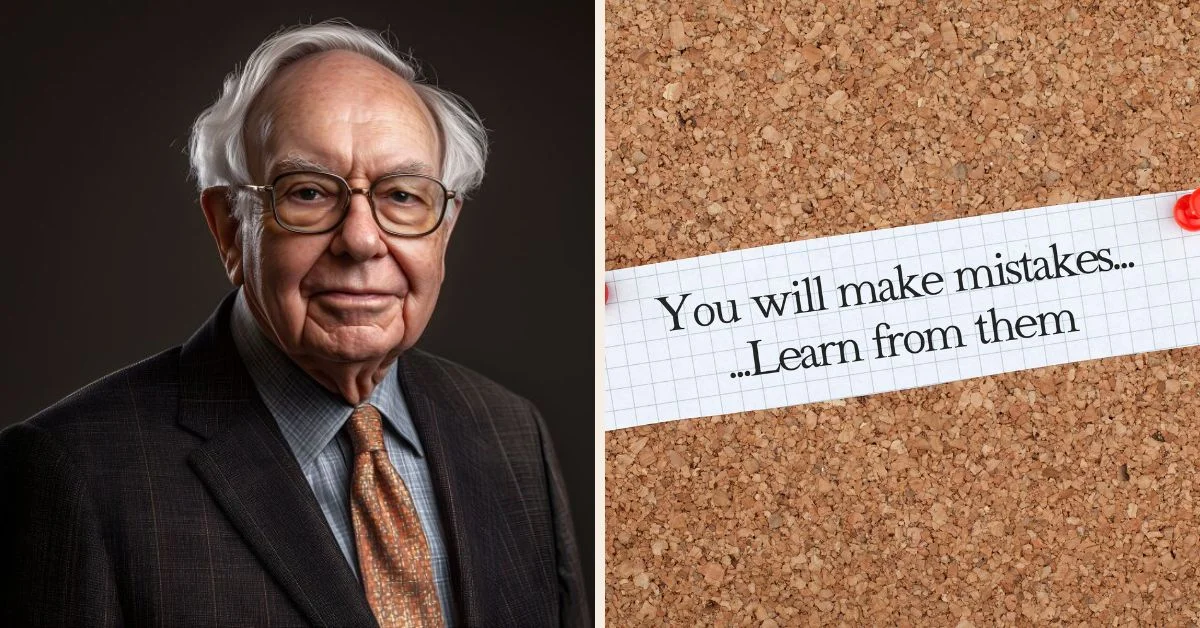
7 Ways to Fix Your Entire Life According to Charlie Munger (Wisdom That Works)


A friend once told me his life felt like an old house with a leaking roof. The money ran short every month. His temper ran short too. He compared himself to everyone and always came up short.
Then he read about Charlie Munger, the quiet man who worked beside Warren Buffett for decades and helped guide Berkshire Hathaway into one of the most respected companies in the world. Munger did not hand out fancy advice. He gave repair advice, plain and practical.
Munger believed most lives are not broken beyond repair. They have a few clear faults, like a clock that stopped because of dust in the gears. Find the fault, clean it, and the whole thing starts ticking again.
I like this way of thinking because it removes shame. You are not a bad person. You are a good machine with a few loose screws, and loose screws can be tightened.
This article walks through seven common breaks in a life and the fix Munger would suggest for each. His ideas come from a long life of watching what works and what fails. They are plain, honest, and tested by time.
The short answer: Charlie Munger, who helped guide Berkshire Hathaway for over four decades, taught that a good life is repaired, not rebuilt: spend less than you earn, skip envy, wait for the right moment, avoid stupidity instead of chasing brilliance, keep learning, guard your name, and keep going with a smile. These seven fixes cost nothing and change everything.
Key Takeaways
- A life is repaired, not rebuilt: fix one clear fault at a time.
- Spend less than you earn and dodge big money mistakes; small leaks sink big ships.
- Envy helps no one, so focus on your own game and your own score.
- Wait for the right moment instead of rushing into big choices.
- Aim to be consistently not stupid rather than rarely brilliant.
- Keep learning like a machine after every fall.
- Guard your name, because a good reputation opens doors for decades.
- Keep going with a smile even when luck turns against you.
1. Fix the Money Mess First
Picture a man named Dan who earns a decent salary. Every month the money is gone by the 25th. He cannot say where it went, and the worry follows him to bed.
Munger had a simple rule for this kind of mess. Spend less than you earn. It sounds too plain to matter, but almost every money problem starts with breaking this one rule.
He also warned against big mistakes more than small ones. One big loss can wipe out years of small wins. So the repair is not about clever tricks. It is about avoiding the one large hole in the boat.
Do the simple math on small leaks. A four dollar coffee from a shop each day is about 1,460 dollars a year. Two unused subscriptions at 15 dollars a month are 360 dollars a year. Small leaks, big ocean.
| Money leak | Per month | Per year |
|---|---|---|
| Daily coffee from a shop | 120 dollars | 1,460 dollars |
| Two unused subscriptions | 30 dollars | 360 dollars |
| Extra takeout dinners | 200 dollars | 2,400 dollars |
| Yearly phone upgrade habit | 65 dollars | 780 dollars |
Dan wrote down every expense for one month. He found 210 dollars leaking out on things he did not even enjoy. That is 2,520 dollars a year walking out of his pocket.
His repair was simple. He moved 200 dollars to a separate savings account on payday, before spending anything. What was left was what he could spend. The mess began to clear in three months.
You can copy this today. Track every expense for 30 days on paper or in your phone. Then move a small fixed amount aside on payday. Money peace is the floor every other fix stands on.
A money mess is the first thing to fix because it touches everything. Sleep, mood, choices, all of them improve when the money stops leaking. Tighten this screw first.
2. Fix the Envy Habit
Sara scrolls her phone every night and sees old classmates with new cars and bigger homes. Her own life feels small by comparison. She sleeps badly and wakes up tired.
Munger thought envy was one of the most useless habits a person can carry. It gives no joy and it ruins judgment. A mind full of envy cannot make clear choices.
Envy pushes people to spend money to impress others. The car, the watch, the bigger flat, none of it fills the gap. The gap is in the mind, not in the garage.
He liked a trick called inversion. Instead of asking how to be happy, ask what would make you miserable, then avoid it. Comparing yourself to others all day is a fast road to misery, so he simply refused to play that game.
Try the math of envy. A 40,000 dollar car bought to impress loses value every year and eats your savings. The same 40,000 dollars set aside quietly builds your freedom. One choice feeds pride, the other feeds peace.
Sara made a small repair. She set a 20 minute limit on scrolling and wrote down three goals of her own. Within two months she stopped checking what others had. Her own plan felt exciting again.
You can do the same this week. Write your own goals on paper where you can see them. When envy knocks, read your own list instead. Your game is the only one you can win.
3. Fix Rushing Into Big Choices
Tom got a job offer with a bigger title and said yes in one day. Three months later the long hours broke his health. He wished he had waited and asked more questions.
Munger was famous for patience. He would sit and wait for the right moment instead of jumping at every chance. He believed most good results come to those who wait for the clear opportunity.
He also taught the idea of staying inside what you understand. He called it your circle of skill. If a choice sits outside what you know, rushing in is a fine way to get hurt.
Compare two buyers of a small shop. One signs in a week because he fears losing the deal. The other spends a month talking to customers and checking the books, then walks away from a bad deal. The patient one kept his money and his sleep.
Before any big yes, write down what must be true for the choice to be good. If you cannot fill the list, you are not ready. Waiting is not weakness. Waiting is a tool.
Waiting also protects you from smooth talkers. A rushed buyer is easy to push. A patient buyer asks hard questions, and hard questions reveal the truth.
- Do you truly understand this choice?
- What is the worst realistic result of being wrong?
- Can this wait 30 days without losing anything important?
Tom now uses this list for every big decision. His choices got slower and his life got calmer. Fix the rushing and the regret fades with it.
4. Stop Trying to Be Brilliant
Mike chased every hot idea. New business, new trend, new shortcut. Each one cost money and time, and each one ended the same way.
Munger flipped this thinking around. He said it is more important to be consistently not stupid than to be brilliant once in a while. Most damage in life comes from avoidable errors, not from a lack of genius.
Think of it like driving. You do not need racing skills to arrive safely. You need to avoid the big crashes. A calm driver who avoids mistakes beats a fast driver who crashes twice a year.
Do the math. A man who grows his money steadily at 8 percent a year doubles it in about nine years. A man who chases hot tips and loses 30 percent once needs a 43 percent gain just to get back to zero. Avoiding the loss beats chasing the win.
I once watched a neighbor lose half his savings on a tip from a stranger. He learned the hard way and never made that kind of move again. His new rule was simple: skip anything you do not fully understand.
Make your own not-stupid checklist. Never risk money you cannot afford to lose, never decide when angry, and never follow a tip you cannot explain in plain words. Three rules, taped to the wall.
Brilliance is rare and unreliable. Not being stupid is a daily habit anyone can build. Build it, and the brilliant results often arrive on their own.
5. Fix Quitting After a Fall
After his small shop closed, Peter wanted to quit everything. The failure felt like proof he was not cut out for business. He stayed on his couch for a month.
Munger had a different view of failure. He spent his life trying to become a little wiser every single day. He read, he studied, and he treated every fall as a lesson with tuition attached.
A setback is only a waste if you learn nothing from it. Write down what went wrong and the lesson becomes yours forever. The same mistake stops being a trap and starts being a teacher.
Two men lose their jobs in the same month. One spends a year complaining, while the other spends one hour a day learning a new skill. After 365 hours of practice, the second man has a new trade and new confidence.
Peter started small. Twenty pages of reading each night. One lesson written in a notebook each week. In six months he opened a smaller, smarter shop, and it survived.
Learning also builds quietly. Each small lesson stacks on the last one, and after a year the stack is tall. Nobody can take that stack from you.
- Read 20 pages a day about your work or your money.
- Write one lesson a week in a plain notebook.
- Ask one smart question a month to someone ahead of you.
The repair here is simple. Never let a fall be the end of the story. Make it the middle chapter where the hero learns. Heroes are made in the middle, not at the start.
6. Fix Burned Bridges
Karen sent an angry email to a client and lost the account. Then she spoke badly about a partner and lost another. Doors kept closing, and she could not see why.
Munger treated a good name as a person’s most valuable asset. It takes years to build trust and only a moment to break it. Every harsh word is a small fire near your own house.
People do business with people they trust. A trusted name brings repeat work, fair prices, and help in hard times. A burned name brings silence, and silence is expensive.
Two freelancers start the same year. One answers honestly, delivers on time, and admits mistakes fast, while the other overpromises and blames clients. By year three, the first one turns away work from referrals, and the second one is still hunting.
Before you speak in anger, use a simple test. Ask if you would be proud of these words if everyone could read them. If not, wait a day. Most fires die if you give them no air.
| The damage | The repair |
|---|---|
| Harsh words sent in anger | Apologize honestly within a day |
| A promise you broke | Admit it fast and make it right |
| An old grudge you keep | Make one honest call to clear it |
You can also repair old damage. One honest apology can reopen a closed door. People remember who came back to make things right.
Guard your bridges like they are made of gold. Cross them kindly, and they will carry you far. Burn them, and you will swim alone.
7. Fix Blaming Bad Luck
Every morning, George listed his bad luck to anyone who would listen. The economy, his boss, his childhood, all of it was against him. Nothing ever changed, because he never did.
Munger stayed cheerful through hard times, and he believed a good attitude was part of the work. Complaining changes nothing. Steady effort changes something, even when the start is unfair.
Luck matters, but it is not the whole story. Two people can face the same bad luck, and one keeps working while the other keeps complaining. Ten years later, their lives look nothing alike.
Do the math on small effort. Thirty minutes of skill practice a day is 182 hours in a year. That is enough to learn a real skill. Bad luck cannot block a person who quietly builds for 182 hours.
George tried a new habit. Each morning he wrote down one thing he could control that day. One call, one page, one small task. His luck did not change much, but his life did.
Make your own list tonight. Three things you control tomorrow. Do them before noon. Repeat for a month and watch what shifts.
The house is now repaired, one room at a time. Money, envy, rushing, pride, quitting, bridges, and blame, each fixed with a plain tool. That is the whole secret, and it was never a secret at all.
Conclusion
Seven breaks, seven fixes. Spend less than you earn, starve your envy, and wait for the right moment. Choose not-stupid over brilliant, learn from every fall, and protect your name. Keep going with a smile through it all.
You do not need to fix everything this week. Pick the one break that hurts most and start there. One tightened screw can steady the whole machine.
I still keep a short list of these rules on my desk each morning. It reminds me that a good life is not built in a day. It is repaired, one honest fix at a time.
Start today, start small, and keep the tools close. The clock is waiting to tick again, and you already hold the screwdriver.