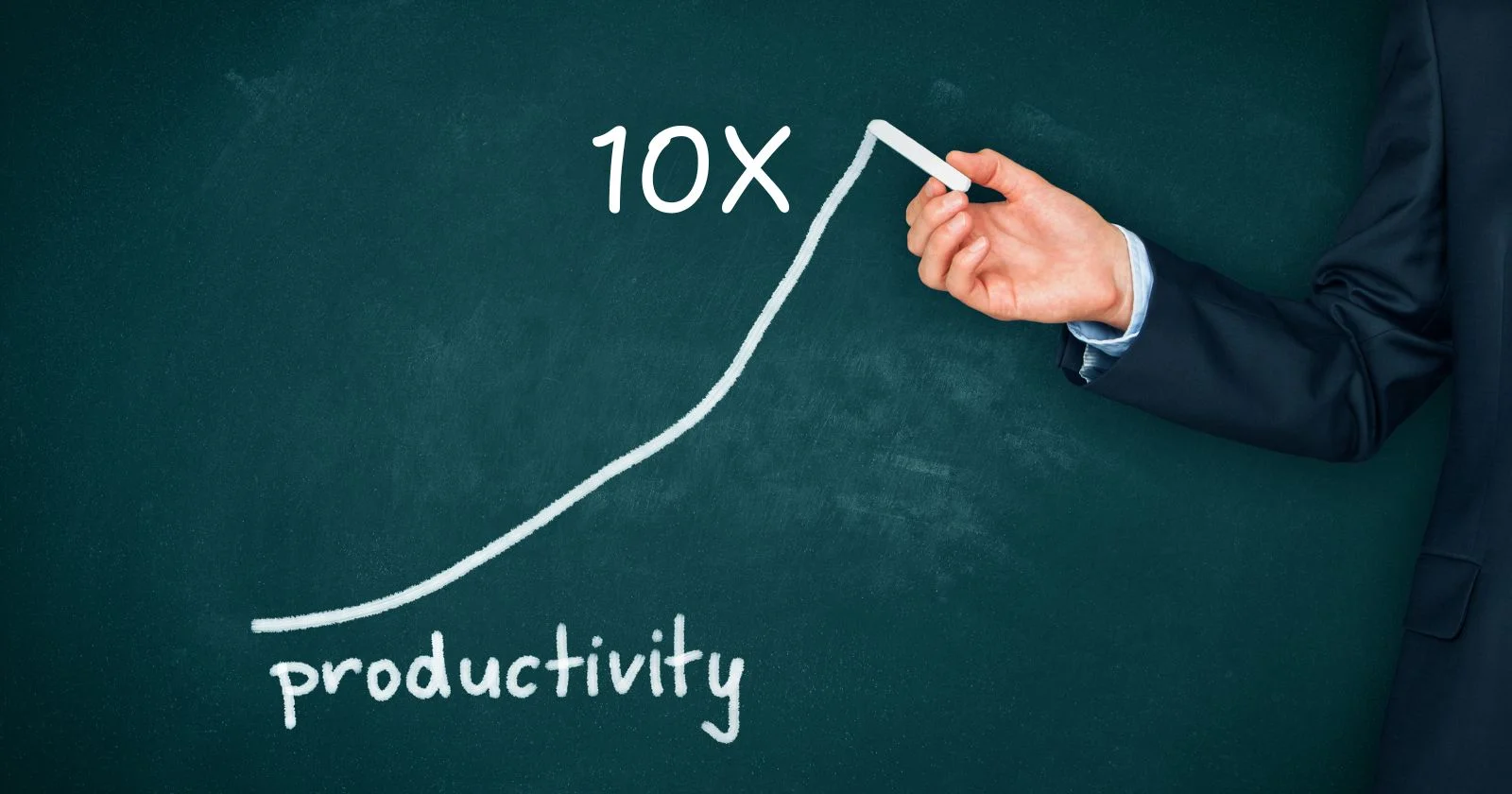
7 Productivity Mistakes That Destroy Your Daily Focus

Distraction is a part of life, but when people focus, they get successs in this difficult world.
Most days, the work is not the hard part. The hard part is what you do in and around the work. The small wrong moves that pile up, slow you down, and pull your whole day off track in ways you do not even see at the time.
These are not the same old tips. Not “wake up at 5am” or “turn off your phone.” Those are fine. But they are not what takes the fire out of a good day. What does that is much more quiet, more deep, and more close to how the mind works when no one is watch it.
Here are 7 of them.
1. You Start the Day With Choice, Not With Work
Most pros say “plan your day the night before.” That is good tips. But what they do not say is this: when you wake up and the first thing you do is pick what to work on, your brain is not at work yet. It is still in a soft, half-wake state. And when you ask it to make a big call like “what should I do first?” it goes into a low, slow spin.
This spin does not feel like pain. It feels like prep. Like you are being smart and plan. But what it is, in fact, is a delay. A kind of drift that can cost you the best one hour of your whole day.
The fix is not more plan. It is less choice at the top of the day. When the first task is set the night prior, the mind does not have to spin. It can just go. That is a big gap, and not many talk of it in the open.
What drains you most is not hard work. It is the act of pick from a long list when your mind is not yet at its best. The brain in the first 30 min of the day is like a car that is just warm up. You do not race a cold car. You let it run.
Most do not know this gap costs them more than all the bad habits they try so hard to fix. They tweak their list, buy new apps, try new plans, but wake up each day and still let the first hour go. Not to work. Not to rest. Just to the slow fog of pick, and pick, and pick.
Set the task the night prior. One top task. The first move of the day is just to go do it. No pick. No spin. Just go. This one shift, more than most, can change the pace of an entire day.
2. You Treat “Get Set” Like It Is Work
Here is one most will know but few will own up to. When you sit down to work, how much time do you use just to “get set”? Open tabs. Fix the desk. Fill the cup. Move the files. Put on the right kind of sound. Look for the right pen.
All of this feels like work. It has the look of work. But it is not work. It is a set of acts that let you feel you are in work mode, with no real work done at all.
The mind is very good at this. It can fool you for a long time. And what is sad is that many of the most hard-work type of people do this the most. They prep and prep and prep, and by the time they are “set,” the good part of the day is over and they do not know how it went.
This is not a will-power fail. It is a habit loop. When the brain links “set-up” with “start,” it will seek the set-up over and over. It is safe. It is calm. It has no risk of fail. The real work has all of that, and the brain knows it.
Try to note, just once, how long your “get set” time is each day. Most will be a bit stun when they do. Some will find it is 20 min. Some more. And most of that time, the work could have start. The mind just did not want to face it yet.
The real act of start is not the set-up. The real act of start is the first line of the real task. That is the gate. And the set-up is just a way to stay near the gate with out ever walk through it.
One way to beat this is to stop in the act. You are fill the cup, and you ask: “is this work or is this wait?” Most of the time, the cup can wait. The task can not.
3. You Rest Wrong (And It Cost You More Than You Know)
One of the most big gaps in how most talk of work is rest. Not sleep, not days off, but the small rest you take in the day. The 5-min break. The walk. The sit and stare.
Most do one of two things: they skip rest (“I am on a roll, no stop”) or they rest in a way that is not rest at all (they check their feed, read fast news, scan for what is new). Both of these are traps. Both make the next hour of work worse, not more good.
When you skip rest, the mind does not stop. It just runs with no fuel and gets hot. Work gets slow. Tiny task feel big. You push more, but do less. You think you are on a roll but in fact you are coast on a hill that gets more steep each step you take.
When you rest with your phone or feed, you give the mind more load, not less. It does not get to cool down. It stays on. And then you go back to work with a mind that is more tire than when you stop for the break.
True rest, the kind that helps, is kind of dull. A walk with no aim. A sit with no task. Just look at a wall or the sky for a bit. Not long. Even 5 min of real, low-load rest can do more than 20 min of fake rest with a screen in your hand.
This is not a new find. But what is not said out loud is how most high-skill work types are the worst at this. They feel that to sit and do no thing is to fall back. They feel time is loss. So they fill it. And then they hit a wall at 2pm and call it “low will-power” when in fact it is just a mind that was never let to rest at all in the day.
The cure is to let the rest be a bit dull. If it is not a bit dull, it is not rest. It is just more work with a new name.
4. You Keep Score of the Wrong Game
Many work with a to-do list. This is fine. But at the end of the day, what do most do? They look at what is left on the list, not what they did. And if 3 of the 10 things are left not done, the day feels like a loss.
This is a trap of how you keep the score. If the 3 tasks left are small and the 7 done were hard and deep and real, that was a good day. A great day. But the brain does not see it that way. It sees only the gap.
What gets lost here is the link to what the work is for. When you track just “done / not done,” you cut out the most key part: did the work move you? Did it grow what you want to grow? Or did you just clear a list that will fill back up by the next morning?
A task can take 5 min or 5 hours. But most lists treat them the same. And so the mind will push you to do the fast, easy ones just to feel the score go up. This is why, by end of day, many find they did a lot but feel they did not move at all. They did the list but not the work.
Keep score of what moved, not what you crossed off. Even if the score is slow and small, that is the real game. A list of 3 tasks that all move the main thing is a far more good day than a list of 10 tasks where 9 are just noise.
This is hard to sell to the mind. The mind likes to check the box. It gets a small hit each time. But if the box does not match the goal, the hit is fake. And fake hits are how good people end up busy and still stuck.
5. You Think Calm Means You Are Fine
When the work is hard or big or new, the mind does not like it. It will try to move you to a calm state. It does this in ways that look like sense and smart. Like “let me do some small task first to get in the zone.” Or “let me read more on this first before I dive in.”
But calm is not the same as good. In many case, if you feel too calm in your work, it is a sign you are not in the right work. The best work has a bit of edge to it. A small pull. A hint of risk.
Not all edge is bad. There is a kind of good edge that comes when you work on the right task at the right depth. It does not feel like fear. It feels more like care. Like what you do has some weight to it and you are the one who must lift it.
When you chase calm all day, you keep the work safe and flat. And safe, flat work does not tend to be the work that gets you where you want to go. It just fills the time. It feels fine. But it does not grow you.
This one is quiet and hard to spot. Most high-skill people know this at some deep level but they do not say it out loud. They just show up, push past the pull to go back to calm, and do the hard task any way. That is not a trick or a tip. That is a trait. And the good news is it is one you can grow with time.
If your work feels too calm, too safe, too easy, ask what you are not doing that you know you should do. That task is the one you are keep yourself calm to avoid.
6. You Add More When Less Is the Fix
When the day gets off track, the first move most make is to add. More plan. More apps. More rules. More time. More list. More tools to track the tools that track the work.
But what if the day got off track not from lack of plan, but from too much of it?
This is more real than most want to own. When you have 14 items on your list, 5 apps to help you work, 3 check-in calls and a new rule set you just made up this week, the mind is not free to do deep work. It is busy just keep up with the system that was made to help it.
Less is a hard sell. More feels like care. More feels like try. It feels like you are take the work more, not less, when you add a new tool or a new plan. But there is a type of pro who runs a very lean day, and they tend to do more real work than most who run a full and busy one.
One rule. One top task. One place to hold the rest. The mind works best when it has room to move. When it is full of plan and list and track and check-in and sync, the real work gets push to the side. It has no room. It gets done last, if at all.
Try to cut one thing from your day set-up this week. Just one. See if the day gets worse, or if, in fact, it runs more clean. Most find the day runs more clean. And then they want to cut more. And that is how it starts to change.
7. You Wait for the Right Feel to Do the Right Work
This is the last one, and also the most cost one. The habit of wait for a good mood, a clear head, the right time, the right place, the right set of facts, before you do the hard work.
The mind will tell you this wait is wise. “I work best when I feel good.” “I need more data first.” “I will do it when I am not so tire.” These are all real. And they are all fine in small dose.
But they also add up fast. They grow into a wall that sits just in front of the best work. And over time, the wait gets long and the work gets less. The task gets more big in the mind than it is in the real, and by the time you “feel ready,” the time or the chance may be gone.
What the most good pros have in them is not more will. It is the skill to start with no need for the right feel. To sit down and do the first 5 min of the hard task with no care for how they feel at the time of start.
Most find that once they are in, the feel shifts. Not for all, not each time. But most of the time, the task that felt too big at 9am, after 20 min of work, does not feel the same way at all. The block was not the task. It was the start.
The wait is not the prep. The wait is the fear. And fear with a smart name is still fear. Once you see that, the wait gets a lot less power over how your day goes.
What Most Days Are Really Made Of
- The best hour of the day is lost more in prep and pick than in hard work.
- Rest done wrong is just more load on a mind that did not ask for more.
- “Done” is not the same as “moved.” They are not the same game.
- Calm in work is not a sign of good. It can be a sign of safe, flat play with no real risk.
- Less plan can free more work than more plan ever will.
- The wait for the right feel is fear in a coat that looks like good sense.
Conclusion
Most of what kills a work day is not seen as a trap at all. It is seen as prep, as care, as smart. That is what makes it so hard to fix. You can not fix what you do not first see.
But once you see it, and you have seen most of it here, you can not un-see it. And that is not a fix. But it is, in many ways, more than half the work.
Bill Walsh, who built one of the most good teams in sport, once said: the score takes care of itself. On most days, so do the big moves, if you get the small ones right.