5 Stoic Habits for a Calmer, Happier Life (Marcus Aurelius Wisdom)

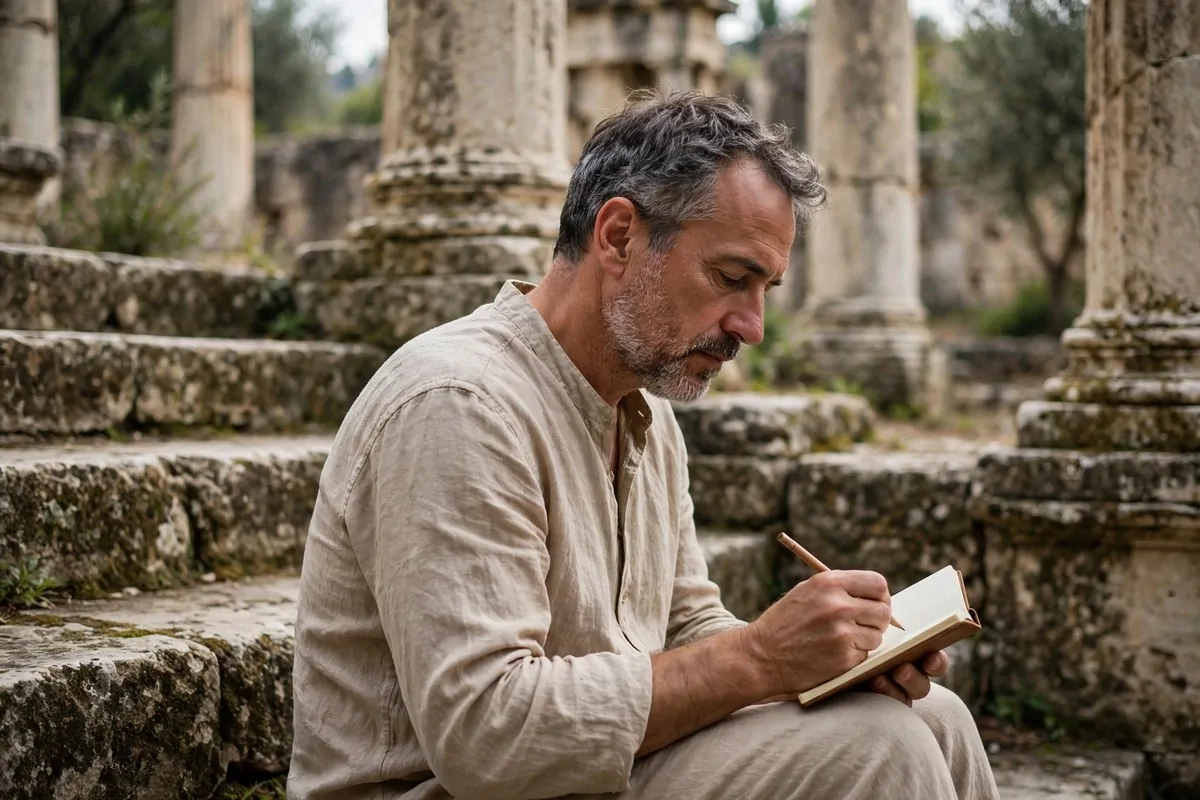
Two thousand years ago, the most powerful man in Rome sat alone each dawn and wrote notes to himself. He was not writing for fame or for show. He was writing to keep his mind calm.
His name was Marcus Aurelius, and he ruled a vast empire. War, plague, and court plots filled his days. Yet his private notes speak of peace, not power, and they became a book we now call Meditations.
What he wrote was plain and short. He asked what he could control, and he let go of the rest. He trained his mind the way a runner trains his legs, with small daily reps.
I first read his notes on a slow Sunday, and one line stayed with me. He said that a calm mind is worth more than a full purse. That line changed how each day starts.
The short answer: Marcus Aurelius left us five daily habits that still work today. Control what you can, picture loss so you feel thanks, plan your morning and review your night, treat life as short, and turn each setback into a lesson. Each one takes only minutes, and each one quiets the mind.
Key Takeaways
- Control what you can and release the rest; worry shrinks when you sort the two.
- Picture losing what you love for one minute a day; it turns plain days into gifts.
- Plan your morning in three lines and review your night with three questions.
- Treat life as short; small fights and slights are not worth your peace.
- Turn each setback into a lesson; ask what it taught you, then move on.
1. Control What You Can, Release the Rest
Marcus wrote that we suffer most from things we cannot steer. The rain, the past, and what others think of us do not bend to our will. When we fight them, we only tire ourselves out.
His fix was a plain daily sort. Draw two lists in your head. One holds what you can change, the other holds what you cannot, and you give your hours to the first list.
A trader in old Rome could not stop a storm at sea. He could check his ropes, load his ship well, and sail at the right hour. The rest he left to the sky, and he slept well.
You can run the same sort today. You cannot control a late bus, but you can leave ten minutes early. You cannot control a rude remark, but you can choose a calm reply.
Try this for one week and watch your worry shrink. Each time your mind spins, ask one plain question: is this in your hands? If yes, act at once. If no, let it pass like a cloud.
Most of our stress lives in the second list. We replay old talks and fear next year, though neither can be changed by thought alone. Naming them as not yours to steer breaks their hold.
Marcus called this the first step to peace. It does not make life easy, but it makes your mind light. A light mind sleeps well, and a rested mind finds joy with ease.
| Habit | Your 3-minute daily version |
|---|---|
| Control what you can | Sort one worry into “mine to steer” or “not mine,” then act or drop it. |
| Picture losing what you love | Close your eyes for one minute, picture one good thing gone, then feel thanks. |
| Morning plan and evening review | Write three lines at dawn and answer three questions at night. |
| Life is short | Ask if this upset will matter in five years; if not, let it go. |
| Setbacks into lessons | Ask what today taught you and write the answer in one line. |
2. Picture Losing What You Love, to Value It
This habit has a long name, negative visualization. The name sounds dark, but the act is sweet. You simply picture losing a good thing for one short minute.
Close your eyes and think of your warm home, your good health, or a dear friend. Now picture a day without them. Feel how cold that day would be, then open your eyes with thanks.
Marcus did this with his own life each dawn. He told himself he might not see the next dawn, so this one was a gift. That thought did not make him sad; it made him glad.
We treat good things as sure things, and sure things bore us. The cup of tea, the laugh of a child, the roof that keeps out rain all fade into the wall. One minute of loss brings them back in full color.
I do this each night before sleep and keep it to one minute. Then thanks go to one good thing from the day, as if it had just come back. It is the sweetest minute of the whole day.
Do not turn this into fear or gloom. The point is not to dread loss but to taste the good while it lasts. A man who knows his bread may be his last eats it with more joy, not less.
In one known study, people who wrote three good things each night for a week felt brighter for months. That is the same root at work. Thanks, felt on purpose, feeds the mind like food feeds the body.
3. A Short Morning Plan and an Evening Review
Each dawn, Marcus planned his day before the sun rose. He wrote what he would face and how he would act. Then at night he asked himself three plain questions about how it went.
Your morning plan can fit on three lines. Write the one task that matters most, one kind act you will do, and one trap you will dodge. That is the whole plan, and it takes three minutes.
The trap line is the clever part. If you know you snap at slow drivers, you write it down first. When the slow car comes, your own note warns you, and you stay calm.
The evening review is just as short. Ask what went well, what went badly, and what you will change tomorrow. Write one line for each, then close the book and rest.
This loop turns days into lessons. Without it, the same fault repeats for years. With it, you catch small slips while they are still small, like weeds pulled when young.
A young clerk tried this for a month. His morning line was one client call before lunch, and his trap was his phone at meals. By week three his call rate had doubled, and his wife smiled more at dinner.
Start tonight, not next Monday. Three lines in the morning, three questions at night. Small reps build a calm mind the way small coins build a full jar.
- What went well today, and why did it work?
- What went badly, and what was your part in it?
- What one thing will change tomorrow?
4. Remember Life Is Short, So Small Fights Are Not Worth It
Death stayed in view for Marcus, not from gloom but from sense. A man who knows his time is short does not waste it on spite. He spends it on what feeds his soul.
Think of your last big row over a small thing. A rude word, a late reply, a seat taken at the park. A week later it felt like dust, yet it stole a whole glad day.
The short-life view is a clean lens. Hold each upset up to it and ask if it will matter in five years. Nine times in ten it will not, and you can let it drop with a smile.
This does not mean you let all wrongs slide. It means you pick your fights the way you pick ripe fruit. Save your fire for what truly counts: your health, your work, your loved ones.
Try a plain test the next time anger rises. Ask yourself if you would trade one full glad day for this point. Almost always the trade is a bad one, and the anger melts on its own.
Old letters from Rome show Marcus used this on court fools who mocked him. He wrote that their taunts would be dust soon, and so would he. Then he went back to his work in peace.
A short life is not a sad thought. It is a bright one, like a lamp that makes you use the light well. Fewer fights means more room for joy.
5. Turn Setbacks Into Lessons
The last habit is the one Marcus loved most. He wrote that we should love what happens, even when it hurts. Pain can be a teacher if we let it speak.
A setback feels like a wall, but it is often a door in paint. The lost job frees hours for a new skill. The failed test shows the weak spot to fix, and the harsh word reveals a soft point to guard.
The way through is a plain question asked with a cool head: what did this teach you? Write the answer in one line. That line turns a loss into school fees you will not pay twice.
A potter in old Rome broke his best jar the day before market. He wept, then he saw the crack ran along a thin spot. His next jars were thicker there, and they sold for more.
You can run the same turn on small ills. The bus you missed gave you a walk that cleared your head. The rude no from a boss taught you to ask with facts, not hope.
Do not fake cheer or rush the grief. Marcus did not smile at pain; he mined it. Feel the sting, then ask the question, then rise with one new lesson in hand.
These five stoic habits for happiness ask little and give much. Start with the first habit today and add the next each week. By month two you will own a mind that bends less in every storm.
Conclusion
Two thousand years of dust have not dulled these habits. They worked for an emperor on a throne, and they work for a clerk at a desk. The mind is the same in every age.
You do not need new tools or a quiet cave. You need three minutes at dawn, three at night, and an honest heart in between. That is the whole cost of a calmer life.
Start with the first habit, since it opens the door to the rest. Sort what you can steer from what you cannot. Feel the load lift the very first day.
Add the second habit in week two, the third in week three. Slow growth beats fast starts that fade. A habit that lasts a year beats ten that last a week.
Some days will still be hard, and that is fine. The habits do not promise a life with no rain. They promise a mind that can stand in rain without fear.
Keep a plain notebook by your bed if you can. It costs little and holds much. Your own notes may one day calm a friend, just as the notes of Marcus calm us still.
Peace is not found far away. It is built at home, one small habit at a time. Begin tonight, and let the calm grow.